


Aardvarchaeology
Dr. Martin Rundkvist is a Swedish archaeologist, journal editor, public speaker, chairman of the Swedish Skeptics Society, atheist, lefty liberal, board gamer, bookworm, and father of two.

As I learned a few hours ago, and as a few other Sb bloggers have already announced, Scienceblogs.com will shut down at the end of this month. I'm going to move Aard and continue my blogging, but I haven't figured out where to move it yet. Suggestions from you, Dear Reader, are most welcome.
It needs to be done soon, because while I have exported all the blog entries and comments safely to my laptop, I can't do that with the images and PDFs. I have to import the blog onto a new WordPress site and then instruct it to grab all the non-text files from Scienceblogs.com. Which will not be…

I don't read much in Swedish. On a whim I decided to check what recent Swedish books I've read and liked outside work. Turns out they're all popular history. Alla rekommenderas varmt för den som delar mina intressen!
Kring Hammarby sjö. 1. Tiden före Hammarbyleden. Hans Björkman 2016. Local history.
No, I'm from Borås. Ola Wong 2005. Eventful family history in China and among German-speaking Romanians, Banater Schwaben. (Yes, the title is in English.)
Svenskarna och deras fäder - de senaste 11 000 åren. Bojs & Sjölund 2016. On DNA and the post-glacial peopling of Scandinavia.
Det svenska…

Medieval account books were so common in Germany and considered to be so worthless, that into the early 19th century they were used as fuel to heat certain archives.
Got nominated to the municipal council. Not likely to be high on the list, but still, feels good to be considered useful.
I was shocked to learn that people who get elected onto the municipal council sometimes just flake out and never show up again after the first few meetings. Somebody pointed out that many people don't live my kind of predictable, regimented life. But accepting and then flaking out from public office suggests…

Ben Aaronovitch = Benjamin Aaronson wrote The Rivers of London. I wonder if it's a pen name for my grandpa's grandpa Aaron Benjaminson, who was a farmer in Tanum.
Two students are trying to play verbal chess while digging. The board is in their heads.
"Well, I'm not the world's most physical guy / But when she squeezed me tight she nearly broke my spine / Oh my Lola" /Ray Davies
Sudden thought: Christianity is a 2000-year extension of a state of spiritual emergency that Jesus thought would last a year or two.
Sweden has recently reformed its coinage. Convenient for me and the students: when…
Habilitation, docentur, is a symbolic upgrade to your PhD found in Scandinavia and other countries with a strong element of German academic traditions. You can think of it as a boy-scout badge. It confers no salary, but it opens certain doors including that of supervising doctoral candidates. Though formally handed out by the faculty, it's impossible to get without support from your department, as I learned from my abortive attempt at the University of Stockholm in 2010. If on the other hand you do have the support of your department, it's impossible to avoid getting your habilitation – a…
Oslo colleagues have asked me to give a fuller account of the spring 2017 hiring that I called the most egregious case I’ve seen. This is not because they're trying to make the University of Oslo's Museum of Cultural History look good, but because they feel that I unfairly singled out a single hire, when in fact there were three. I'm happy to oblige. For one thing, I hadn't even noticed that one of the three has no PhD.
Some background. Norway has a strong tradition of research performed at museums. Bergen's museum, for instance, was doing major science long before there was a university in…
I recently received a long-awaited verdict on an official complaint I had filed: there was in fact nothing formally wrong with the decision by the Dept of Historical Studies in Gothenburg to hire Zeppo Begonia. Since the verdict didn't go my way, as planned I am now turning my back on academic archaeology. The reason is that qualifications don't count in Scandyland.
Being friends with people inside, and preferably being a local product, is what gets you academic jobs here. I need to cut my losses and move on. I would call this post a burning of bridges if there were any to burn, but there are…

Planting a gingko and listening to early Black Sabbath.
Sailboat owners around Älgö have a lot of trouble with their wind indicators. The local crows use them as merry-go-rounds, which messes them up.
Me: "I am daft today." Autocorrect: "I am Daddy Toast."
Friendly local fellow gladly gave us permission to stash our excavation gear overnight behind his garden shed.
Heavy downpour making loud whoosh noise on the roof.
Rented a van, collected excavation gear and two students, deposited gear at site, bought extra gear, had lunch, returned van, am now in no hurry to airport. Everything went as…
In archaeology, we distinguish osteological sex from artefact gender. Osteo-sex is with very few exceptions (odd chromosomal setups) the same thing as what your genitals are like. Artefact gender is the material correlate of a role you play according to the conventions of your time: e.g. whether you keep your genitals in Y-fronts or lacy knickers. We judge these two parameters from separate source materials. Your skeleton can't tell us anything about your gender, and your grave goods can't tell us anything about your osteo-sex. They are in principle able to vary independently.
Nevertheless,…

Five years since my first teaching gig. Still temping today, still enjoying it, still think I should have a steady job.
LinkedIn suggests that I might apply for a job as home language teacher of Kannada, a Dravidian language spoken in southern India. 15% of full time.
Did Timothy Leary use TripAdvisor?
Richard Bradley discusses my 2015 book at length in his new book A Geography of Offerings. *happy*
I want to text my lower-teen self that I just favourited Mötley Crüe's "Kickstart My Heart". He would be absolutely disgusted.
Breakfast: bread that I baked, mushrooms that I picked, crayfish…
I'm confused. For years and years this boy lived with me. Now instead there's a tall young man studying engineering in Jönköping. I somehow helped make this happen. It's strange to me.
The most common surnames among my DNA relatives are Johansson, Nilsson and Persson. All three are among the ten most common surnames in Sweden.
Miley Cyrus & the Flaming Lips have covered "Lucy In The Sky With Diamonds" & "A Day In The Life" together. Both are amazingly good!
Hehe. NYT writer spells "help reign in spending". Maybe using a reigndeer?
"She's a peach" was not coined by Prince in the 90s.…
I don't get it, safe deposit boxes, Sw. bankfack. Are they a disappearing bank service? Do I know anyone under the age of 50 who has one? What do you guys keep there?
Do you wonder if I've got my shit together? I'll tell you. I have street maps of Helsinki from visits in 2002 and 2009 instantly retrievable from the bookshelf next to my desk. That's how together I've got my shit, OK?
Sonja Virta: in the 1966 edition, Tolkien added to The Hobbit that Gollum is small and slimy. Illustrators had been drawing him too big.
New adjective: beshatten = very dirty. "Honey, can you find clean pants for…
I was pleased to learn from Current Archaeology #330 (p. 65) that Chris Catling shares my distaste for the habit scientists have recently picked up of prefixing their answers to interview questions with ”So...”.
Q: Where did you find the new exciting fossil?
A: So we found it in Mongolia.
Q: How old is it?
A: So it's from the Early Cretaceous.
What annoys me about this isn't just that it's new. I know that us speakers change language over time. My irritation is down to the fact that I reserve ”So”, when used in this position in a phrase, for two other purposes. Either to mean ”thus, ergo, it…

The 75th World Science Fiction Convention took place in Helsinki and seems to have had the second-highest attendance ever: more than 7000 people in the Messukeskus convention centre, 2000 of whom had (like myself) never attended a WorldCon before. There were 250 programme items only on the Friday between 10 am and 10 pm, so there is no way that I'll be able to tell you everything that went on. (Check out the programme here.) Instead I'll tell you the bits I enjoyed the most, plus some observations.
The WorldCon crowd was incredibly diverse even if you disregarded the cosplayers. Men…

Reading Matt Ruff's new novel about black Americans in the 50s. Annoyed to find that nothing in the dialogue would sound out of place if spoken by a white American sci-fi fan in 2017.
Feared 45 would be the sort who gets the trains running on time and starts wars. Actually can't get trains running at all, wars with TV hosts.
Etymological misunderstanding in this novel. Ruff parses the name Braithwaite as Braith-white, when it is actually Brae-thwaite.
There's this book about edible wild plants in Sweden named "Can you eat these things?" A more important question is "What population…
"Ways of knowing" = alternative facts.
I am on a WorldCon panel about the Medieval mind and fantasy literature. I just had the (unoriginal) idea to say that the High and Late Medieval aristocracy lived largely in an Arthurian fantasy world of their own creation.
Last night a skinny cat came miaowing at our door. Turned out to have left his home 200 m from us a week ago. With no sense of direction. And no hunting skills. He's back with his kind owners now.
I've bought a lot of ebooks from Google. I would happily continue to do so even though now I've got a Kindle, because Google has much…
Yesterday we had a guest entry from Lars Amréus, the Director General of the National Heritage Board about the signage with fringe theories at a much-visited archaeological site in southern Sweden. As I read it, the main take-away message is ”Sorry, I know this used to be our job but it isn't any more”. So if you want to be charitable, you might say that N. Heritage has not strictly speaking abdicated from its responsibility. It was dethroned and had to hand the crown to N. Property. I haven't heard that N. Heritage fought the decision, but I don't know everything. Maybe they did. Or maybe…
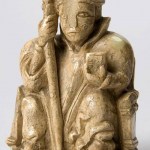
Los Alamos means "the poplars".
A friend lent me J.P. Hogan's 1980 novel Thrice Upon A Time. It's set in 2010 but has pre-PC "mini" computers the size of fridges, with text terminals and command-line interfaces. Four years before Neuromancer...
1970s computer designers: "What? You folks run your screens in graphics mode all the time? But why? It's so inefficient compared to text mode! Must be unbearably slow!"
Had some skin moles lasered. The smell of burning hair is strong immediately inside the clinic's front door. The lasering makes a noise like quietly frying bacon.
Pluto's orbit is…
It seems that my comments yesterday on the small issue of signage at Ales stenar touched a nerve regarding something bigger, having to do with the National Heritage Board's overall societal role in relationship to archaeology and public outreach. Lars Amréus is the Board's Director General, an archaeologist and Qaisar Mahmood's boss. He has kindly written a guest entry in response to mine. My comments will follow in a later entry.
-----
I’m a regular follower of Dr. Rundkvist's blog. I often find it both interesting and engaging. Above all, I appreciate that Dr. Rundkvist is an ardent…
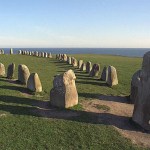
Bob Lind has yet again managed to get the National Heritage Board to abdicate its responsibility at Ales Stenar, a beautiful 7th century AD burial monument near Ystad in southern Sweden. Bob has self-published odd interpretations of the site that have found no traction among professional archaeologists. He has kept vigil at Ales stenar for decades, lecturing to visitors, ranting at the municipal guides and occasionally attacking them. He has a very large sign on site, next to the National Heritage Board's, with permission from the County Archaeologist. My colleague Björn…