

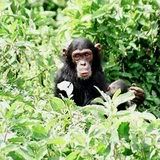
 When we think of the spread of antibiotic resistance between animals and humans, we tend to think of it going from Them to Us. For example, much of the research over the past 20 years on the sub-clinical use of antibiotics in animal feed has looked how this use of antibiotics as a growth promotant breeds resistant organisms in animals, which can then enter the human population via the food we eat. Along a similar line, I just mentioned Burt's post post on cephalosporin use in cattle and the evolution of antibiotic resistance, where the worry is that use of these broad-spectrum antibiotics in animals will select for resistance that can then spread to humans. However, spread of resistant organisms is not a one-way street. For example, it has been suggested that transmission of methicillin-resistant Staphylococcus aureus (MRSA) has been transmitted both from horses to humans and vice-versa (see, for example, this Emerging Infectious Diseases paper). A new paper suggests that this phenomenon can happen even in animals that aren't in such close contact with humans: chimpanzees.
It's been previously suggested that human diseases--including respiratory infections, scabies, and polio-like viruses--were responsible for epidemics in Gombe National Park in Tanzania between 1966 and 1997. However, what wasn't known was exactly how these pathogens were transmitted between species. Was it via direct contact (for example, between researchers and primates?) Was it via an indirect source, such as contaminated water? Or do both play a role (and if so, which is more important?) A new study sought to begin investigation of those questions.
The authors took rectal samples from humans working in an area of western Uganda, where chimpanzee research and tourism has recently increased, as well as samples from local villages who had no contact with chimpanzees or their habitat. They also took fecal samples from chimpanzees in the area (I told you you could learn a lot from studying an animal's ass!). From both of these samples, they isolated E. coli. Why this bacterium? Well, one, it's known to be rather easily transferred between animals and humans. Two, it has the potential to cause clinical disease. Three, it's well-characterized, and likely to be present in fecal samples. So, this was essentially used as a marker for movement of organisms between the human and chimpanzee populations. They then characterized the E. coli they isolated using molecular methods and their antibiotic resistance profile.
Overall, they found that more than half of the human isolates and ~4% of the chimpanzee isolates were resistant to at least one of the antibiotics tested. (They chose antibiotics which were commonly available in the region for their investigation). A smaller proportion of the isolates were resistant to more than one antibiotic, and one multiply-resistant strain was found in a chimpanzee, ~8% of villagers, and more than 20% of the chimpanzee researchers. Looking at the strains of bacteria found in chimpanzees, humans in contact with them, and the humans from the area village, it was found that the chimpanzee strains were, on the whole, more closely related to the strains from humans they were in contact with--suggesting transmission between the two species.
Despite some interesting data, exactly how the bacterial strains got from one species to another remains murky. It was unclear from their results whether the strains had a common origin--for example, in the forest, where both humans and chimpanzees picked them up--or if they moved from one species to another via the environment or directly (although the authors suggest that the former appears to be more likely). However, what is known is that the chimpanzees under study were never administered antibiotics directly, and that, while the neighboring human population in Uganda is poor, several of the antibiotics tested are available over the counter and can be used indiscriminately, increasing the likelihood of evolution of resistance. Nevertheless, the results have policy implications, especially in an area that is seeking to increase revenue through "eco-tourism." Clearly, when the area's primates are a main tourist attraction, it's bad for everyone if they die off due to human-introduced antibiotic-resistant pathogens.
The study is interesting for more reasons than that, however. What they did was take a very limited snapshot of the shared bacterial flora. It would be much more informative if they repeated this experiment in a time series to examine the changing resistance patterns, and if they examined more than just E. coli. I don't know if this is in the works or not, but it would make an excellent follow-up study, and might allow for some more concrete conclusions regarding transmission direction and source of the resistant organisms.
References
Goldberg TL, Gillespie TR, et al. (2007) Patterns of gastrointestinal bacterial exchange between chimpanzees and humans involved in research and tourism in western Uganda. Biological Conservation. 135:527-533.
Weese JS et al. (2005) Methicillin-resistant Staphylococcus aureus in Horses and Horse Personnel, 2000-2002. Emerging Infectious Diseases. 11:430-435.
Image from http://www.discoveryinitiatives.co.uk/media/1190.jpg

Very interesting. A good reminder of how microbial interaction between animals is, by definition, two-way. I hope there are more studies like this.
How does the drug resistance of a human introduced pathogen change the affect said pathogen will have on a chimpanzee population?
Unless you are saying that the local humans would attempt to treat a chimpanzee epidemic with antibiotics, I wouldn't think that drug resistance per se would have much affect upon the chimpanzees themselves.
Or do we have to add medicine to the list of things that humans aren't special for?
I don't know enough about 'molecular methods' to answer this question myself: is it incontrivertible that the e.coli are closely related? Are the antibiotic resistances expressed in the same way, i.e. through the same genetic variation? What are the chances of parallel evolution? How 'strong' a suggestion is this? And how much of this study on e.coli can be applied to other strains?
Ian,
The antibiotic resistance is only a portion of it; the sharing of strains is, IMO, more interesting. We know very little about the overall ecology of so many of these microbial organisms, and while we can examine their transfer retrospectively (not only in the current research, but in looking at previous epidemics that moved between humans and primates), we're only beginning to understand how--and how frequently--these sort of exchanges occur. As far as chimpanzees being dosed with antibiotics, indeed, that seems unlikely, but as their value grows as tourist attractions, who knows what might happen? You also have the possibility of moveable resistance elements, that may move throughout the chimpanzee's normal flora, creating a novel "superbug" that humans haven't seen before--and since pathogen transmission is likely bi-directional, it could originate in the chimps but then end up in the human population. Lots of possibilities.
fnxtr,
The method they used to determine relatedness used repetitive sequences scattered throughout the E. coli genome. This is a fairly quick way to get data, but it's not necessarily the most robust (or repeatable, IMO, though some scientists would disagree). You may conceivably get different results using different molecular methods. As far as resistance, the genetics underlying that weren't investigated; they used phenotypic methods to determine that (disk diffusion).
As far as parallel evolution, that might be possible for antibiotic resistance (IOW, that the resistance arose from two distinct events), but unlikely for the phylogenetic analysis. For your last question, do you mean other species? That's hard to say. I think it would be very likely that we're sharing other species as well, including many that probably possess resistance to antibiotics. There's no reason this should be limited to E. coli.
Species. Yes. Thank you.
Chimps have been doing research on this for some time now.
Normally antibiotic resistance is associated with a decrease in fitness. Is it actually likely that antibiotic resistant strep will expand in the chimp population without usage of those antibiotics on chimps?
Hi,
Very interesting. A good reminder of how microbial interaction between animals is, by definition, two-way. I hope there are more studies like this. thanks you.