
 I blogged back in March about World TB day, the theme of which was "TB anywhere is TB everywhere." We know that someone can simply hop on a plane halfway across the world, and be practically anywhere else on the globe in the span of about a day--and their bacteria and viruses are just along for the ride. This is particularly disconcerting when it comes to respiratory diseases, where fellow airline passengers may be coughing and sneezing all over you, or touching shared objects without washing their hands. This is also a scenario that's known to have spread SARS, and may spread a future pandemic influenza strain.
What's equally worrisome is that this method of travel also has the ability to spread highly antibiotic-resistant bacteria, such as extremely drug-resistant Mycobacterium tuberculosis (XDR-TB) all around the globe. And it's more than just a hypothetical. A new story reveals that a passenger did, indeed, board a plane here in Atlanta, flew to Paris, ended up in Prague, and then flew back to Montreal and drove back into the U.S.--and he was infected with XDR-TB.
More after the jump...
CDC director Julie Gerberding noted:
"During these two long flights, the patient may have been a source of infection to the passengers."
Those most at risk would have been seated within two rows of the man, she said, adding that she was not sure what seats he occupied. Still, she said, CDC is recommending that all passengers be notified.
And this is just what they're doing--notifying passengers who were present on those jets. I have to wonder, though, about his route; about his layovers--did he have a long conversation in the airport while waiting to catch his flight out of Atlanta? Out of Prague? Was he coughing at the gate? It's unlikely he would have effectively exposed anyone there, but it's still within the realm of possibility. The article notes that his sputum was negative for the presence of bacteria, meaning he was unlikely to be coughing up or exhaling a significant number of organisms. However:
Because the man's sputum does not test positive under the microscope for the bacillus, the chance that he would infect others is considered low, Gerberding said. "But we know it isn't zero," she said, adding that 17 percent of TB cases are transmitted by such carriers.
The bad part is that the passenger knew he had TB, though it's not clear whether he knew he had the highly drug resistant strain:
The man's tuberculosis had been diagnosed before his departure, but he disregarded his doctors' recommendation that he not travel, she said. "The patient had compelling reasons for traveling and made the decision to go ahead and meet those personal responsibilities," she said, adding that federal authorities did not know until he had left the country that he had the rare form of the disease. The man himself may not have known either, she said.
He also apparently ignored recommendations not to return on a commercial flight, and went ahead and did so anyway--potentially exposing even more people. Because of this, he's currently in an enforced isolation (which I noted is still legal), and he drove there voluntarily, so at least it appears he's cooperating--now. Better late than never, I suppose.
[Edited to add: Revere has some complementary information on airplane airflow and microbial spread that may be of interest to readers.]
[Edited again to add: be sure to see the additional information on this story here as well.]
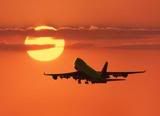
Image from http://www.freepatriot.com/imagewarehouse/airplane-departing.jpg

According to what I have gleaned from news stories, his "compelling reason" for traveling to Greece was his wedding. In isn't clear that the seriousness of his illness was clear before he flew.
What is more damning is his reaction to being informed of the seriousness in Italy. He apparently actively avoided requests not to fly and, to get around the no-fly list, flew to Canada before renting a car to turn himself in. (NPR audio. Julie Gerberding was trying to get a government flight to get him back to the US. It isn't clear whether he knew they were trying to get him back. He obviously didn't want to get treated in Italy.
This might really change the publics view on how possible carriers should be handled at airports. The patient's actions are probably going to capture the headlines over the next few days. I wonder if Homeland Security will as us for skin tests before we can board flights. As foolish as getting rid of all liquids but will make the public feel safer. (Imagine what will happen if this guy turns out to be Muslim. *sigh*)
You should quickly write an editorial both to point out what the realistic dangers are and why precautions are necessary. Think about it. It's a perfect educational 'Framing' moment.
This is shocking, even if it is a case of closed, rather than open, TB.
As far as I know, some countries do not even disinfect planes once passengers have disembarked.
Some authorities have linked this to 'airport malaria'.
I think this guy should be brought up on charges of reckless endangerment. That is clearly what he did.
I think that people who may have been exposed have a reason to sue him for the damages they have, including medical expenses to get tested, lost work, pain and suffering.
By being irresponsible, he is going to cause "the authorities" to be irresponsible too, and impose public health measures via military force. That will drive people underground and cause more trouble than it will help.
The airlines, the governments, and the WHO need to get their act together on methods for people who are infected like this to travel in a way that doesn't risk exposing other passengers. It doesn't take a lot, an isolation suit, HEPA filter everything exhaled.
If XDR-TB becomes widespread, you will see suicide bombers infecting themselves before blowing themselves up.
also damning: he and his doctor knew that he had the extensively drug resistant strain (XDR) BEFORE he took the trip:
http://www.ajc.com/health/content/health/stories/2007/05/29/0530meshtb…
"But it turned out his TB was resistant to the first-line drugs -- and the second-line drugs. So county officials stopped treatment. The man said he and his private doctor -- with the agreement of government health officials -- made plans for him to undergo cutting-edge treatment with specialists at National Jewish Medical and Research Center in Denver after his honeymoon."
Unless his doctor gave up on secondary antibiotics after trying only two, he already knew he had XDR.
This is shocking, even if it is a case of closed, rather than open, TB.
As far as I know, some countries do not even disinfect planes once passengers have disembarked.
Some authorities have linked this to 'airport malaria'.
This is realy shocking,
As I know, some countries do not even disinfect planes once passengers have disembarked.
http://www.marisglobal.com/