


A few weeks ago, I was notified that if I wished to continue blogging at Scienceblogs/National Geographic, I'd have to agree to new terms. After considering these terms, as well as the decision to ban pseudonymous blogging, I don't feel that the new management and I are on the same page. I have therefore decided to leave Scienceblogs.
I've had to put BioE on hiatus a few times over the past few years anyway, as my career moves in a different direction, and the odds are that my posts will be infrequent in the future. So it's as good a time to leave as any.
You can find me in the future at…
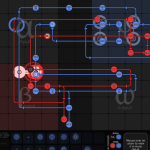
A few months ago I got an email from Zachtronics, creators of the Codex of Alchemical Engineering, about the new indie game called SpaceChem. It was billed as "an obscenely addictive, design-based puzzle game about building machines and fighting monsters in the name of science." What's not to love?
Here's a preview. . .
Science!
Game reviewer Quintin Smith loved it:
SpaceChem is a game where you build fabulous contraptions. It's about getting stuck into a massive puzzle, laughing at the optimism of what's expected of you, and then finally applying what might be the finishing touch to your…
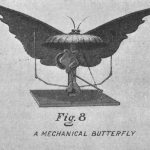
Check out this great slideshow of fascinating advertising novelties from 1911, over at Scientific American.
Recently, Scienceblogs/National Geographic decided it would no longer host pseudonymous science bloggers. As a result, many of my former colleagues have left. I think this decision was wrong. Read on for my reasons.
One: simple fairness. Several well-established pseudonymous bloggers had been active here for years. While it's perfectly reasonable to set up a media site from scratch and institute a "no pseudonymous blogging" policy at that time, it's quite another to change the rules and evict members of an established community. It violates my sense of fairness; it's why we usually expect…
This video from Xperia Studio very effectively conveys how data visualization can both leverage and challenge our conceptions of "reality." The night sky we've seen since childhood, like everything else we see, is just a tiny slice of the spectrum - only what we can perceive with our limited physiology. An app that lets us "see" otherwise invisible wavelengths is not merely a prosthesis that cleverly enhances our sensory perceptions, it's a tool to expand our worldview, by reminding us that what we see is only a limited subset of the whole: we could as easily see quite a different world, and…
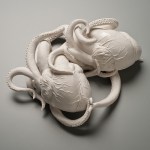
Entangled, 2010
handbuilt porcelain, cone 6 glaze
Kate MacDowell sculpts partially dissected frogs, decaying bodies with exposed skeletons, and viscera invaded by tentacles or ants. It's the imagery of nightmares, death metal music videos, or that tunnel scene in the original Willy Wonka (not a speck of light is showing, so the danger must be growing. . . ). But her medium - minimalist, translucent white porcelain - renders her viscerally disturbing subject matter graceful, even elegant. Some of her pieces, like Sparrow, below, play off the porcelain's resemblance to delicate bleached bone.…

Photo of Vermont highway courtesy of Kyle Cornell
Last week, I had my long-awaited vacation semi-ruined when, thanks to Hurricane Irene, my flight back from the West Coast was cancelled. I had to rent a car and drive across the country in a rush - not my favorite way to spend three and a half days. But based on what I saw passing through New York, and what I've heard about the damage in Vermont, I can't complain: flooding has overturned homes, isolated entire towns, and destroyed everything some families own.
Vermonters are a notoriously self-sufficient bunch, and I haven't seen that much…

Etsy seller bullseyebeads makes glass acorns and tops them with real acorn caps. I think they're adorable.
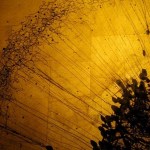
Gold Cortex
16 x 20, 2010
Greg Dunn
I used to have a beautiful gold Japanese folding screen, which was purchased by my great-grandmother's feisty sister on a trip in the 1920s. I loved the gold patina and the surprisingly modern impact it had on my wall. At the moment, it's loaned to a friend, but looking at Greg Dunn's artwork, I couldn't help but be reminded of the best aspects of my screen: the gold leaf, crisp black patterns, and way that the scene seemed half natural, half abstract.
The biggest twist Greg, a 6th year graduate student in neuroscience at the University of Pennsylvania,…
Under glass, a bare forest of pins
held down an army of insects in ragged rows. . .
--"The Expression of Emotion in Man and Insects," by Debora Greger (read the full poem at the Atlantic)
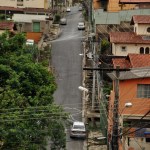
Chalk Outline Tree
Armando Fontes (graffiti) and Catia Rissi (photographer)
Armondo Fontes and Catia Rissi call their chalk outlines of cut urban trees a "collective denunciation as an environmental graffiti." Fontes, who lives in the city of Belo Horizonte in southeastern Brazil, saw that trees were being cut and the city was not replacing them. He decided to engage in a guerilla art protest:
With the stumps that remain after cutting the trees, Fontes draws what would have been the shadow of the tree that once existed there. "I thought to refer to the universe of the cartoon. The silhouette…
In a guest post at Scientific American, Rebecca Jablonsky says,
Kuhn de-legitimized the understanding of science as implicitly including objective reality, leaving room for theory to de-stabilize rituals of practice and produce authentic innovation-something that is certainly prized in both artistic and scientific communities alike.
Seriously - go read it and come back. It's short. I'll wait.
So I don't get it. While Jablonsky's post is well-written and thoughtful, and I basically agree with everything she says, and find the concepts interesting, I can't figure out who the post is intended to…
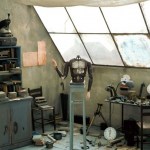
L'Automaton #06, 2010
Paolo Ventura
(zoom view available here)
Artist-photographer Paolo Ventura constructs and photographs miniature, dreamlike scenes. His Winter Stories represent the reminisces of an old circus performer. Above, a scene from the Automaton series captures a mysterious, half-built android. Who is the android's creator? When and where is this happening? Ventura's work is evocative precisely because it is so mysterious. (It turns out that Ventura's backstory for the Automaton series involves a lonely watchmaker in the Jewish ghetto of 1942 Venice - but still, that hardly…
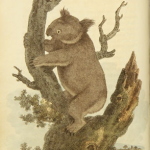
From 1810-11, architect and amateur naturalist George Perry published The Arcana, a lavishly illustrated, serial natural history magazine. Although Perry intended for the serial issues to be assembled by his subscribers into a book, only thirteen complete copies are known to survive today. More than a third of the known copies are in Australia - perhaps fittingly, as Perry was the first to publish an illustration of the koala (above).
Perry's work is not well known; in researching this post, all I could find online were auction listings and occasional references to a recent facsimile…
"Magnetic Field Outflows from Active Galactic Nuclei"
P.M. Sutter, P.M. Ricker, H.-Y. Yang, G. Foreman, D. Pugmire/ORNL
Wired has an article/webgallery of award-winning scientific visualizations which is worth a lunchtime visit. (Having trouble with Wired's interface? The videos collected there are the winners from SciDAC 2011's "Visualization Night" challenge, so you can also just watch them here.)
These visualizations are not your usual public-facing educational animation. Rather, they're just what you'd see at a scientific meeting - dry, functional, aimed at a specialist audience, and…
Annalisa Crannell, a professor at Franklin & Marshall, has a great essay at Inside Higher Ed on the math of perspective. Crannell, who thinks her students are generally more scared of drawing than they are of math, uses the "fencepost puzzle" to get her students working through the proportions that create realism:
We mathematicians tend to stare at the paper, hoping an answer jumps off the page at us. Artists pull out their pencils and start doodling, often stumbling upon a solution almost by accident. The artists have learned to overcome their fear of drawing something that is "wrong,"…
This little video from Abebooks is the closest I've ever gotten to flipping through a copy of the Codex Seraphinianus. What a truly weird book.
I particularly love it when the staid narrator reveals his "favorite" illustration - a roller skater murdered by a monstrous pen. What?!
The Codex reminds me of If You're Afraid of the Dark, Remember the Night Rainbow by Cooper Edens. My mom had a copy and I used to flip through it as a child, confused and not a little disturbed. I still took things too literally to appreciate the visual non sequiturs, combined with the nonsensical text ("If you…
FYI: longtime blogger-artist Glendon Mellow has teamed up with Kalliopi Monoyios to start a new artscience/sciart blog, Symbiartic, for Scientific American's blog hub. For a taste, check out this post on why cameras won't replace artists anytime soon.
What with all the buzz surrounding Bjork's Biophilia project, science films are so hawt right now! Don't know what I'm talking about? Then check out this weirdness:
Yeah. . . okay!
Anyway, some other science/film folks, the crew over at Imagine films, reached out to ask me to remind you that the deadline is approaching for your science films to be considered for this year's festival:
We are currently looking for short or feature length films to showcase at this years festival. Submissions should weave elements of real science into a fictional narrative and filmmakers from all backgrounds are…