

 cwhyte |
By Angela Leroux-Lindsey
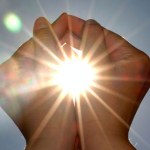
Hold out your hand: Look closely. If you're outside on a sunny day, you might see dust motes and pollen dance in the air, perhaps landing on your skin, and bright rays of sunlight peek between your fingers. To the naked eye, your skin provides a barrier between your body and these exterior elements. The light refracts around your palm, not through it.
But microscopically, the air is filled with particles that have the ability to traverse solid matter. Sunlight is actually composed of tiny “packets,” or quanta, of light called photons. Most structures built of wood or…
 jeure |
Big science is a massively collaborative endeavor. From the initial theoretical puzzles to the brilliant engineers that build on-of-a-kind machinery, experts come together to make discoveries happen. Case in point: We’re moving this 50-foot-wide physics experiment over 3,200 miles of land, sea, and river, starting on Long Island, NY and ending in Batavia, IL. Sometimes understanding the fabric of the universe requires a very technical and very long journey.
The 50-foot-wide muon ring assembled at Brookhaven Lab.
The experiment is called Muon g-2 (pronounced gee-minus-…
 jeure |
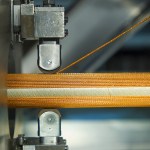
Magnets are neverendingly awesome, and superconductors may be the ultimate in cool—they are, after all, literally extremely cold. And not just anyone has the tools to weave superconducting magnets with compressed metallic thread. It's a more essential skill than you might think.
Ultra-cold superconducting magnets steer high-speed particles inside colliders, keeping the beams tight and guiding them smoothly through the curves of circular racetracks. But those magnets generally rely on iron, an intrinsically magnetic metal, for key structures. That works beautifully for the …
 cwhyte |
X-ray diffraction patterns reveal the orientation of fat crystals. The distribution and directionality of these crystal nanostructures (parallel to the shear field in C, randomly arranged in D) affects the flavor and texture of foods.
From butter in croissants to cocoa solids in chocolate, edible fats pack a flavor punch that delights like no other macronutrient we consume. Fats are the most energy dense macronutrients, providing more than twice as many kilocalories per gram as proteins or carbohydrates, which may be the reason we’ve developed a taste for them. Fats are an efficient method…
 cwhyte |
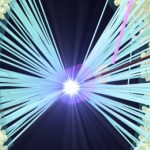
Particle collisions aren't the easiest thing in the world to explain, but one of our physicists took this challenge to the extreme. In another Ten Hundred Words of Science submission, Brookhaven Lab physicist Paul Sorenson explains his work studying quark-gluon plasma with the Relativistic Heavy Ion Collider.
Where I work, we slam together small things to break them into even smaller things until we have the smallest things possible. This is how we know what matter is made of. We gave names to the smallest things in matter like “up”, “down”, “strange”, “top”, and “bottom”. Each…
cwhyte |
Inspired by the internet comic “The Up-Goer Five”, which used only the 1,000 most commonly used words to describe the Saturn V Rocket, scientists across the internet are attempting to describe their work using the just this small set of words. And it’s tough! But one of Brookhaven’s atmospheric scientists was up to the challenge. Alistair Rogers, who works in our Environmental Sciences Department, gives it a go:
Understanding change at the top of the world so we’ll know what is going to happen later
When we drive cars and warm our homes we give out bad stuff that ends up in the air. The bad…
 kmcwalsh |
Theoretical physicist Raju Venugopalan
We sat down with Brookhaven theoretical physicist Raju Venugopalan for a conversation about “color glass condensate” and the structure of visible matter in the universe.
Q. We've heard a lot recently about a "new form of matter" possibly seen at the Large Hadron Collider (LHC) in Europe — a state of saturated gluons called “color glass condensate.” Brookhaven Lab, and you in particular, have a long history with this idea. Can you tell me a bit about that history?
A. The idea for the color glass condensate arose to help us understand heavy ion…
 jeure |
Brookhaven Lab physicist John Smedley wrote this post.
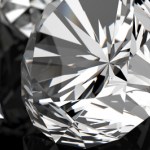
People use diamonds to cut concrete, sharpen knives, and jumpstart wedding plans. As a member of Brookhaven’s Instrumentation Division, I’m on a team that found that diamond also fits the bill for new components in cutting-edge tools we are designing for upgrades for the Relativistic Heavy Ion Collider (RHIC), future linear-accelerator light sources, the National Synchrotron Light Source (NSLS), and NSLS-II-- facilities that researchers from around the world are using to understand more about how the natural world works and how we can…
 jeure |
Ever imagined that an Xbox controller could help open a window into the nanoworld of groundbreaking physics? Well, check out the video above.
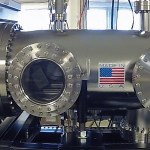
Brookhaven scientist Ray Conley designed that one-of-a-kind machine to grow (through a technique called sputtering deposition) atomically precise lenses that can focus x-rays to within one billionth of one meter, revealing the internal nanoscale structure of materials such as electric vehicle fuel cells.
When tweaking his recipe for these multilayer Laue lenses (MLL), Conley used to have to manually enter commands into a computer to move a crucial…
jeure |
See the way those smooth, amorphous blobs rapidly transform into textured honeycombs? Something similar is probably happening right now inside your laptop or smartphone’s battery, providing you with portable power.
But the cherished efficiency and portability of those compact lithium-ion batteries comes with a cost: each cycle of discharge/recharge degrades the material’s essential structure and ultimate longevity - you’ve probably noticed that your older electronics just don’t hold a charge like they used to. Preventing this persistent degradation requires insight into a process that plays…
 jeure |
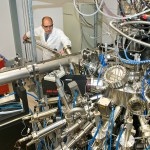
High-temperature superconductors (HTS), capable of storing and transmitting electricity with perfect efficiency, are a theoretical stumbling block. The mechanism underlying HTS behavior is a mystery, and the subject of significant contention and investigation among scientists. This puzzle, unlike headline-making unknowns such as dark energy (admittedly awesome and worth losing sleep over), could revolutionize our entire energy infrastructure. But before HTS materials can flood the electricity market, they need to work their magic closer to room temperature (high-temperature is a bit…
 cwhyte |
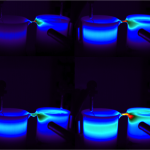
The term “floating water bridge” may sound nonsensical, but it’s the most logical name for a phenomenon that occurs when two beakers of water set slightly apart are zapped with high-voltage electricity and the water molecules jump across the gap to connect and form a thin thread of water. The molecular structure that suspends this liquid bridge has stumped scientists for over a century.
Now, a team of scientists has peered into floating water bridges with high-energy x-rays using the Advanced Photon Source (APS) at Argonne National Laboratory. Their work, “Floating water bridges and…
 jeure |
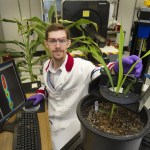
Brookhaven's Joe Gettler interviewed biologist Ben Babst about his pioneering plant biology research - here's an excerpt:
Ben Babst has seen things that no one else has ever seen before. A plant biologist in Brookhaven Lab’s Biosciences Department, Babst is among pioneering researchers who are some of the first in the world to study plants using a technique called positron emission tomography or PET imaging, which is more commonly used to diagnose cancer and study brain activity. With this innovative use of PET imaging technologies, Babst has actually watched plants shift nutrients from their…
 jeure |
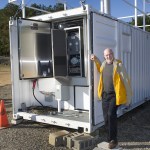
Here's the latest field report from the MAGIC climate research collaboration:
Greetings from Honolulu! I had a wonderful trip over – mostly calm seas (we had a bit of rock and roll the last day out, but it wasn’t too bad), nice weather, some nice clouds to observe, and MAGIC data! In port in LA was busy, as usual, with MAGIC personnel getting off and on the ship, and others coming in for installation. Most of the instruments are up and running well, and of course there are a few that are being a bit problematic, but that’s not unusual for this point in a deployment.
Weather balloon launches…
 jeure |
One of physics’ greatest tricks is polarization. Take magnets, for example, such as those commonly found on refrigerators holding up shopping lists and Christmas cards. These have the familiar north/south polarization that we can experience as attraction and repulsion. That magnetic orientation persists all the way down to the individual molecules, which actually align to cause the larger-scale behavior.
This polar phenomenon is caused by ferromagnetism, a defining quality of some particles that gives them an intrinsic polarity – what scientists call a dipole moment. And remarkably, that…
 jeure |
The positive and sometimes unexpected impact of particle physics is well documented, from physicists inventing the World Wide Web to engineering the technology underlying life-saving magnetic resonance imaging (MRI) devices. But sometimes the raw power of huge experiments and scientific ambition draw the recognition of those seeking only the most extreme and impractical achievements on Earth.
Brookhaven National Laboratory’s Relativistic Heavy Ion Collider (RHIC) smashes particles together to recreate the incredible conditions that only existed at the dawn of time. The 2.4-mile…
 kmcwalsh |
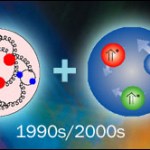
RHIC, the Relativistic Heavy Ion Collider at Brookhaven Lab, found it first: a “perfect” liquid of strongly interacting quarks and gluons – a quark-gluon plasma (QGP) – produced by slamming heavy ions together at close to the speed of light. The fact that the QGP produced in these particle smashups was a liquid and not the expected gas, and that it flowed like a nearly frictionless fluid, took the physics world by surprise. These findings, now confirmed by heavy-ion experiments at the Large Hadron Collider (LHC) in Europe, have raised compelling new questions about the nature of matter and…
 jeure |
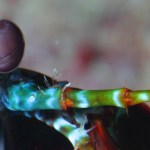
Mantis shrimp, or stomatopods, are the planet’s most powerful bare-knuckle boxers, armed with dactyl clubs that literally fly faster than a speeding .22 caliber bullet. Each strike boils the surrounding water and creates a tiny cavitation bubble, which then implodes with a sonic pop that can render targets unconscious. Consider that: if the strike itself doesn’t get you, its aftershock will. And that’s just the variety of stomatopod equipped with blunt fists - others launch their lance-like arms to pierce prey.
These little lobster cousins, usually between 4 and 12 inches…
 jeure |
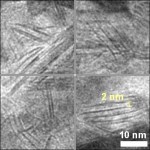
With nanotechnology rapidly advancing, the sci-fi dream of a Star Trek replicator becomes increasingly less fantastic. But such radical technology would, in theory, require the kind of subatomic manipulation that far exceeds current capabilities. Scientists lack both the equipment and the fundamental knowledge of quantum mechanics (the Standard Model, for all its elegance, remains incomplete) to build items from the raw stuff of quarks, gluons, and electrons . . . but what about alchemy?
Even Isaac Newton, credited with the dawn of the Age of Reason, felt the mystical draw of alchemy,…
jeure |
Building 3D images gets trickier with objects bilions of times smaller. (courtesy Electric-Eye on Flickr)
Let's start with a number, by chance a palindrome: 1441. Imagine taking that many photographs of a single object, a soccer ball, say - obsessively capturing it from every angle to expose all the details. Those 1441 images provide all the evidence needed to illustrate and understand the three dimensional structure of that soccer ball. Each shot reveals another curve of the sphere, another line in the checkered pattern, another scuff or scratch along the surface.
An adept programmer or…