


Probably not.
All right, now that you know my conclusion, let's see how to get there with data. First, some background.
Let me give very quick overview of Bitcoin in this context. (There are many comprehensive overviews elsewhere.) Bitcoin is an ongoing ledger of transactions of along the lines of "This guy had 5 Bitcoins, and he sent 2 of them to that guy. Now he has 3 Bitcoins." The transaction ledger is public, which prevents people from sending coins they already sent - the ledger rejects invalid transactions. Everyone on the network has a copy of the ledger. New transactions are appended…

I had an interesting question posed to me recently: how frequently does the sun emit photons with an energy greater than 1 TeV?
All of you know about the experiments going on at the LHC, where particles are accelerated to an energy which is equivalent to an electron being accelerated through a potential difference of trillions of volts (which is what a "trillion electron volts" - a TeV is). During the ensuing collisions between particles, high-energy TeV photons are produced. Of course everything is emitting light in the form of blackbody radiation all the time. Human beings emit mostly long-…
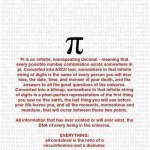
George Takei posted the following thing to Facebook recently:
It got reposted by a bunch of people and provoked a tremendous amount of discussion (for a math topic, anyway), much of which was somewhere in the continuum between merely wrong and psychedelically incoherent. It's not a new subject - a version of the image got discussed on Stack Exchange last year - but it's an interesting one and hey, it's not all that often that the subtle properties of the set of real numbers get press on Facebook. Let's do a taxonomy of the real numbers and see what we can figure out about pi and whether or…

Why is the sky blue? It's a classic question - probably the classic question of the genre of explanatory popular physics. The famous short version of the answer is that Rayleigh scattering by air molecules affects short-waveength light more than long-wavelength light, and so blue light tends to get scattered in random directions to create the diffuse blue we know and love. But like almost every answer physics can give, the answer leads to more questions. Why does Rayleigh scattering scatter short-wavelength light more strongly? This is a fairly involved question to answer from first…
Question from a reader:
Pick up a comb, rub it with your hair and you have got some electric charge. Now shake it and you are generating an electromagnetic wave. Am I right?
Yes indeed. So why don't we see light emitted when we brush our hair? Let's run some numbers. If you wiggle around an electric point charge, electromagnetic radiation is emitted. The power carried by this radiation is given by the Larmor formula:
$latex \displaystyle P = \frac{e^2 a^2}{6 \pi \epsilon_0 c^3}&s=1$
Well, a comb isn't a point charge. But if we're just interested in an order-of-magnitude estimate, we can…

A reader emailed me a fun question from a physics exam he took, along these lines:
A car driver going at some speed v suddenly finds a wide wall at a distance r. Should he apply brakes or turn the car in a circle of radius r to avoid hitting the wall?
My first thought was that surely the question wasn't doable without more information, but it turns out that we do have enough to give a straightforward answer. Let's take the "turns in a circle" and "slams on brakes" scenarios one at a time.
Turns in a circle:
Velocity is a vector whose magnitude is the speed and whose direction is the direction…
The Theoretical Minimum: What You Need to Know to Start Doing Physics
When this book appeared in my mailbox I judged it by its cover and was a little concerned. The problem with the cover is the name of one of the authors: Leonard Susskind. He's an extremely talented physicist and writer, to be sure, but he's a string theorist. Worse, he's one of the major names behind the string theory landscape idea. Though not a high-energy physicist myself and thus not really being terribly qualified to judge, I tend to classify the string theory landscape as somewhere between speculative and…

The human eye is sensitive to a portion of the electromagnetic spectrum that we call visible light, which extends from around 400 to 700 nanometer wavelength, peaking in the general vicinity of greenish light at 560 nanometers:
Here's the intensity (formally: power per area per unit solid angle per unit wavelength - whew!) of the radiation emitted by an object with the temperature of the sun, plotted as a function of wavelength in nanometers according to Planck's law:
$latex B_\lambda(T) =\frac{2 hc^2}{\lambda^5}\frac{1}{ e^{\frac{hc}{\lambda k_\mathrm{B}T}} - 1}&s=1$
Spectral radiance (…
This post is political. As always, physics readers who don't care about politics are encouraged to skip it. I've got an actual physics post going up tomorrow.
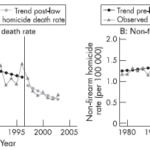
Mark and I have been conducting a debate/discussion over gun control in the United States. For the first round, here's his post and my response. Here's his second round post, and this post is my response.
First, let me summarize where the debate stands. We have four main topics as set forth in Mark's posts: gun violence in "ordinary" crime, gun violence in the context of mass shootings, suggestions for gun control, and miscellaneous…

The first major computer-animated film was Toy Story. It had a few human characters, most prominently Andy (who spends most of the film wearing a hat) and Sid (who sports a buzz cut). The focus of the film is on the plastic toys.
One of the major reasons for this is the fact that toys are pretty simple. They have just a few moving parts for the computer to keep track of during the rendering process. People have many more. Every hair on a person's head really consists of many moving parts, since it can bend anywhere along its length to various degrees. And there are around a hundred thousand…

Ok, so this isn't really physics as such, but it's pretty fascinating. There's a very large online community called Reddit in which users submit links which interest them. These links come with two little arrows beside them, and the users can vote the link up or down. Here's a screenshot of how the website looks to me at the time of this writing:
As I visit on different days or on different times on the same day, the links and their order changes. This keeps the site fresh and news-y, at least if you like your news full of cat memes. It's pretty clear that the ordering of these links is both…
Recently a number of ScienceBloggers including Mark Hoofnagle of Denialism and myself have written posts about guns and gun control in the United States. While the internet tends to generate more heat than light, we decided that it might be worth having a discussion and debate about the subject. His opening salvo is here, at his blog. I recommend reading it first. He argues that substantial new gun control is both necessary and helpful, and I will generally disagree. As always, I apologize to my physics readers for yielding to the temptation to wax political. I know I dislike it when my…
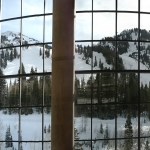
I'm sitting in a hotel in Utah at the PQE 2013 conference. As I write this, the temperature is a rather brisk 19F. (For everyone else in the world, -7.2C) That's not cold at all to some of you, but some of you didn't grow up in south Louisiana.
Once a year they let us grad students out of the basement!
Either way, on the Kelvin scale the weather here is still a balmy 267 degrees above absolute zero.
Which is as cold as it gets, right? Right. As a result, I've seen a lot of hubbub online about a new result published in the journal Science: Negative Absolute Temperature for Motional…
Over the Christmas break I traveled to Louisiana to visit my family and to Georgia to visit my wife's family. In both cases (especially in the Georgia case!) the overarching theme was the consumption of delicious homemade food in quantities which were somewhere between preposterous and superhuman. I'm not the only one with this experience. The very first TV commercial I saw after the stroke of midnight at the dawn of this year was for a weight loss program. So was the second commercial.
"Eh," I used to scoff, "Calories in < calories out. Simple as that. It's basic thermodynamics." But…
My last post was political, and to be quite honest I sort of hate it when my favorite non-political writers decide to break out the soapbox and flog their views in public. Since I have just done so, let's at least partially make up for it by another post talking about something near and dear to my heart - the propagation of light. In this case, let's talk about shadows. Here's a cool one from Wikipedia:
The basic idea of a shadow is simple. You have a light source, rays of light come out of it, some of the rays hit an obstacle, and the shadow is the region where the light has been blocked.…
The shootings in Connecticut are a monstrous act of incomprehensible horror. For all the atrocities visited upon the world in the last hundred years, this is still without doubt among the most appallingly evil acts ever performed by a single person. And he is dead, and beyond the reach of human justice.
Normally I'd wait for the story to wane and passions to cool before commenting on the nakedly political aspects of a catastrophe, but this story is so hideous, so devastating, that many people have been viscerally compelled to speak: How can the permissive laws preferred by people like you…

Wow, lots of moon posts these days. This one is going to talk about a question left by commenter ppnl a couple posts back:
ppnl: So could you use a pair of one meter telescopes a kilometer apart to create a point of constructive interference on the moon as small as what would have been created by a kilometer size telescope?
Me: I don’t think so. The whole thing about interferometers having the resolution of a telescope the size of the baseline is sort of a hand-waving way of sweeping of lot of technical detail under the rug. You could make some pretty closely spaced interference fringes…
This wonderful headline showed up in my Facebook feed: U.S. 'planned to blow up Moon' with nuke during Cold War era to show Soviets might. This was a bit eyebrow-raising. Dr. Strangelove was a slightly unfair caricature, but the Cold War really did have a better-than-average share of nuttiness. Still - blowing up the moon? Surely not.
And it was in fact surely not. The article itself says there was a never-pursued idea to detonate a nuke on the lunar surface. To an earthbound observer, it would have meant a bright, brief pinprick of light on the face of our celestial neighbor and not much…
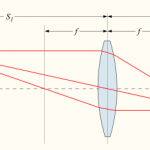
My post about seeing a laser from the moon mentioned the fact that the beam from a laser spreads as it propagates. We're used to seeing this from a flashlight - the beam from a flashlight across a room is much smaller than the beam from a flashlight across an open field. Lasers spread too, though not by as much. But spread they do, and over the quarter of a million miles to the moon, a laser will spread quite a bit. The spread of a laser (which is more accurately called its angular divergence) can be reduced though, which is useful if you want your beam diameter to be smaller at long…
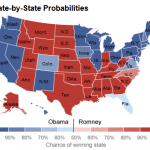
If you're one of the probably four people who haven't heard about Nate Silver, you've missed out. He's a statistics guy who runs the always interesting 538 Blog at the New York Times. He made his name in baseball statistics, Moneyball style, and moved into politics where he made state-by-state statistical forecasts of the last couple national elections. His track record is pretty good. The final prediction for this election was an Obama win with 90.9% probability, and it duly came to pass. On a state-by-state basis, he seems to have been correct in every case. (Much of this was blind luck, as…