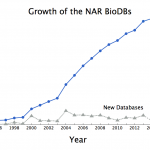
Is it crazy to consider community curation?
Category: Bioinformatics
or is it just an idea that's ahead of the curve?
Posted by Sandra Porter at 9:37 AM • 1 Comments
My thoughts on biology, teaching, life, and exploring the living world via the digital one. Only my opinions are represented by these postings, they do not represent the viewpoints of any funding agency or Geospiza, Inc.
I am a microbiologist and molecular biologist turned tenured biotech faculty turned bioinformatics scientist turned entrepreneur. My passion is developing instructional materials for 21st century biology (Geospiza Education).
e-mail digitalbio at gmail.com
June 24, 2008
Category: Bioinformatics
or is it just an idea that's ahead of the curve?
Posted by Sandra Porter at 9:37 AM • 1 Comments
June 23, 2008
Category: Biology (Macroscopic )
It was a -1 tide on Sunday and great entertainment for people and birds.

Posted by Sandra Porter at 9:01 AM • 2 Comments
June 21, 2008
Category: Seattle
Arrgh. Fremont is just crawling with Pastafarians.
Photos below the fold.
Posted by Sandra Porter at 5:01 PM • 12 Comments
Category: Genomics
Are you curious about Second Life?
Next week you can satisfy your curiosity and learn about the personal genomics frontier at the same time.
Bertalan Meskó announced that Erin Davis (science writer) and Joyce Tung (human geneticist) from 23andMe will be giving a presentation next week in Second Life on personalized genetics.
Posted by Sandra Porter at 1:40 PM • 5 Comments
June 20, 2008
Category: Dog
"Let this sleepin' dog lie, son. Dog-gone it, I'm dog tired. I'm tired of leading the dog's life and fightin' likes cats and dogs against cats and dogs, a young pup's doggin' my trail tryin' to become top dog. I'm going to the dogs in a dog eat dog world, son. I... I'm so far over the hill... I'm on the bottom of the other side. "- Wylie Burp from Fievel Goes West
I don't know why I find these stories about cloning puppies so interesting, but...
Posted by Sandra Porter at 1:15 PM • 0 Comments
Category: Databases
It's pretty common these days to pick up an issue of Science or Nature and see people ranting about GenBank (1). Many of the rants are triggered, at least in part, by a wide-spread misunderstanding of what GenBank is and how it works. Perhaps this can be solved through education, but I don't think that's likely. People from the NCBI can explain over and over again that some of the sequence databases in GenBank are meant to be an archival resource (2), and define the term "archive," but that's not going to help.
Confusion about database content and oversight is widespread in this community with good reason.
Posted by Sandra Porter at 8:51 AM • 21 Comments
June 19, 2008
Category: Genetics & Molecular Biology
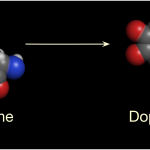
Right or wrong, the word "dopamine" always conjures up images in my head of rats pushing levers over and over again, working desperately hard to send shots of dopamine into their tiny little rodent brains.
Posted by Sandra Porter at 3:52 PM • 7 Comments
June 18, 2008
Category: Databases
In a recent post, I wrote about an article that I read in Science magazine on the genetics of learning.
One of things about the article that surprised me quite a bit was a mistake the authors made in placing the polymorphism in the wrong gene. I wrote about that yesterday. The other thing that surprised me was something that I found at the NCBI.
Posted by Sandra Porter at 8:19 AM • 16 Comments
June 17, 2008
Category: Genetics & Molecular Biology
In its simplest sense, we imagine that learning occurs through a series of positive and negative rewards. Some actions lead to pleasure, others to pain, and it seems reasonable to expect that people will repeat the actions with pleasurable results and avoid those that ended in pain. Yet, we all know people who aren't deterred by the idea of punishment. We all know people who never seem to learn.
Could there be a physical reason, hidden in their genes?
Posted by Sandra Porter at 5:11 PM • 7 Comments
June 16, 2008
Category: Dog
Pet cloning is back!
Pets are funny things. Some owners find their pets to be closer than some human friends, other owners never really bond with their pets at all.
BioArts, a California biotech company, founded by ex-CEO of the now defunct Genetic Savings & Clone, is counting on the strength of those human-dog emotional bonds .
Posted by Sandra Porter at 3:30 PM • 5 Comments
June 14, 2008
Category: Science culture
A few months ago, I made a new page for a more complete blogroll. Now, that my class is over and I have a break from traveling around leading workshops, I'm ready to add some links.
Other bloggers; Bora, Mike the Mad, PZ, Janet, DM, and Abel; use a nice technique called "blogroll amnesty" where they offer other writers a chance to be on their blogroll. I like that.
So, to paraphrase Mike:
Posted by Sandra Porter at 12:10 PM • 7 Comments
June 12, 2008
Category: Biotechnology
Students in the United States take many convoluted and unnecessarily complicated paths when it comes to finding careers in biotechnology. If Universities and community colleges worked together, an alternative path could benefit all parties; students, schools, industry, and the community.
The image below illustrates the current paths and the approximate time that each one takes.
Posted by Sandra Porter at 2:52 PM • 9 Comments
June 11, 2008
Category: Metagenomics
Hey students: if you are looking for a summer internship in marine metagenomics and you can get your application together before June 16th, Jonathan Eisen posted information about an open position on his blog.
It also looks like he's looking for post-docs (see the side bar on the right of this page.)
Posted by Sandra Porter at 3:25 PM • 2 Comments
June 9, 2008
Category: Biology (Macroscopic )
What are you learning in school?
Posted by Sandra Porter at 4:07 PM • 2 Comments
June 4, 2008
Category: Metagenomics
Have you ever wondered what kinds of viruses can be found in human waste?
Mya Breitbart and team have been sequencing nucleic acids from fecal samples in order to find out. You might expect that we'd find viruses that infect humans or viruses that infect the bacteria in our gut.
I wouldn't have expected to learn the result that they found.
Posted by Sandra Porter at 1:07 PM • 6 Comments
Category: web resources
I'm in Berkeley right now at the annual Bio-Link Summer Fellows forum. We're getting to hear talks from people in the biotech industry, listen to enthusiastic instructors describe their biotech programs and ideas, and try out new educational materials.
Yesterday, two speakers (Damon Tighe and Jason Baumohl) from the Joint Genome Institute in Walnut Creek, CA, gave a fun talk about DNA sequencing and sequence assembly.
They also showed some very nice Flash animations, made by Damon Tighe, at the JGI, that illustrate how DNA sequencing is done. There's no sound, but the animations are quite nice. The site also has some step by step diagrams describing the process.
I think the animations and diagrams would be a great help to students who are engaged in DNA sequencing projects.
Posted by Sandra Porter at 10:30 AM • 2 Comments
June 3, 2008
Category: Bio-Link
A little over ten years ago, Dr. Elaine Johnson obtained funding from the National Science Foundation to start Bio-Link, an Advanced Technology Education center, focused on biotechnology. Since that time, Dr. Johnson has become a national leader in biotech education, enlisting the country's top educators and industry captains to ensure that community college students receive a quality education and the best preparation possible for entering the workforce.
In this radio interview from Tech Nation, Dr. Johnson talks with Dr. Moira Gunn about the easiest way to a biotech career.
Posted by Sandra Porter at 6:08 PM • 0 Comments
June 1, 2008
Category: teaching
In part I, I wrote about my first semester of teaching on-line and talked about our challenges with technology. Blackboard had a database corruption event during finals week and I had all kinds of struggles with the Windows version of Microsoft Excel. Mike wrote and asked if I thought students should be working more with non-Microsoft software and what I thought the challenges would be in doing so.
I can answer with a totally unqualified "it depends."
Posted by Sandra Porter at 8:19 PM • 25 Comments
Category: Science culture
This month's edition of Medicine 2.0 focuses on connections. You'll learn how new technologies are empowering patients by connecting them with their own health records, connecting patients and paramedics with doctors, and connecting doctors with each other.
Nothing connects like Web 2.0.
Let's hit the Midway!
Posted by Sandra Porter at 8:03 PM • 3 Comments
May 30, 2008
Category: Science careers
For aspiring technicians, who live in the right parts of the country, biotech jobs are out there and waiting. But what if you don't want to be a technician? Or what if you're in graduate school, in a post-doc, or have a Ph.D. and simply want to do something else?
Where do you begin?
How do you know what sorts of positions are going to be a good match for your skills and talents? Is the outlook really as bleak as it may seem?
Posted by Sandra Porter at 9:15 AM • 12 Comments
Category: books
I got my copy of "A short guide to the human genome" by Stewart Scherer today from Cold Spring Harbor Laboratory Press (2008, ISBN 978-087969791-4). Usually, I would wait until after I've read a book to write a review, but this book doesn't require that kind of study. As soon I skimmed through it and read some of the questions and answers, I knew this would be the kind of quick reference that I would like to have sitting above my desk.
Posted by Sandra Porter at 12:30 AM • 3 Comments
May 29, 2008
Category: Genetics & Molecular Biology
RFLP is an acronym that stands for "Restriction Fragment Length Polymorphism." That's quite a mouthful and once you've said this phrase a few times, you realize why we use the initials instead.
I know a Restriction Fragment Length Polymorphism sounds like something that must be impossibly complicated to understand, but if we take the name apart, it's really not so bad.
Posted by Sandra Porter at 6:52 PM • 0 Comments
Category: Science careers
"Why won't biotech companies hire people with Ph.D.s to be technicians?"
"I already have a Ph.D., how do I find a job?"
These were some of the questions that commenters left after my earlier posts (here, here and here) on biotechnology workforce shortages.
Unfortunately, for these students and post-docs, the shortfall of employees in the biotech industry is largely a shortfall of technicians. It is a sad thing that promoting science careers can have the unintended consequence of creating a surplus of unhappy post-docs and even more unhappy graduate students. Perversely, many of the efforts to expand and improve science education often don't reach the students who'd be happy to be technicians. Both groups get misled by the incorrect notion that science jobs require a Ph.D.
I'll tackle the job searching question in a later post, for now, let's focus on why it is that having a Ph.D. could make job searching harder.
Posted by Sandra Porter at 11:32 AM • 16 Comments
May 28, 2008
Category: Genomics
After leading the Human Genome Project and the National Human Genome Research Institute at the NIH for many years, Francis Collins is retiring.
No matter what you think of Francis Collins, he's been successful in getting the genome project done and he's done some amazing things during the 15 years that he's headed NHGRI.
My friend, Dr. Joan Messer, told me many times about the hours he spent talking with students at one of the AAAS meetings. I will always remember him from the NWABR fund-raising dinner where he pulled out his guitar and had the entire audience singing about DNA.
Posted by Sandra Porter at 3:31 PM • 0 Comments
Category: teaching
On-line courses were a still a new phenomenon when I was teaching full-time. Our school was pretty gung-ho about on-line education but many instructors were skeptical, some were still lamenting having to learn how to use a computer and losing the services that used to be provided by departmental secretaries. Other instructors simply distrusted the entire idea, seeing distance learning as the equivalent of an educational scam, a kind of "get rich quick scheme" that would allow the school to collect more tuition dollars without paying instructors.
I never did teach an on-line course during my years as a tenured faculty member but I did take an on-line class in on-line teaching.
Posted by Sandra Porter at 2:00 PM • 2 Comments
Category: Science careers
Where have all the flowers gone?
Long time passing
Where do all the flowers gone?
Long time ago
Where do all the flowers gone?
Young girls picked them everyone,
When will they ever learn? When will they ever learn?
- Pete Seeger
Where do graduate students and post-docs go when they decide it's time to leave the pipeline? And, if they're thinking about going, how do they find a path into something new?
Posted by Sandra Porter at 8:49 AM • 14 Comments
May 27, 2008
Category: Science careers
In part I, I wrote about the shortage of technicians in the biotechnology industry and the general awareness that this problem is getting worse. This part will address the challenge of getting more students into programs that will prepare them for jobs in the biotech field. I've also been asked to write a bit more about finding jobs in companies, that post will be a bit later. Before proceeding, there are two points that need a bit of discussion. The first point is the whether there's a shortage at all and the second applies to the kind of shortage.
It's hard to see the forest when you're deep in the woods
Biotech workforce shortages are not distributed evenly. When you live in an area where companies are laying off large numbers of people, the idea of a shortage is a bit difficult to accept. Certainly, the people in Rhode Island might be skeptical. When a large employer like Amgen cut 20% of the local work force last fall, 300 people ended up on the streets looking for work.
Posted by Sandra Porter at 4:44 PM • 10 Comments
Category: Science education
Students, teachers and scientists converge tommorrow morning from all around the Puget Sound region and elsewhere in Washington to share their experiences and talk about science. The students will present posters, science-themed music, art, drama, and many different types of projects that involved first-hand research and investigation. Scientists from the local biotech companies and research institutions talk with the students and judge the projects.
The public viewing time is tomorrow, May 28th, between 9 am-12 noon at the Meydenbauer Center. More information can be found here.
This video is a great snapshot of a Biotech Expo from the past.
Posted by Sandra Porter at 3:59 PM • 0 Comments
May 22, 2008
Category: Science culture
On June 1st, I'll be hosting the next edition of Medicine 2.0, a carnival devoted to exploring the impacts of web 2.0 technologies on medicine and medical practice.
All topics that consider the impacts of web 2.0 on medicine and healthcare are fair game.
If you have an article that you think fits the description, feel free to submit it to me, either via e-mail digitalbio at gmail.com or through the fancy blog carnival submission form.
Posted by Sandra Porter at 3:18 PM • 0 Comments
May 9, 2008
Category: Science careers
Workforce shortages are a growing problem in the biotech industry. Communities are concerned that a lack of trained workers will either keep companies away or cause companies to move. If companies do have to move, it's likely those jobs might be lost forever, never to return. According to Robert Reich, former U.S. secretary of labor, now a professor at UC-Berkeley, biotech companies that can't hire in the U.S. will recruit foreign workers or open research centers overseas (Luke Timmerman, Seattle PI).
Posted by Sandra Porter at 8:00 AM • 19 Comments
May 8, 2008
Category: Plant biology
Dave Robinson and Joann Lau from Bellarmine College in Kentucky are going to be describing their student project in a free webinar next Friday, May 16th. Their students clone GAPDH (Glyceraldehyde 3-Phosphate Dehydrogenase) genes from new plants, assemble the DNA sequences, and submit them to the NCBI. Here's an example.
Plus, since GAPDH is a highly conserved, it's a great model for looking at evolution.
You can get more information and register here.

The cool thing about plants is that there's lots of material to work with.
Posted by Sandra Porter at 7:36 PM • 3 Comments
Category: Bio-Link
Community colleges are such extraordinary places that even California's governor, Arnold Schwarzenegger credits his time at Santa Monica community college as one of the secrets to his success.
From the SF Chronicle:
"People always ask me 'What is the secret of your success?' " he said Tuesday. "I always say, 'Come to America. Go to community college. And marry a Kennedy. It's all very simple.' "
HT to Jim DeKloe.
Posted by Sandra Porter at 12:30 PM • 1 Comments
May 1, 2008
Category: Genomics
Good news! Good news!
Last week the Senate passed the Genetic Nondiscrimination Act (GINA). This week it was passed by the House. It only needs one signature and GINA will become law.
For years, those of us who teach genetics have had to caution students about genetic testing. The biggest reason was the fear that having a genetic test would cause them to lose their health insurance.
Posted by Sandra Porter at 3:51 PM • 8 Comments
Category: Biology (Macroscopic )
Yesterday morning I was sitting at conference table, downing coffee to keep my eyes open, when I heard someone say that it's springtime now and the snakes are waking up. Well, those kinds of statements at the breakfast table do have a way of getting my attention.
Posted by Sandra Porter at 2:07 PM • 10 Comments
Category: PubChem
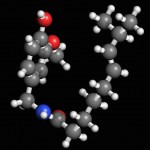
APRIL was so much fun, that I thought I should find a molecule for May. I searched both the Gene database, the structure database, everywhere, without any luck.
Finally, I decided to change the search and use the date instead of the name of the month. And here we have it, straight from PubChem. A molecule for May. 05012008 is the compound substance ID.
Posted by Sandra Porter at 8:42 AM • 6 Comments
April 27, 2008
Category: viruses
A potential link between lung cancer and human papilloma virus may make parents even more glad about vaccinating their children with Gardasil®. Not only are the children protected against viruses that commonly cause cervical cancer, they may be protected against some forms of lung cancer as well.
The April 25th version of Nature News reports (1) that two viruses, HPV (Human papilloma virus) and measles virus, have been found in lung tumors.
Posted by Sandra Porter at 5:50 PM • 10 Comments
April 26, 2008
Category: molecular structures
Over 2600 genetic diseases have been found where a change in a single gene is linked to the disease. One of the questions we might ask is how those mutations change the shape and possibly the function of a protein?
If the structures of the mutant and wild type (normal) proteins have been solved, NCBI has a program called VAST that can be used to align those structures. I have an example here where you can see how a single amino acid change makes influenza resistant to Tamiflu®.
This 4 minute movie below shows how we can obtain those aligned structures from VAST and view them with Cn3D.
Posted by Sandra Porter at 1:21 PM • 2 Comments
April 24, 2008
Category: Genomics
Bill Gates, Eric Lander, Maynard Olson, Leena Peltonen, and George Church fielded questions last night at a fascinating panel discussion on personal genomics at the University of Washington.
We were fortunate to be in the audience. I'll share some of the questions and answers, in some cases shortened and paraphrased.
Posted by Sandra Porter at 10:41 AM • 10 Comments
April 22, 2008
Category: Bioinformatics
One of my favorite web 2.0 technologies is the webinar. When you work at a company and not a University, with constant seminars, it gets a bit harder to hop on a bus and travel across town to learn about new things. Webinars are a good way to fill that gap. I grab my coffee cup, put on my headphones, and I get to listen to someone tell me about their work for an hour and show slides over the web. It's nice.
Our company is even going to be involved in two webinars in the next two months. One of us is giving an Illumina webinar tomorrow on managing Next Generation Sequencing data. A description of the webinar and digital gene expression workflows is here.
Next month, yours truly will be assisting (if needed) in a science education webinar on cloning novel plant genes and using bioinformatics to sort out good and bad data and figure out what you've cloned. You can register for that one here.
Posted by Sandra Porter at 3:36 PM • 2 Comments
April 17, 2008
Category: sequence analysis
In the class that I'm teaching, we found that several PCR products, amplified from the 16S ribosomal RNA genes from bacterial isolates, contain a mixed base in one or more positions.
We picked samples where the mixed bases were located in high quality regions of the sequence (Q >40), and determined that the mixed bases mostly likely come from different ribosomal RNA genes. Many species of bacteria have multiple copies of 16S ribosomal RNA genes and the copies can differ from each other within a single genome and between genomes.
Now, in one of our last projects we are determining where the polymorphic bases map within the structure of the 30S ribosomal subunit (see a video for background information on ribosomes here).
This video shows how we align the sequences and find the polymorphic sites in the three dimensional structure.
Posted by Sandra Porter at 8:00 AM • 2 Comments
April 16, 2008
Category: molecular structures
Ribosomes are molecular machines that build new proteins. This process of synthesizing a protein is also known as translation.
Many antibiotics prevent translation by binding to ribosomal RNA. In the class that I'm teaching, we're going to be looking at ribosome structures to see if the polymorphisms that we find in the sequences of 16S ribosomal RNA are related antibiotic resistance.
This is related to our metagenomics project where we investigate the polymorphisms we find in 16S ribosomal RNAs.
Posted by Sandra Porter at 7:54 PM • 2 Comments
April 11, 2008
Category: Bioinformatics
I know some of you enjoy looking at data and seeing if you can figure out what's going on.
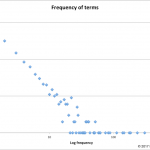
For this Friday's puzzler, I'm going to send you to FinchTalk, our company blog, to take a look at lots of data from a resequencing experiment that was done to look for SNPs and count alleles. The graph is at the end of the post.
The graph shows data from 4608 reads (sequenced from both strands, forward and reverse). And there are some interesting patterns. Can you figure them out?
Posted by Sandra Porter at 8:23 AM • 0 Comments
April 9, 2008
Category: Genetics & Molecular Biology
You can find out. Blaine Bettinger, the Genetic Genealogist has a fun little quiz.
Posted by Sandra Porter at 5:30 PM • 0 Comments
April 8, 2008
Category: molecular structures
I love using molecular structures as teaching tools. They're beautiful, they're easy to obtain, and working with them is fun.

But working with molecular structures as an educators can present some challenges. The biggest problem is that many of the articles describing the structures are not accessible, particularly those published by the ACS (American Chemical Society). I'm hoping that the new NIH Open Access policy will include legacy publications and increase access to lots of publications about structures.
Posted by Sandra Porter at 2:01 PM • 11 Comments
April 4, 2008
Category: Ask Dr. Science
This morning I had a banana genome, an orange genome, two chicken genomes (haploid, of course), and some fried pig genome, on the side. Later today, I will consume genomes from different kinds of green plants and perhaps even a cow or fish genome. I probably drank a bit of coffee DNA too, but didn't consume a complete coffee genome since my grinder isn't that powerful and much of the DNA would be trapped inside the ground up beans.
Of course, microbes have genomes, too. But I do my best to cook those first.
So, what is a genome? Is it a chromosome? Is it one of those DNA fragments or sequences that people are always writing about?
Posted by Sandra Porter at 12:45 PM • 21 Comments
April 3, 2008
Category: Pivot tables
Goodbye desktop, we're off to see the web.
Both my students and I have been challenged this semester by the diversity of computer platforms, software versions, and unexpected bugs. Naturally, I turned to the world and my readers for help and suggestions. Some readers have suggested we could solve everything by using Linux. Others have convincingly demonstrated that Open Office is a reasonable alternative.
But, now there's something new and cool on the web.
Posted by Sandra Porter at 12:40 PM • 7 Comments
April 2, 2008
Category: Genetics & Molecular Biology
A few months ago I posed some questions about the regulations that might oversee personal genomics companies (Who's your Daddy? and Step right up, get your very own DNA profile).
Why?
Posted by Sandra Porter at 1:59 PM • 6 Comments
April 1, 2008
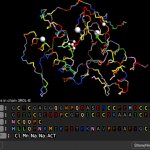
Category: molecular structures
I added the spring colors.

Posted by Sandra Porter at 6:02 PM • 2 Comments
Category: Bioinformatics
Is it real or is it April Fools?
Posted by Sandra Porter at 8:18 AM • 3 Comments
March 31, 2008
Category: Humor
We used to love watching him blow stuff up on TV.
But things are different now....
GrrlScientist has the movie.
Posted by Sandra Porter at 11:54 AM • 4 Comments

YES! Send me a free issue of Seed.
If I like what I see, I'll receive 5 more issues (6 in all) for just $14.95. That's 50% off the cover price! If I'm not completely satisfied, I'll simply write "cancel" on the invoice and owe nothing. The free issue is mine to keep.
(Non-U.S. subscribers, click here.)