

Alan Boyle, Science Editor for MSNBC.com, was kind enough to answer questions about science in the mainstream media after the fallout of the coverage of the Chilean earthquake.
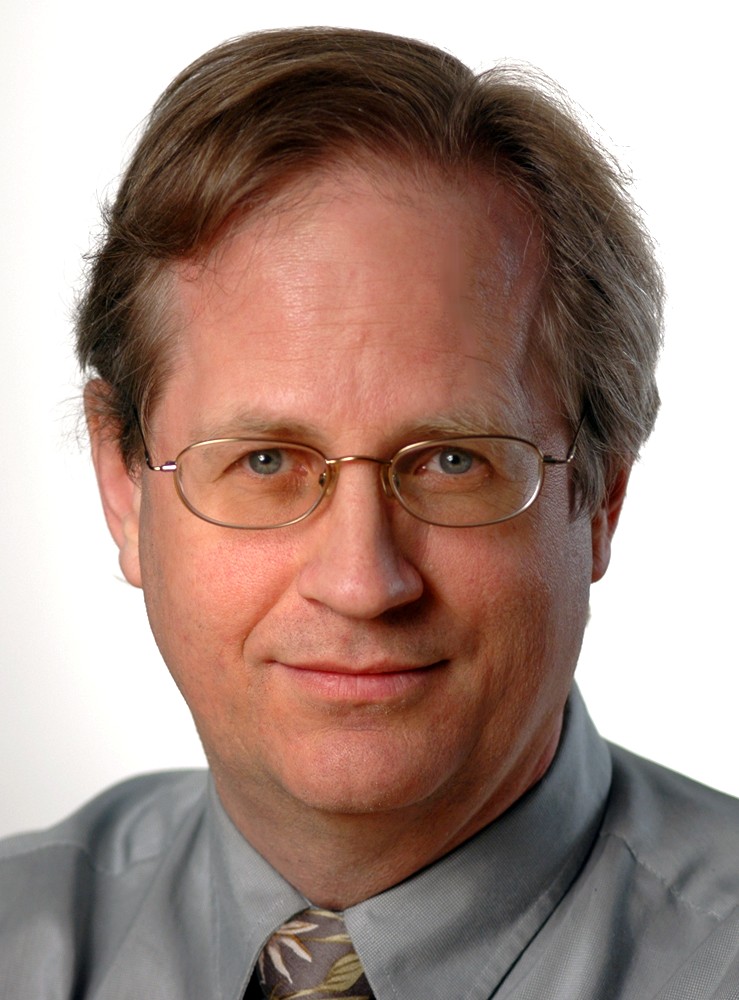
Alan Boyle, science editor for MSNBC.com
Alan has been with MSNBC.com since 1996, covering science and technology. He has his own blog on space called the Cosmic Log. He's also won quite the array of awards including from the National Academies, the American Association for the Advancement of Science, the National Association of Science Writers, the Society of Professional Journalists, the Space Frontier Foundation, the Pirelli Relativity Challenge and the CMU Cybersecurity Journalism Awards program. He's also a big fan of Pluto.
I want to thank Alan for taking the time to answer the questions!
Q&A - Alan Boyle, MSNBC.com
Alan: Thanks so much for your questions.
(Randall Nix)
- I was just wondering how many emails you received about that headline (after the Chilean earthquake)?
Alan: Randall, I'm not sure I received any e-mails about the "Out of Control?" headline, except for the e-mails back and forth with my editor. As you may know, we weren't satisfied with that initial headline and settled on a different one after a couple of hours ("Big quake question: Are they getting worse?").
The "Out of Control?" angle stayed alive a while longer in references from the site cover, and I did use that angle as well in a question board (our unscientific version of a vox-populi vote). You may also recall that the story was picked up from one of our content partners, LiveScience - and when I went back to look at the LiveScience site version of the story, it also carried the "Out of Control?" headline. So now I'm thinking they came up with the headline first and we just adapted it.
(Fitz)
1) How much interest would there be in a Documentary Series about Geology? Something a little deeper than just Yellowstone, St Helens and the San Andreas over and over. For instance, the 26 "supervolcanoes" in Colorado?
Alan: I think that would be a good angle for future coverage. The routine that I've fallen into is not really conducive to doing long-form documentaries, but I could see doing the occasional item on "past and future eruptions" ... particularly with the (ahem) St. Helens anniversary coming up. I've been programmed to look for news hooks or anniversary hooks for stories, so I hope you don't mind if I try to capitalize on one of those better-known volcanoes or faults.
2) Does your network train your broadcasters at all in Disaster Presentation? It seems like every news channel has the same problem, after the first reports are given, confusion, stammering, repeating. Isn't there a canned set of questions and graphics to show for such repeatable events as quakes, crashes, and balloon joy rides?
Alan: I can only speak to how we do things on the Web site, and I can't say there's a formal procedure for disaster coverage. We do have a lot of people here with experience covering various types of disasters, and there is a to-do list that the journalists tend to follow (reports of damage, possible causes, disaster response, timeline, scientific background, etc.). For example, we have some standard explainers for earthquakes and volcanic eruptions, as well as illustrated galleries for past disasters.
We do have a detailed disaster plan for space shuttle accidents, but natural disasters may be variable enough that we don't have canned sets of questions. Of course, TV is quite different from the Web, but there are some old hands on the NBC side who have covered quite a few disasters and know what to do.
(Taylor)
-Alan, I feel as though there is not much science in the media unless it is pertaining to something like an earthquake or volcanic eruption. I wish there was more but it seems that whenever it gets out there is a lot of debate. For example, climate change. Do networks purposely put out stories that are going to cause a debate?
- When it comes to science I personally know that there are many big confusing words that some people may not understand. I think that if networks took some more time to broadcast about science and explain these terms more people would be able to understand what is going on. Any thoughts on that?
Alan: On the Web site we put out a goodly amount of science and space coverage as part of the Tech/Science section. I'd say we have seven to 17 stories a day, including daily original reports from yours truly. (Today it was eight, yesterday it was 17.)
Other folks cover climate change and health/medical issues for the Web site, so I'm not often involved in those issues. Including those stories would certainly double the 7-to-17 count mentioned above. (Today the count was 16 additional stories.) You can easily find those stories by going to environment.msnbc.com or health.msnbc.com.
It's certainly true that conflict and debate generally raise the news interest in a particular story, so it may be that news media focus more on the debates relating to science as opposed to explaining settled science.
I think the Web is well-suited to science coverage in part because we have the ability to link out to other resources. For example, in a story about the fabrication of an invisibility cloak, I didn't need to explain the process of direct laser writing in detail because I could refer readers to a Web page elsewhere. I do agree that it can be difficult to find opportunities to explain basic concepts or wide-ranging topics in science. Nevertheless, we are able to do that every once in a while.
(Arron)
I was just wondering what types of pressures you feel in editing for a source that so many look to in order to form their opinions on current events, especially in the area of the sciences and technology, and how you deal with them?
Alan: The pressure usually has to do with time: There's not a lot of time available to put out a report with the depth and breadth that I'd like, especially when I feel an obligation to offer something at least semi-original every weekday. I just have to prioritize and decide what we can do without, and even when I do that the workdays are always longer than I would like. There's not usually much time or opportunity for second-guessing ... but if it turns out that there are problems with what we've put out, I do try to set things right.
(Amy)
My name is Amy and i'm a college student taking a course on how to write popular science articles. I am just curious about who are the main readers of popular science articles? Are the readers a certain age, gender, or profession? Do popular science writers target a specific reader?
Alan: The easiest thing is to visualize your reader as someone like yourself ... or, um, myself. Someone who's interested in and intrigued by the quirks, discoveries and deep themes associated with science. Someone who would like to hear about innovations that could affect society in the years or generations ahead. We used to think of these people as more educated or more connected than the average computer user. Fourteen years ago, when MSNBC started operation, demographics might have suggested the readers of science/tech stories would be more likely male than female. I think those demographics have changed quite a bit since then, however. Currently, the demographic skews older for science news than for tech news.
(Samir)
I am also a college student taking a course on popular science writing and I often find it hard to incorporate everything I read in original research articles because there is a lot of jargon that the popular media probably would not appreciate. What I have learned is that whatever the students find interesting the popular media will also find interesting but I often feel that I am not giving all the necessary information for the subject. Is there any reading strategies that you would suggest for these research articles?
Alan: Usually I start by reading the abstract at the beginning of the article as well the conclusions at the end. Then I look at how past work in the specific field has been covered, to get a sense of the context for the research. Then I delve into the methods described in the middle of the research report, but I don't worry too much if I don't totally get the description of the methods. Then I contact the researcher(s) and check my understanding of the methods.
Robert Krulwich, one of the best science journalists in broadcast media, once told me that he basically argues with researchers until they're able to settle on "a metaphor they can live with." Here's a link to the posting where Krulwich discusses his approach:
http://www.msnbc.msn.com/id/9732230/ns/technology_and_science-science/#…
I hope that's helpful.
(Geolith)
Is the media aware of the role of cognitive biases in altering perceptions of the world? If so, what role can media play in educating its audience about the effects of, say, the recency bias, in altering perceptions of unrelated events. From that perspective, stringing the Haiti and Chilean earthquakes together into a headline about nature out of control is understandable. It's not science, but it is human nature. If not, how can 'the media' be 'learned' about such things?
Alan: Yes, the stories you reference with regard to the Haiti and Chile earthquakes (and later stories about the Haiti/Chile/Taiwan/Turkey earthquakes, or the Chile aftershocks) are actually attempts to explain the broader sweep of seismic activity, framed in a way that mirrors how people generally perceive temporally proximate events.
Here's another example of the genre:
http://www.globalreinsurance.com/story.asp?sectioncode=23&storycode=383…
Similarly, there are the occasional stories about global climate change vs. regional weather patterns:
http://www.cbsnews.com/8301-503544_162-6194071-503544.html
http://climateprogress.org/2010/02/08/climate-science-extreme-weather-m…
For a couple of years we had a columnist at MSNBC, David Ropeik, who went on to bigger and better things as a risk consultant. Risk perception happens to be his specialty, and he's just written a book titled "How Risky Is It, Really?" I'm just starting to delve into the book but I might have more to say (and write) about risk perception after I'm done.
(Jay)
How can scientists, the media, and communities act together to create societies and towns that are consciously prepared to mitigate and deal with natural hazards? What are the most effective strategies for promoting risk-awareness and communicating safe evacuation plans to the public?
Alan: We do have "standing stories" that address disaster preparedness. For example, this is the extensive story we keep around to fill people in on earthquake preparedness:
http://www.msnbc.msn.com/id/12911952/
... And here's an interactive on what to do during the aftermath of a hurricane:
http://msnbcmedia.msn.com/i/msnbc/Components/Interactives/News/US/Katri…
But I think we could do more in terms of drawing these types of resources together into a "Need to Know" guide that's easily accessible at all times ... rather than trotting out the advice after the earthquake, or hurricane, or whatever. Theoretically, it's good to be prepared in advance of a disaster, rather than afterwards (even if the disaster happens to occur somewhere else). Realistically, however, some people (and journalists) don't devote enough attention to these preparedness / mitigation issues until disaster strikes.
We in the media should be developing really good resources in collaboration with scientists and emergency workers, and then we should find ways to make those resources easy to get to at all times. I'm betting we'll have something like this front and center when the hurricane season starts.
(Lockwood)
- Do journalists (both reporters and editors) realize how distressed science-literate readers are by the frequent mistakes, sensationalism, misrepresentation, and more subtly, inappropriate emphasis we so frequently encounter when reading MSM science reporting?
- Are those of you in the MSM even aware of the magnitude of your credibility gap in the science community, and if so, do you have any plans or ideas for improving your reporting and delivery in the future?
Alan: I think journalists do realize that they're not perfect, although I'm not sure we're keyed into how frequently problems crop up. I have to smile at the reference to the "MSM" ... for one thing, I still think of our Web site as a long way out from the mainstream. But since we've been in business now for 14 years, and are finally making a profit, I guess we have become part of the media mainstream.
For another thing, using the acronym implies that there's some distance between journalists and the public, as if I was part of the CIA or the NWO (New World Order). Actually, I'm just a guy, trying to provide a fair and factual picture of the world and the wider cosmos. Obviously I can't know as much about seismology as a seismologist (just as an example), so I do depend on seismologists to set me straight if I stray.
I think professional scientists have to keep in mind that we're writing primarily for folks who are not professional scientists ... folks who may not fully understand all the ins and outs of a technical field. Thus, we have to put things in terms that regular folks can understand. That usually involves simplifying a concept without distorting the facts. Sometimes we have to gloss over some of the finer points that scientists may feel are important to their more nuanced understanding of a particular phenomenon. And sometimes we have to ask questions or address issues that some scientists feel are not worthy of being asked or addressed.
The only way we can improve our reporting and delivery is by talking with each other, and staying engaged with the public. Although I'm paid by MSNBC, my first obligation is not to serve the MSM, or scientists, or sources, but to serve the public. And that includes you or anybody else reading these words. I'm very glad to hear from you if there's ever anything about our science coverage that needs to be fixed or addressed. You can write me at alan-dot-boyle-at-msnbc-dot-com.
(Callan)
Rick Sanchez's behavior while interviewing Dr. Kurt Frankel on CNN was bizarre. He was extremely aggressive and "shouty." Is there a decent explanation for this behavior, or is the consensus that he expressing some sort of pent-up frustration at the fact he didn't understand what was going on? (...or for that matter, what a "meter" is, or where Hawaii is located...)
Alan: I didn't see what Sanchez was doing at the time. I've only seen clips of his faux pas as captured on YouTube, etc. It looks as if he was experiencing the stress of doing a live show during a catastrophic event, and maybe he was a little out of his depth. I'd hate to be in his shoes - or the shoes of the folks who were with him on the set.
(Me)
What is the relationship between science journalism in the mainstream media and science bloggers (like myself)? Do you feel it is antagonistic right now? How do you think the two groups might come together?
Alan: Actually, I'd say the relationship between bloggers and journalists is really good. The line between those groups is getting fuzzier as time goes on. For example, journalists tend to see me as a blogger, and bloggers see me as a journalist. So I don't at all feel as if the relationship is antagonistic. Many of my most valued colleagues are bloggers and tweeters, and would not be considered "journalists" in the traditional circa-1995 sense.
If people feel respected, they tend to provide respect as well. But if people don't get that respect, that's when resentment can build up. So, mutual respect is the key to bringing bloggers, journalists, scientists, readers and commenters together. (By the way, a Pew Research Center study indicated last year that scientists were seen as having a significantly more positive impact on society than journalists, 70 percent vs. 38 percent. I discuss that study here: http://cosmiclog.msnbc.msn.com/archive/2009/07/09/1991160.aspx)
Is there a struggle at times with the need to entertain and the need to inform that exists in the mainstream media?
Alan: I think there is a tension between the need to inform and educate and the need to entertain. That's particularly true for the kinds of things I tend to write about, which have to do with technical subjects (from nanotechnology to cosmology) ... subjects that do not have an immediate impact on personal health, wealth or well-being. The stories that I write generally have to convey a sense of wonder, discovery, mystery ... and touch upon the cosmic themes that humans have wondered about since the first days when they sat around the fire and looked up at the stars. So I do have to get people's attention first, and then give them something that nourishes the brain.
Do you think that the general public is science-phobic or antiscience based on your experience at MSNBC or is there still excitement about science (other than disasters and debate)?
Alan: My impression is that the general public is excited to hear about exciting discoveries, and powerfully drawn to news about actual or potential catastrophes ... but they're not much interested in the nuts and bolts of the scientific process. The traffic that we get on stories about science almost always pales in comparison with the traffic for stories about celebrities, for instance.
If you could change one thing about how science is treated in the mainstream media today, what would it be? Do you think it could happen in the next 5 years? 10 years? Ever?
Alan: If I could change one thing about science reporting, I guess it would be to create a ways to tie in the discoveries and challenges of the day to in-depth resources that would help people understand those developments in vivid ways. In a recent item I referred to a video documentary that attempts to do that for quantum mechanics. It's called "The Quantum Tamers":
http://cosmiclog.msnbc.msn.com/archive/2010/03/17/2231022.aspx
http://www.perimeterinstitute.ca/Outreach/Quantum_Tamers/The_Quantum_Ta…
I could envision doing similar videos or interactives for energy policy, climate change, genetic research and other key scientific issues for society. But it takes a lot of time, money, expertise and focus to do that ... so I guess that's what I'd wish for. Will the next five or 10 years bring more time, money, expertise and focus for science communication? Here's the answer:
http://web.ics.purdue.edu/~ssanty/cgi-bin/eightball.cgi
What are your favorite subjects to cover in science? Anything recently get your attention?
Alan: My favorite subjects all have to do with outer space: space exploration, commercial spaceflight, planetary science and astrobiology. I'm intrigued by the current debate over the goals and future course of America's space effort. I'm fascinated by the idea of finding evidence for life (ancient or extant) on Mars, or Enceladus, or Europa. And of course I'm closely following the search for new worlds in our solar system and beyond. I recently wrote a book titled "The Case for Pluto," which is about that dwarf planet's ups and downs as well as the wider planet quest ... so that subject has a special place in my heart. I'm generally on the side of the underdog - particularly if that underdog has a Disney character named after it. ;-)
http://www.thecaseforpluto.com
I was traveling in the Midwest last week to promote the book, and that's why it's taken a little longer than I expected to get back to you with these answers. But I thank you for the opportunity to chat ... and look forward to continuing the conversation.
What do you think is the most important science story you've covered in your career?
Alan: That's a surprisingly hard question for me to answer, because you could take that several ways. When it comes to the sorts of things that Eruptions readers are most interested in, I guess that would be the 1980 Mount St. Helens eruption. It had a huge impact on the region at the time - and served as something of a seismic wakeup call for Americans, even though it didn't have the devastating impact other eruptions have had elsewhere in the world. That seems so long ago now, and my role at that time was really to edit and help direct coverage (as an assistant city editor) rather than to write about it myself.
When it comes to issues with important scientific and technological angles, the big story would be the search for cleaner and more abundant energy sources as the fossil-fuel era enters a late phase. I do feel as if the energy terrain will change dramatically in the next 20 years, and we'll eventually look upon petroleum the same way we look upon whale oil now. But right now I'm covering that wave of change around the edges, and not devoting as much energy (heh, heh) to the subject as it deserves. This is a story that's being covered as well by other folks at MSNBC ... folks who are on the environment and energy teams in the newsroom.
If I had to pick a scientific issue where my coverage played an important role, I might go with the controversy over the Large Hadron Collider's safety. I wrote stories that tried to explain what people were worried about when it came to crazy stuff like runaway black holes or strangelets, as well as what the experts and the courts said about it. In the past couple of years, I've spoken to particle physicists as well as the general public about this issue - and I hope the things that I've said and written have helped people understand this weird issue as well as particle physics in general.
When it comes to developments in science and technology that will be important for decades or centuries to come, I'm drawn to the discussions over humanity's long-term future in space, which takes in the push toward commercialization and the development of a frontier mentality toward space travel. I'm very interested in tracing NASA's changing role in a new era of space science and exploration, as well as the growing role of new players in the cosmic field. It may sound a bit woo-woo to earth scientists (or should I say down-to-earth scientists?) ... but I do think that in the long term, we have to find a way to get off this rock.
- Log in to post comments
Alan, I like your approach and I would like to express my gratitude to all the popular science journalists out there. I remember the days when I first lapped up any popular article I could find about volcanoes and soon found myself thirsting for deeper knowledge and fell into the gap between your joe-average magazine article and the high-brow scientific articles. I still find myself caught in this gap and think there is a gap in the market there waiting to be filled.
Personally, I can't see magazines doing it too well because the market for it is too small but I think blogs like Eriks and Ralph Harrington's fit the bill perfectly. It pains me that these guys are footing the bill for all this work entirely on their own and I would love to see some solution that could channel money in this direction. Do you have any ideas on this score that wouldn't compromise their personal control of a blog format yet supply a revenue stream? Do you see any opportunities for cooperation between blogs and the mainstream media?
I'm with Bruce Stout. Some way to pay the bloggers out there like Erik would be a giant step in the right direction. (So Erik could head out to the volcano stories around the world, for example.)
I was too late for a question, but I've a comment. Perhaps if all journalists were taught the meaning of scientific method a lot of noise could be eliminated from science discussions. In addition, they'd be able to pass it onto their viewers.
I'm afraid that too many people are lacking the tools for critical thinking. It's as though there is thinking that scientists are all about opinion rather than observation and testing. If the theory, test, compare, review tools were handed to people, perhaps discussion would improve.
I've a science background, and I need reminding. (Over at Geotripper, I learned to remind myself that "correlation does not mean causation". That line alone could help journalists.)
Good luck in your endeavors.
>I'm afraid that too many people are lacking the tools for critical thinking.
Correct. Senior high and college freshman year coursework should include elements of critical thinking and evaluation tools.
The Wiki page on Critical Thinking is correct, in that university educators assume that their students have mastered critical thinking basics and self-corrective analysis skills necessary to objectively examine and critique self- and public understanding of controversial topics.
Interestingly, this is also the basis of meditation, to sort emotional bias and internal reference frame skewness, in the distinction of reality and derived perception.
Remember, we humans are high order sentient organisms, with encased central nervous systems that operate on a complex, sensor-processed, sorted and experiential compared (derived) reality. The Internal Reference and External Reality Frames, of Self and Others, is learnt, consensus-driven and synthetic. It rests on a deep-brained, ancient and primitive base of emotional response related to survival environment sensing and social bonding.
The goal, then, is to practice emotional detachment, to recognize emotion-bias in automatic response to information presented, and to sort through learning and experience, using analytical skills, to apply filter criteria of logic, conceptual clarity, credibility, accuracy and precision, personal and other-based relevance, depth and breadth of significance.
> If the theory, test, compare, review tools were handed to people, perhaps discussion would improve.
Absolutely! The skill set should be introduced early on, at a point when young brains are capable of critical thinking understanding, skills learning and practice. And then these concepts and skills should be repeatedly reinforced, in everyday examples within coursework.
Unless critical thinking skills are hammered in, they are lost though the many shortcuts we have created to help teens and adults master an exponentially growing base of 'must-have' knowledge.
Now, the question is, if public schools and higher education centers aren't properly providing critical thinking basics and skills sets, how is it gained?
Human brains are wonderful, in that they have the ability to utilize vast, complex neural networks that build on learning and experience, to develop a lightning-quick ability to intercalate and interpolate new ideas. facts and concepts.
But these must be 'vetted' regularly, to prevent emotional bias and factual misunderstand do not weaken this neural net that compressed and thickens (in the outer cortex) with time.
What works against this thickening? Lazy 'thinking' where active learning is replaced by sound-bite presentation of fact, lack of critical thinking training and practice, chronic physical and emotional stress, learning-avoidance, and erroneous complacency.
Active, critical thinking-trained brains not only repair neural nets more effectively, they do so because there is a physical controller working on gut emotional response that sets the bar for daily stress tolerance. This training essentially limits cell-damaging emotions - acute and chronic anger, personal resentment, envy and greed, and faulty risk sensing and recognition - and reinforces cell-sparing personal and social responsibility, patience and tolerance, objective empathy, healthy risk evaluation, and active social network building.
These are hormonally-cued critical cellular damage-and repair responses to information gathered by senses, processed, sorted, compared, and stored within internal- and external- reality neural net frameworks.
From the wiki page:
'Critical thinking forms, therefore, a system of related, and overlapping, modes of thought such as anthropological, sociological, historical, political, psychological, philosophical, mathematical, chemical, biological, ecological, legal, ethical, musical thinking, technological, business, etc.
In other words, though critical thinking principles are universal, their application to disciplines requires a process of reflective contextualization.'
This is really key to advanced development of the adult brain, that is also genetically cued before midlife, at about age 25-30. It affords parents with an ability to sacrifice to rear their young offspring when material resources are stressed.
This gene-cued phase also encourages shared social responsibility and action with extended family and community that is necessary for survival during personal, political (war) and environmental (severe weather disasters) critical events.
Humans have a high encephalization ratio* and require a very long period for rearing of young. One of the trade-offs is that 85% of brain development is put off until after birth.
* http://en.wikipedia.org/wiki/Brain-to-body_mass_ratio
Complex cognitive functioning that is balanced and healthy in our modern age of information overload absolutely requires critical thinking tools for dealing with an onslaught on information and making informed decisions that are beneficial for self and society.
Re: Bruce's and Paclair's comments, although it didn't start that way when I started the blog on Wordpress, I actually do get paid by Scienceblogs. Admittedly, not enough to traipse the globe to visit volcanic eruptions, but I think any blogger would say that getting paid anything is better than nothing!
yes, sorry Erik, that was yet another one of my posts that I immediately regretted posting. Not that the message is wrong, just, given the context, I was definitely encroaching on your personal space. Sorry about that!!
I hope people realize I was thinking more widely.
Here's my response. I felt that in many ways, Boyle dodged the serious questions and issues here. Still, I really appreciate both his and your efforts here, Erik.
Thanks to Mr. Boyle for taking the time to respond to these questions in such detail. I'm impressed with the time invested in writing back.
Why is it so dificalt to present a new invention to the mainstream science media. msnbc is going to present a program concerning energy and what is the future of our energy requirements. Msnbc does not have all thje answers and will create fear in people concerning our future. msnbc shoul also serch out private inventer before they tall what the future will bring. There i a lot of ideals that will help solve our energy shotages. I have a process that will reduce the need for fosel or nueclear powered plants no one will lisen because I'm not a PHD but nethier was the wight brothers or other inventers. It only takes minets to review a process and jest maybe it will solve our energy problem. What would say to a process that will drive a wind turbine 24 hours a day seven days a week without the wind and uses resources to drive the generator whcih are reneable and non polluting. and the process is self sustainng and operating cost are the same as a wind turbine?. sound to good to b e true but it is. before msnbc airs this energy program please reviw my process and ask around for other inventions to give the public hope not fear of their future.
Hey that's an amazing insight on the subject, thanks so much! never heard it more clear.
My x-boyfriend thinks your blog is lame.I think he's wrong.;)
Hello there! I really enjoy reading your blog! If you keep making great posts I will come back every day to keep reading!
Then again, the opposite could be true. - Strive not to be a success, but rather to be of value.- Albert Einstein
The moment I found your page was like wow. Thank you for putting your effort in publishing this tutorial.
I enjoy to play games, but I particularly like to play Big Game Hunter. Desire to find some Big Game Hunter Cheats? Just press my link. - Thank you for your email. This Internet of yours is a wonderful invention. (email to Al Gore, mocking his famous Internet invention claim, quoted in Newsweek, Mar 2000) Attributed to George W. Bush
haha, I love Kim! Sheâs so hot! - It has been my experience that folks who have no vices have very few virtues. Abraham Lincoln 1809 1865