

Like BlagHag, I have a soft-spot for astrology. Not that I ever 'believed' in it, I have just always loved the stars and the moon and zodaic stuff is just fun. Via that, Ive also always had a soft-spot for cows. I am a Taurus, and I just think cows are pretty:
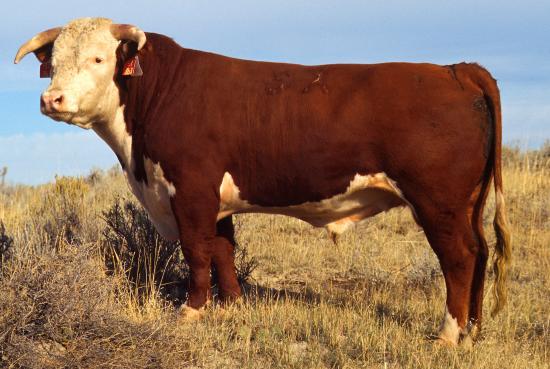
I also love zodiac for the lulz.
Example #1:
*in an argument with person Im dating*
Me: You should have known I wouldnt like you changing plans on a whim like that. You KNOW Im a Taurus. *angry face*
Person: *stops argument dead in tracks in disbelief I just said that*
Me: LOL PWND!
Example #2:
Literally everyone Ive dated has had a birthday within a week of mine. Three have had the same birthday. To the point where I ask when someones birthday is on the first date, and curse loudly for about 30 minutes about the Aries-Taurus cusp when they say "Ummm... April 17th?" or "Ummm... April 23?"
So you can bet I was really interested to learn more about ERVs in Bos Taurus!
Genome-wide detection and characterization of endogenous retroviruses in Bos taurus.
Like every other creature we have looked at so far, there are a TON of ERV elements (bits a pieces, a gag here, a pol-env there)-- Their max estimate (taking out some of the repeats) was at about 9,700, but there could be more they missed. These were divided into 24 families-- less diversity than humans (31 families) and chimpanzees (42 families) have. They actually lack an entire class of ERVs humans and primates have-- The Class III spumavirus-like ERVs.
Of those ~9,700, quite a few of them were about the same size as a full-length proviral ERV-- about 250. The average ERV was a nice, normal, respectable retroviral length of ~10,000 nucleotides. The smallest was only 6,200 nt long, and the largest was a Bos-sized 23,000 and 25,000(!!!) These big guys probably arent 'real' though. Theyre not previously unseen maxi-retroviruses, they were just normal retroviruses who made a maxi-boo-boo and accidentally duplicated some or all of their genes, either during reverse transcription or in the natural history of the ERV. Probably not ever real exogenous viruses with two gags, two pols, and two envs.
Cows also have a really cool ERV family that contains both the oldest and the youngest ERVs! One BoERV1 element was estimated to be ~58-126 million years old, while a different BoERV1 element was only 0-1 million years old!
One thing I liked about this paper was how they qualified their discussion-- Yes, they made these observations, but they used a specific breed of cattle-- Hereford. Cattle have been under intense, 'alternative' breeding for a loooong time, since early Neolithic. So its possible that if you looked at a different breed of cow, you would see a different picture.
The evolutionary fun you could have playing with ERVs from moo-cows!
Are we being trolled on the Zodiak thing? Maybe you are just tired of science/skepticism people finding you attractive ...
It would be interesting to see if a nested hierarchy supporting the idea of "ERV as evidence of evolution" existed in these evolved (via artificially selection) breeds. To be fair, you'd have to map all of the ERVs in each breed, and search for all hierarchies--not just those nested hierarchies that fit evolutionary trees conceived or determined a priori. If the breed to breed evolutionary distance is too close compared to temporal ERV insertions, you wouldn't expect any significant differences among cattle breeds, in which case, you'd have to compare to Yaks, tembadaus, or species more distant.
I would look at the evidence, but I won't hold my breath waiting for it.
yeah...that's no 'cow'
Don't be silly, Ed, it's just a bit harder for milk.
@William Wallace,
The evolutionary hierarchy picture would be very muddied with domesticated cattle because it's not just line breeding but also hybridization that goes into making new breeds.
Oh dear. ERV,* having gone to the dogs is* now going to the farm.
* ERVs are, even.
Seriously, nice theme. I had meant to write about the Gallic [sic] ERVs, but have been overrun by Emergent Research Vastnesses. (Sorry. Feeble, I know. Especially that last one.)
Uh, Abbie...that's not a cow. Being into biology and all that, you're supposed to know these things.
It is big, smelly and goes "mooo", it is near enough to a cow (especially as Herefords aren't usually a dairy breed).
so, many people may not get the opportunity to do the following..but..
if you find yourself walking through a cow pasture with a stethescope handy...please listen to a cows gut...
those 4 stomachs make the coolest noises!