

Today is the last day that ScienceBlogs will exist. Sometime today the site will go into read-only mode. A few days later, it will disappear completely from the Internet. It's a sad thing to contemplate after all these years. Whatever happened later, I will always be grateful for the start in blogging I got there.
But that's the past. The future is here:
respectfulinsolence.com
Some work remains to be done with the site, and I am not ready to produce new posts for it yet while these odds and ends remain to be taken care of. Due to a confluence of events in addition to still having to tweak…


 oracknows | October 23, 2017
Here's a brief update on the move, announced last week.
Things are progressing, and most of my old material has been transferred to the new blog, which is located at respectfulinsolence.com. Of course, there are still some things to tweak and fix, which is why, given how insanely busy this week is going to be, given my impending trip to CSICon on Thursday afternoon, I've decided to hold off on writing new material for the new blog until sometime next week, probably November 1 or 2. I'm just gratified that there are so many of you who are still checking back and commenting. Please be patient.…
oracknows | October 16, 2017Well, QEDCon is over, and this box of blinky lights is on its way back across the pond to its home in the US, having had an excellent time imbibing skepticism from its (mostly) British and European partners in skepticism.
Before I left, I made a somewhat cryptic remark about "major changes" to this blog coming up. Well, the cat's out of the bag, so to speak. Basically, Scienceblogs is shutting down at the end of the month. I still remain grateful for the opportunity Scienceblogs offered me. I wouldn't be as prominent as I am now without it. However, unfortunately, Scienceblogs has barely…
 oracknows | October 13, 2017
As you probably noticed, I didn't manage a post yesterday. Nor did I manage one today, other than this. That's because I was busy preparing for QEDCon, where I will be on a panel and giving a talk, and, of course, putting together my talk. As I write this, I'm horrendously jet lagged; so I probably couldn't write much that's coherent anyway. Consequently, there likely won't be any new posts until next week.
I will take a moment, however, to mention that there will be significant changes to this blog in the near future. It's a process that will likely take a couple of weeks, and I'll update…
oracknows | October 11, 2017QEDCon is fast approaching (indeed, I can't believe I have to leave for Manchester tomorrow night), and because my talk there will be about the phenomenon of "integrative medicine," I've been thinking a lot about it. As I put together my slides, I can't help but see my talk evolving to encompass both "integrative" medicine and what I like to refer to as quackademic medicine, but that's not surprising. The two phenomenon are related, and it's hard to determine which has a more pernicious effect on science in medicine.
One aspect of quackademic medicine that I probably don't write about as much…
 oracknows | October 9, 2017
I've written on quite a few occasions about a pair of scientists beloved by the antivaccine movement. I'm referring, of course, to Christopher Shaw and Lucija Tomljenovic. Whether it is their publishing dubious "evidence" that HPV vaccines cause premature ovarian failure or even death or demonizing aluminum as a vaccine adjuvant, Shaw and Tomljenovic publish nothing but antivaccine pseudoscience that antivaxers love to cite whenever they dump some turd of a study on the medical literature.
Just last month, they dumped their latest turd of a study, in which they basically tortured mice in the…
 oracknows | October 8, 2017
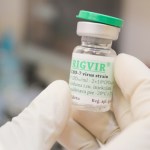
Over the last two Mondays, I've been writing about an unproven cancer therapy that I hadn't really heard much about before. The cancer treatment is called Rigvir; it is manufactured in Latvia and marketed primarily through a Latvian entity called the International Virotherapy Center (IVC).
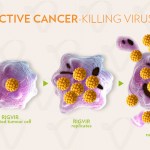
To recap, Rigvir is an unmodified Echovirus, specifically ECHO-7, that, according to the IVC, seeks out cancer cells, replicates in them, and thus lyses the cancer cells (causes their membranes to break, spilling out the cancer cells contents, thus killing the cell), hence the term "oncolytic virus."…
 oracknows | October 6, 2017
Naturopathy and naturopaths are a fairly frequent topic on this blog—and for very good reason. If there is an example of a pseudomedical "discipline" that has been gaining undeserved "respectability," it's naturopathy. It's licensed in all too many states, and physicians who have fallen under the spell of so-called "integrative medicine," a specialty that rebrands science-based lifestyle medical interventions as somehow "alternative" or "integrative" and uses them as a vessel to "integrate" quackery into medicine, seem to have a special affinity for naturopaths. Indeed, so common has the…
 oracknows | October 4, 2017
I sometimes like to write about things happening in my neck of the woods that are relevant to the kinds of things I normally blog about every day. This habit of mine dates back at least to the days when investigative reporter Steve Wilson of our local ABC affiliate used to lay down fear mongering barrages of nonsense about mercury in vaccines that would have made Robert F. Kennedy, Jr. proud if he ever knew about them. Then there was a report on "orbs" seen in photographs where the reporter speculated whether they were actual spirits. Then there's the periodic fascination with veterinary…
 oracknows | October 3, 2017
It's October again, which is Breast Cancer Awareness Month. As someone who takes care of breast cancer patients, I have a love-hate relationship with October. On the good side, I like seeing positive messages about what's going on in breast cancer research, advocacy, and clinical treatment. On the other hand, the quacks come out. I also see a lot of bad breast cancer studies. You might think that I'd like that too because it provides blog fodder. I could actually do without that, but in this case I happened to come across a "study" that illustrates why I detest how those promoting unproven…
 oracknows | October 1, 2017
Last week, I wrote about Rigvir, a highly dubious cancer therapy developed in Latvia. Rigvir is an oncolytic virus, and its proponents claim that it targets only cancer cells for destruction, leaving normal tissue alone. Its history and how it came to be approved in Latvia in 2004 and added to the Latvian Health Ministry's list of reimbursable medications in 2011 remain rather mysterious, but how it is being marketed does not. For example, Rigvir has become a new favorite treatment at a number of quack clinics, such as the Hope4Cancer Institute in Mexico, where Rigvir is offered along with…
oracknows | September 29, 2017John Weeks has long been an activist for what is now known as "integrative medicine," earlier known as "complementary and alternative medicine"(CAM). Basically, for many years Mr. Weeks has been at the forefront of encouraging the "integration" of quackery with real medicine and promoting what I like to refer to as "quackademic medicine," a perfect term to describe the increasing encroachment of pseudoscience and quackery in medical academia in the form of—you guessed it—integrative medicine.
Despite his having zero background in scientific research or the design and execution of experiments…
 oracknows | September 28, 2017
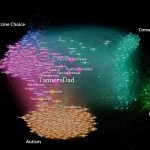
Two years ago, I wrote about a study that demonstrated how the antivaccine movement had learned to use Twitter to amplify their antiscience message. At the time, I noted how in 2014, when the whole "CDC whistleblower" conspiracy theory was first hatched, antivaxers were so bad at Twitter, so obvious, so naive. The Tweeted inane claims at government officials, scientists, legislators, and whoever else might have influence on vaccine policy, using hashtags like #CDCwhistleblower and #hearmewell. (These hashtags are still in use, but much less active.) However they did get better, to the point…
 oracknows | September 27, 2017
Last week, an antivaxer "challenged" me to look over a paper purporting to show that aluminum adjuvants in vaccines cause inflammation of the brain and therefore contribute to autism, a paper that she would be "citing frequently." Being someone who lives by the motto, "be careful what you wish for," I looked it over in detail. Not surprisingly, my conclusion was that the experiments were poorly done using obsolete and not very quantitative methodology and that the results do not support the conclusions made by the authors. I was not alone in this conclusion. Skeptical Raptor was, if anything…
oracknows | September 26, 2017Last week, the University of California, Irvine (UCI) announced that Susan and Henry Samueli were donating $200 million for it to set up a massive new integrative medicine initiative. The plan would basically transform biomedical sciences and medical education at UCI—and not in a good way.
Remember what "integrative medicine" is. What is being "integrated" into medicine is, of course, quackery. Oh, sure, integrative medicine also emphasizes lifestyle modification, such as diet and exercise, but that is part of "conventional medicine" already.
There is no good scientific or medical rationale…
 oracknows | September 24, 2017
This blog is based in the United States, and I'm an American. Unfortunately, this produces a difficult-to-avoid baked-in bias towards medicine as it is practiced in the US and, to a lesser extent, as it is practiced in the English-speaking world, because English is my language and I can read accounts coming out of English-speaking countries. The same bias exists with respect to pseudo-medicine, with our concentration having been primarily on either quackery that is practiced in the US, UK, Canada, or Australia (and sometimes New Zealand). It's not because I'm not interested in medicine and…
 oracknows | September 22, 2017
Back in the day I used to do a weekly feature every Friday that I used to call Your Friday Dose of Woo. For purposes of the bit, woo consisted of particularly ridiculous or silly bits of pseudoscience, quackery, or mysticism, such as the Quantum Xrroid Consciousness Interface. Amazingly, I managed to keep that up for a couple of years, but over time I started sensing that I was getting a bit too repetitive. The same bits of pseudoscience kept recurring. Over time I had to dig more and more to find suitable bits of woo that amused me enough to inspire me to ever more over-the-top heights of…
 oracknows | September 21, 2017
"Why, oh, why do I have to die in the cause of such crappy science?"
For antivaxers, aluminum is the new mercury.
Let me explain, for the benefit of those not familiar with the antivaccine movement. For antivaxers, it is, first and foremost, always about the vaccines. Always. Whatever the chronic health issue in children, vaccines must have done it. Autism? It’s the vaccines. Sudden infant death syndrome? Vaccines, of course. Autoimmune diseases? Obviously it must be the vaccines causing it. Obesity, diabetes, ADHD? Come on, you know the answer!
Because antivaxers will never let go of…
 oracknows | September 19, 2017
It's not infrequently that, whenever I complain about the increasing infiltration of quackery and pseudoscience into medicine, I sometimes lament that skeptics and supporters of science-based medicine are massively outgunned, because we are. Thus, we have the continued growth of what I like to refer to as "quackademic medicine," the infiltration of pseudoscience into medical academia in the form of whole divisions, departments, and institutes dedicated to studying fairy dust like acupuncture, naturopathy, and other "unconventional" treatments that are then "integrated" into medicine. It's not…
 oracknows | September 17, 2017
For nearly as long as I can remember, I've been a fan of Jeopardy! Indeed, if I'm at home at 7:30 PM on a weeknight, Jeopardy! will usually be on the television. Given that, I remember what was basically a bit of stunt programming in 2011, when Jeopardy! producers had IBM's artificial intelligence supercomputer Watson face off against two of the most winning champions in the history of the show, Ken Jennings and Brad Rutter. Watson won, leading Jenning's to add to his Final Jeopardy answer, "I, for one, welcome our new computer overlords."
Watson's next challenge was similarly highly hyped:…