Now on ScienceBlogs: Acupuncture quackademic medicine infiltrates PLoS ONE

ScienceBlogs Book Club: Inside the Outbreaks

August 30, 2010

Plant Transformation

Category: bacteriaexperimentiGEMplants

Sometimes among all of the tedious protocols and mundane inconclusive data, I forget that I'm doing something amazing and incredibly powerful. Almost all my experiments require altering a living organism to do my bidding--to hold onto and replicate a piece of DNA that I'm interested in or to produce an enzyme that I want a lot of. Thanks to iGEM this summer I've gotten to learn some new soon-to-be-tedious protocols that seem absolutely thrilling now, and the experience is reminding me of how awesome (in the real sense of the word) genetic engineering is.

plants.pngThe team is working with the model organism for plants, Arabidopsis thaliana, and we've finally gotten our DNA ready to insert. There are two methods for introducing new DNA into plant cells: One is to literally shoot it in with a gene gun, and the other is to hijack infectious bacteria that naturally inject their own DNA into the plant genome. These agrobacteria can themselves be engineered to insert only the DNA we want and not the genes that make the plant sick. Many biological technologies are just that--biological, modifications of processes that occur in nature as DNA is chopped, copied, and swapped between organisms. I love when these technologies require the use of whole, living organisms instead of just purified genes or enzymes, as in agrobcterium transformation of plants, or the assembly in yeast of the Venter Institute's synthetic genome.

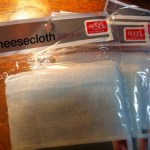
bacteriaprep.pngIn the wild, agrobacterium can infect plants through the roots or get in through damaged tissues, but in the lab we have to gently convince the bacteria to get into the plant's seeds so that the engineered trait will last into future generations. In arabidopsis this happens by dipping the flowers into a thick slurry of the bacteria mixed with a soapy solution that very easily gets sucked up into the plant cells. It's remarkably simple really--just scrape the thick lawn of cells growing on agar plates into the liquid, then dip the whole pot right in and swirl it around.

flowerdip.pngWe have to wait a while to see if any of it worked, an eternity for people like me used to fast-growing E. coli, but even if we don't get what we expected, I still think plants and plant engineering are pretty cool!

August 25, 2010

Peepee Power

Category: bioenergyengineeringenvironmenthydrogen

wallpaper_KLonice.jpgThere's a terrific new article in New Scientist about some of the ways scientists are working on turning pee into energy. There's a lot of pee in the world all going to waste, often at huge cost to the environment in terms of energy used to collect and purify waste water. Methods that can produce even small amounts of power from urine could be useful to help power office buildings or farms where there are a lot of people or animals all peeing in the same place, and smaller fuel cells could even also be used to power portable electronics, with no need to carry any fuel or batteries, just a water bottle.

There are three such methods discussed in the article, distinguished by their distance from the source. The urea in pee can be used to directly power a fuel cell, reacting at the anode with the hydroxide ions generated at the cathode. According to the scientists developing the technology, "an adult produces enough urine each year to drive a car 2700 kilometres on energy from the urea it contains." The urea in pee also makes electrolysis--the process by which electricity splits water molecules to produce hydrogen gas--more efficient, requiring a smaller electricity input to produce the same amount of hydrogen. Rather than using the urea directly, the hydrogen gas produced can be use to power other fuel cells. A third method doesn't need concentrated urine at all, but uses waste water streams to power fuel cells where bacteria produce the electricity. Metabolism requires a way to get rid of extra electrons and in organisms that breath air, oxygen takes the extra electrons, producing water. Many anaerobic organisms instead "breath" metal, putting their extra electrons generated from metabolizing the chemicals in waste water straight onto an electrode and producing electricity in microbial fuel cells.

As someone who has spent a lot of time thinking about how to produce hydrogen fuel from biological sources, I'm totally fascinated by this new take on "bioenergy." There is a lot of potential for capturing and converting some of our personal and industrial wastes into usable sources of energy, personalizing our energy sources depending on what is available and what is most efficient:

No one claims that urine will ever be the complete answer to our energy needs, but Botte argues that the more sources we have for our energy, the better. "We have gigantic energy needs. We are talking billions of megawatt-hours each year in the US alone," she says. "Trying to find one solution is not the answer. There is room for many technologies with different market shares."

There's not going to one magic fix to our energy needs, but biology and biological engineering can help us in reducing our inputs as well as reusing some of our outputs.

via NewScientist

August 18, 2010

Love of Legos

Category: DNAfuniGEMsynthetic biology

lego-blocks.jpgA recent survey of 3,000 people worldwide found what many have known all along--that Legos are the best toy ever made. For synthetic biologists, this doesn't come as much of a surprise--Legos are at the heart of the concepts underlying the basics of synthetic biology.

biobrick.pngMeagan_biobrick_small.jpgLegos are a favorite analogy for BioBricks, the DNA parts that are made to easily "snap" together using a shared genetic engineering strategy. The iGEM competition is structured around BioBricks, with undergraduate teams combining old and creating new BioBricks for the Registry of Standard Biological Parts, competing for the coveted Lego-shaped trophy, and sometimes even using real Legos in their projects, building robots used for biological experiments.

legorobot.png090928_r18840_p233.jpgLegos are wonderful toys because snapping just a few little pieces together can, with a little imagination, turn simple bricks into almost anything. It's a powerful analogy for synthetic biology, where not only do Legos provide us with the idea that common biological parts can be easily snapped together to create something completely new and amazing, the analogy gives us a license to play with biology, to try different combinations and see what happens. The same people who loved playing with Legos as kids are the people building the Registry, making new biological systems, trying to see what we can make. Of course cells aren't the blank slate that our bedroom carpets were for building Lego structures, by playing with biology we can learn a lot about how cells work and create new and potentially useful things.

DNAlego.jpg

August 10, 2010

DTL: Learn Molecular Biology The Jersey Shore Way

Category: DNAcloningexperimentfuniGEMvideo

It turns out that my wonderful iGEM students, besides being brilliant scientists, are also excellent, hilarious actors. Please enjoy their Jersey Shore inspired video about molecular cloning:

August 4, 2010

Smellscape

Category: artculturedesignnew mediasynthetic aesthetics

250.jpg

My Synthetic Aesthetics partner, Sissel Tolaas, is featured in the terrific current issue of the German interview magazine mono.kultur. Her work focuses on smell, exploring the unique smellscapes of different cities, creating provocative scents to show in art galleries, branded "logo" scents for Adidas, "Swedish" scents for Ikea, and therapeutic memory-triggering scents, part of the healing process for patients dealing with traumatic experiences. Until we have smell-o-vision, her work is almost aggressively analog--"beyond what is seen and heard to something indiscernible yet more immediately telling than anything else"; smells are impossible to show online, impossible to experience without a physical and emotional response. It is this response, this primitive communication and understanding through smell that she captures in her work. Interspersed between the pages of the fascinating interview where she discusses her inspirations, her intentions, and her process are blank pages coated with fancy scratch-and-sniff micro-bubbles of her scent creations. As you rub the pages between your fingers, the scents are released, almost like the perfume samples stinking up women's fashion magazines but much more powerful and evocative than any advertisement.

blindsspread.jpgThe 12 scents presented in the magazine are intended to provoke, to explore the smells of the human body in a context that allows them to be more than just "good" or "bad". Part of her 2006 exhibit at MIT's List Visual Arts Center the Fear of Smell--the Smell of Fear, the scents are chemically recreated versions of the smell of sweat produced by men suffering from extreme anxiety disorders in their most fearful situations. The sweat is collected in tiny underarm vacuum cleaners and shipped to Sissel's Berlin lab/studio for analysis and recreation. The scents can communicate fear, violence, aggression, but also a surprising complexity and passion. For Sissel, "Nothing stinks--only thinking makes it so!"

Nose training can teach us to look beyond just "good" or "bad" smells, to identify different components, to feel what is being communicated through smells, and she teaches classes around the world to get students to just this point:

I train them to relate to smells from the perspective of curiosity by saying 'listen, could this give you some information that you pass by or leave out because you were not used to seeing it as information'

Or to release it from certain stereotypes by abstracting it?

Of course. With sweat, it's the same -- they're difficult smells for a lot of people. If you see a person and smell his sweat up front, you back off. But if I position the same smell in an aesthetic displacement, you approach it differently: You come back and you're fascinated!

Guy4.jpgExperienced as blank pages in a beautifully designed magazine, the sweat smells almost good--musky, piney, deep scents that made my chest clench while reading. But it is the differences between the different pages that makes the experience so complex and interesting: Guy #10's cool, almost melon-scented overtones, Guy #6's cinnamon, Guy #9's seductiveness that made one gallery visitor "come every day for three months and kiss the wall up and down with different lipsticks." There is a lot of emotion lurking in the smells, enough to completely envelope and affect the magazine reader, enough that another gallery visitor, "a 90-year-old man started to cry in front of Guy #05."

These differences can communicate a lot about us to others, but we've all but eliminated this part of our life from our cultural experience--

We all dress smells: we spray on deodorant or use soap that smells the same on everyone. So we are all soldiers, or slaves, of certain scent systems...

People manipulate their olfactory identity and surroundings to establish or maintain their class identity--to fit in!..What is the meaning of 'clean'? What is the meaning of 'dirty'? What defines a 'good' smell? Who made these rules, anyway? They were made by the commercial world for white middle-class Europeans from a certain time and they've remained with us forever. But we are living in a global world where the definition of cleanliness and 'bad' and 'good' is completely different...

In the 21st century, the ideal society is presented as deodorised. The fantasy worlds created for us are totally odourless. They exist only in the domains of vision and sound.

What will the future hold for our smellscape? Will globalization completely deodorize our world, making everything smell of soap? Perhaps, but perhaps biology, with all its living smells, will be re-introduced into our lives. As we better understand how our bodies are made up of marvelously diverse communities of bacteria and human cells living in evolutionary harmony, and as synthetic biology pushes to replace many of our industrial processes with living systems, perhaps the definitions of "good" and "bad", "natural" and "synthetic" will begin to change too. Artwork that can provoke us to think about and reconsider how we've constructed our world, what we think of as "normal," can be tremendously powerful, can offer potential for radical change--"We must provoke one another to think differently. If we get to the moment of provocation, then there is hope."

July 30, 2010

Motion Sickness

Category: evolutionhistory

I have a very weak constitution. It doesn't take much time on a moving vehicle of any type to make be barf, and I've hurled all over gorgeous coastal areas in tourist destinations around the world. There was that one time in Italy, snapping photos of the incredible shoreline caves (now dubbed barf grottos), that one time scuba diving in Belize (after I had made it to the surface, thankfully), and in lobby trashcans of various finally stationary destinations (the video is of me, my sister, and my fiancé inadvisedly spinning around while at an archeological site in Greece earlier this summer, where I was lucky enough to avoid any emesis). While I am particularly susceptible to motion sickness, almost everyone with inner ear function will experience it at some point given the right tilting, oscillating, and generally vestibularly-disturbing circumstances.

What is going on in our guts and brains when we're in a moving vehicle that makes us throw up? Why can't we just deal with motion better? As it negatively affects so many, this nauseating (did you know: the word nausea itself comes from the Greek word for boat!) inconvenience associated with technologically-assisted travel by sea, land, air, or IMAX screens has been the focus of intense and sometimes wacky research for more than 100 years. Although a great deal of mechanistic evidence for how motion sickness happens has been described, the theories of why it happens are still controversial and fascinating.

VestibularSystem.gifExperiences with motion sickness have been described since at least the time of Hippocrates, and until the late 1800's, the causes of motion sickness were attributed to "blood and guts theories", the symptoms thought to be the result of decreased cerebral blood flow or disturbance of digestive flow caused by the shaking of the viscera. When Victorian physicians started realizing that people who didn't have inner ear function never got motion sickness, the theories of what causes motion sickness completely changed. Instead of focusing on the humours, physicians thought that motion sickness was caused by vestibular overstimulation--when our balance-sensing systems are overloaded by rolling motion, our body freaks out and starts barfing.

The vestibular system of the inner ear is fascinatingly complex, made out of a series of tubes full of fluid sloshing around inside your head, activating nerves that tell your brain where you are and where you're going as the fluid tips and turns. Connections between the vestibular system and our muscles and eyes help to keep us standing upright and to make sure that we can see stable images even as we move our heads. While the Victorian observations made it very clear that the vestibular system is involved in causing motion sickness, it eventually was realized that overstimulation alone wasn't enough to explain the phenomenon. Overstimulating your vestibular system while jumping or dancing will almost never cause motion sickness, and drivers or pilots rarely experience motion sickness even while their passengers are vomiting, so control of your own motion is somehow important too, affecting how the signals of motion are being interpreted by your brain. Moreover, as basically anyone who's seen Cloverfield can attest, it's possible to feel motion sickness without moving at all, simply watching simulations of motion in movies or video games is enough to make many people sick.

Motion sickness is now understood as not just something that happens when your inner ear is overwhelmed, but arises when your brain is confused about what your eyes are seeing and what your vestibular system is feeling. When your body is moving but you can't see or control why you're moving, or when you see motion that doesn't correspond to what your body is feeling at the movies, the mismatch of the neural signals activates the vomiting center of the brain. Many of these neural pathways and brain structures were identified through a series of horrific experiments on dogs in the 1940's and 1950's involving destroying different parts of the brain and seeing whether the mutilated dog would throw up after being spun around on a swing. In the 1980's and 90's slightly more humane experiments on human undergraduates standing and vomiting on wobbling platforms added more data on the simply anatomical picture from the dog studies, providing mathematical models of the neural pathways involved in motion sickness, details on the types of motion that make it better or worst (0.2 Hz is the optimal barf frequency), how strobe lights or keeping absolutely still while in a moving vehicle can make symptoms better (some people think that this is why antihistamines like dramamine can help with symptoms of motion sickness), how ginger can make you feel less nauseous, and even connections between migraine and motion sickness susceptibility.

These studies offer suggestions for dealing with motion sickness through engineering or pharmaceutical interventions, but none really address why we suffer from motion sickness. Is there a reason that our brains can't process these contradictory eye/ear signals? Does motion sickness somehow actually make us stronger, or at least better able to survive to the next generation; is there a positive evolutionary selection for feeling sick? The fact that many mammals, like those poor postwar experimental dogs, and even fish being transported on trucks experience motion sickness points to a kind of evolutionary stability that many scientists have seen as evidence that there has to be an evolutionary explanation for motion sickness. Starting in the 1970's and continuing today, several evolutionary theories seeking to explain why we suffer from motion sickness have been published and debated, offering several scenarios for how such neural pathways could be selected for.

What kind of selective pressure would be so strong as to keep tricking our brain into barfing in harmless situations? One interesting idea is the toxin theory--during the billions of years of animal evolution, the kinds of motion that cause motion sickness are pretty rare relative to other things that could cause mixed sensory signals getting to your brain, like, for example, hallucinogenic neurotoxins. When your eyes and your ears are saying different things, your brain doesn't realize that this is the result of external motion, but thinks that you're hallucinating and forces you to throw up to expel the offending toxin. If you actually are hallucinating, barfing seems like a great response, and a great way to keep on living to produce more offspring.

Contrasting hypotheses point out that this theory can't really explain the fact that babies and toddlers--who are at relatively high risk for ingesting and being killed by toxins--don't get motion sickness when being carried around. A much simpler and much more recently published theory is the negative reinforcement model, which posits that motion sickness, instead of being a protective mechanism against toxins, is like pain--an unpleasant response to something that is bad for us and causes us to avoid the triggering behavior in the future. According to this theory, motion sickness teaches us to avoid the out-of-control motion that could injure us or leave us more vulnerable to predation. Certainly, spinning around all the time can make you fall down and a much easier target for saber-toothed tigers. In my cushy tiger-free life, motion sickness has provided the negative reinforcement to avoid spinning amusement park rides and sailboats (although not quite enough to stop getting in cars or planes when the destination seems worth it).

These theories can perhaps help satisfy our feelings of being betrayed by our own bodies, and can point to other toxin-sensing or negative-reinforcement neural networks involved, perhaps expanding our how understanding, but I'm always a little skeptical of this type of evolutionary argument. Even though my fiancé comes from a seafaring family, I don't think my motion sickness susceptibility is going to necessarily hurt my chances of reproducing. Although soldiers and sailors do have much higher stakes for being incapacitated by motion sickness, motion sickness became a fixed trait in animals way before the existence of humvees or aircraft carriers. Does there really have to be a positive evolutionary selection for motion sickness in order for it to exist? What if motion sickness is a completely arbitrary consequence of how our brainstems evolved, as some evolutionary biologists are beginning to think is the case for courting displays and secondary sex characteristics (check out Carl Zimmer's awesome post about arbitrary sexual selection and evolution over at The Loom: "Darwin, Sex, and Dada")?

What if as our brain develops in early childhood and we become more coordinated, the pathways that turn out to activate motion sickness in the wrong contexts get laid down too? What if there's no negative selection against motion sickness, or no positive selection for the systems that could stop it? Imagine there is some very costly way for our brains to be able to deal with conflicting sensory input, to avoid motion sickness, but having evolved without boats and cars and airplanes we didn't have the selective pressure for such a mechanism to be worth the cost. Next time I'm feeling seasick, as I try desperately to look to the horizon, clutching my ginger pills, all of these contradictory just-so stories will swirl in my head (just like my vestibular fluid), making me if not comforted that there could be an evolutionary reason for my discomfort, at least distracted from the worst of the queasiness.

July 22, 2010

Living Naturally in a Synthetic World

Category: advicecultureenvironmentgendersustainability

GOOD has an interesting series of articles called No More Dirty Looks about the cosmetics that we use every day and what options are available for safer, more environmentally sound beauty products, without any toxic carcinogens, endocrine disruptors, or petrochemicals. Yesterday they linked to a terrifying video from The Story of Stuff Project describing the limits of regulation on toxic chemicals used in everyday products from lipstick to baby shampoo:

The best line of the video I think comes in about halfway through, when talking about hair relaxers and skin whiteners advertised to young girls that are "super toxic both in their ingredients and in the message they send about what beauty is." Even if we could make cosmetics without carcinogens, how many "natural" products do we need to be "naturally" beautiful? What can we cut out of our routines entirely and still live happily and healthily in polite society? For the things that we can't or don't want to live without, what can we use that would be truly natural and sustainable, for our environment, our health and safety, and for our self-esteem?

For the past few years I have been gradually breaking away from the mountains of products that Seventeen magazine once told me I needed to take care of all my beauty needs. I'm not all the way to crazy-hippie-living-in-a-cave territory, but I'm pretty close. Here's how you can join me!

  • Antiperspirant: It's hard to stop using deodorants entirely if you don't want to be smelly (although many of my not-smelly friends swear that frequent bathing is enough for them), but even back when I was reading Seventeen, antiperspirant was getting bad press, linked to breast cancer and now potentially Alzheimer's as well. I've tried a few versions of deodorant-only underarm care, from the "teen" deodorant that smells like the 7th grade girls locker room to the Tom's of Maine brand that smells like B.O. I've settled on the handmade deodorants from Lush, which is a little more expensive than the teen brand, but a $15 slab can last me for almost a year. According to the website my favorite flavor is "the original patchouli one for hippy pits" but they have several types scented with different essential oils, which topped with a little bit of cornstarch from the kitchen will take care of smells and extra moisture. Sold as bricks wrapped with paper, you also save on the crazy amounts of plastic that go into packaging.

    Edit: I've learned a lot about the safety and environmental impact of deodorants and antiperspirants in the past few days. The data on health risks are at best contradictory, but the environmental benefits of using handmade products with few ingredients and minimal packaging are more clear. For a much better researched blog post about antiperspirants with lots of links check out this post on The Green Lantern.

  • Shampoo: Shampoo is addictive. The soaps strip away the oils that your hair produces to protect it, causing your freaked-out hair to make more oils, making you have to shampoo more often. Even after I had been using my hippie deodorant and The Keeper (if you are a lady and care about the environment and your lady business click here for more info) for years, I never really thought about the shampoo I was using every day, the conditioner I had to pile on to replace the oils I was willy-nilly stripping away, and the insane amounts of goopy products to manage the resulting frizziness. It was a post on one of my favorite sewing blogs that got me to think about shampoo and to make the leap and go "no poo."

    It's easy, healthy, good for your hair, and much much cheaper. Instead of shampoo, clean your hair with about a tablespoon of baking soda mixed with about a cup of water. Don't forget to massage your scalp! Rinse with water, then rinse with diluted apple cider vinegar (about a tablespoon per cup again). Rinse thoroughly with water and voila! Repeat about twice a week as needed for naturally clean and soft hair. It can take a few weeks for your hair to get used to it, but don't give up! The baking soda cleans up the dirt and the excess oils without the harsh stripping of regular shampoo and the mild acid of the vinegar smooths down rough parts along the length of the hair fiber, acting like conditioner. It's actually a pretty neat feeling--the baking soda will make my hair feel sort of squeaky clean, but once the vinegar rinses through it's silky and untangled (which for me is a weird feeling by itself). I tolerate a little more frizz now than when I was in high school, so I don't use any of the goopy stuff anymore when I get out of the shower, just a little bit of jojoba oil to smooth down the craziest parts.

  • Soap: I'm not quite all the way to cave-man no-soap living, but I've been on the lookout for better soaps and using a lot less. Any recommendations? Oh and while we're on recommendations, how about for toothpaste? That's a goopy thing I get at the drug store that I haven't really thought about yet.
  • Lotion: I have very sensitive and dry skin, and I used to have a lot of ointments and lotions to help. As I've cut more and more other goopy things out of my life, I've needed less of the petroleum-based lotions to keep up, and jojoba oil is pretty good at picking up the slack when I need a little extra skin moisturizing (any oil will do, it's just that somehow the fancy shmancy oil labelled for skin use feels less like I'm cooking myself than if I use the olive oil from my kitchen but it's basically the same thing). It absorbs quickly into the skin (you just need a teeeny bit), it smells nice, and is great for moisturizing your hair and skin. I get mine from Trader Joe's I think for about $8 for a bottle that would last me a year if I didn't keep knocking it off the sink.
  • Fabric softener/detergent: I found out I was allergic to fabric softener the hard way and you really don't need it. The high-efficiency, natural, fragrance-free detergents that you used to only be able to get at Whole Foods are now popping up at Stop and Shop have been great for all my laundry needs.
  • Sunscreen: This is a tough one, because sunscreen can do a lot of good protecting our skin, but sunscreens can contain a lot of potentially harmful ingredients too and a lot of them give me a rash (I told you I have sensitive skin). Now that I spend a lot more time indoors in the summer (thanks internet!!!) it's easier for me to avoid having to wear sunscreen and my skin thanks me for it. Here's another place I'm looking for recommendations--is there a brand or type of sunscreen that doesn't have the bad stuff but works well for you?
  • Makeup: I like playing with makeup and nail polish, but my hippie ways have taken hold and now I save it just for special occasions. Makeup is one place where living naturally doesn't have to be about replacing harmful products--like lipstick with lead in it--with better products without harmful chemicals. Nobody needs makeup, and most of the time makeup just makes people look older and weirder (have you seen CNN in HD lately???). This is where that toxic message about beauty can come in too, although certainly not in as problematic a way as the skin whiteners mentioned in the video. Honey, you were born with it, you don't need Maybelline!
I want to close by saying that of course, not all chemicals are bad, but understanding what your skin, your hair, and your armpits need and finding non-hazardous options for cosmetics that are cheap and better for you and the environment is very possible. We don't need to live in a hippie cave to try and live better!

UPDATE:
From emails with some of my sassy lady friends I've realized some things that I forgot to mention and learned some new things.

1. The vinegar smell goes away once your hair is dry, so don't worry about smelling like salad all day if you go no poo!

2. I perhaps was too harsh on the Tom's of Maine deodorant, and have heard from many people who swear by it. Everyone's armpits are unique, so you might have to try a couple different things before you find something that works for you!

3. You can learn about the ingredients in the products that you use now and look for safer alternatives on the website Skin Deep.

4. You can get involved in making cosmetics safer. Ask your congressperson to support the Safe Cosmetics Act of 2010!

5. I put this in the comments but I think it's worth emphasizing and repeating here in the real post: I know that a lot of the rhetoric about supposedly harmful chemicals is overblown and can be misleading, but I still prefer baking soda and vinegar, as my switching to "natural" cosmetics has more to do with how my hair and skin feel, how much money I spend at the drug store, and how much energy is wasted to make the products that I use. Sometimes not falling for "woo" can lead you to fall for buying things that you don't need that don't make your life better and hurt the environment.

July 20, 2010

"we should become more artificial"

Category: bioethicsenvironmentsustainabilityvideo

Everyone's favorite Slovenian philsopher, Slavoj Žižek, discussing his provocative perspective on nature, ecology, biotechnology, and climate change while dumpster diving:

via Immanent Discursivity (thanks Nick!)

July 19, 2010

Teaching Synthetic Biology

Category: educationiGEMsynthetic biology

I recently found this fascinating (relatively) old review article (open access) by awesome MIT professor Natalie Kuldell about teaching synthetic biology. Synthetic biology has integrated teaching and learning with the development of the field since basically the beginning of the field, with students contributing to new technologies through iGEM and academic lab-based courses. By actively participating in a new field students get a unique educational experience, and the field benefits through the work of students being trained as engineers and biologists:

Synthetic biology, with its inclusive content and uncertain outcome, can be used to educate the skilled and responsible thinkers we hope to produce. The newness of the terrain engages students as stakeholders who learn that their viewpoints matter and that their ideas are actionable. Teaching synthetic biology is hampered by the limited number of robust systems that can be converted to teaching materials and by the dearth of standardization and characterization in existing synthetic biology exemplars. Nonetheless, it's today's students who can contribute to the growth of the field and who will soon become practitioners poised to realize the positive outcomes for biology by design.

It's been exciting as a graduate student to be able to participate in the development and definition of a new field, and a lot of fun this summer working with undergrads as they learn about how to do molecular biology in the context of synthetic biology and genetic engineering. Things will change as the hundreds of students that learned how to do science and engineering through iGEM start going to grad school and teaching other people, as "interdisciplinary" gives way to a new discipline:

synthetic biology is a distinct discipline that requires its practitioners to work in ways remarkably different from the work that defines any traditional niche. Biologists who come to synthetic biology must manage complexity, rather than describe and celebrate it. Engineers must build using material under evolutionary pressures. Students who enter synthetic biology perceive the promise and limitations of the emerging discipline and because they have yet to categorize themselves as either "engineer" or "scientist," these students do not see the need to collaborate as much as they see the need to parse out the problems themselves and then systematically develop the skills to solve them.

"Authentic teaching and learning through synthetic biology." Journal of Biological Engineering, 2007.

ScienceBlogs

Search ScienceBlogs:

Go to:

Advertisement
Follow ScienceBlogs on Twitter
Advertisement
Change.org|Start Petition

© 2006-2010 ScienceBlogs LLC. ScienceBlogs is a registered trademark of ScienceBlogs LLC. All rights reserved.