

 Reciprocity is an intrinsic feature of human beings as well as most species of ape. Chimpanzees and bonobos regularly engage in granting gifts of food and expect a return on their generosity (those who don't reciprocate are less likely to receive such gifts in the future) (de Waal and Brosnan 2006). This "tit-for-tat" basis of exchange exists in all human societies and becomes ritualized based on the cultural norms that are present. One of the most well known descriptions of reciprocity among indigenous societies is that of the Kula among the Trobriand Islanders near Papua New Guinea that was documented by anthropologist Bronislaw Malinowski.
The Kula was a ritualized gift exchange in which a shell necklace or armband is given to a member of a neighboring tribe, at which time the receiver reciprocates by offering the other item in return. This exchange is then repeated between societies around the archipelago connecting thousands of individuals. Each person has therefore been the receiver from one direction and the giver in another. This ritualized obligation cemented lifelong connections between neighboring tribes and served as a basis for economic cooperation between peoples.
As Malinowski wrote in his 1922 book Argonauts of the Western Pacific:
[T]his simple action--this passing from hand to hand of two meaningless and quite useless objects--has somehow succeeded in becoming the foundation of a big inter-tribal institution, in being associated with ever so many other activities, Myth, magic and tradition have built up around it definite ritual and ceremonial forms, have given it a halo of romance and value in the minds of the natives, have indeed created a passion in their hearts for this simple exchange (p. 86).
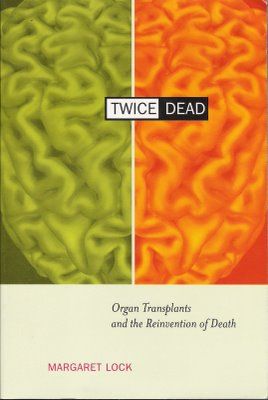
In Margaret Lock's anthropological study of organ donation, Twice Dead: Organ Transplants and the Reinvention of Death, she presents the difficulties this intrinsic reciprocity has when the gift is not one of food or jewelry, but the "gift of life" itself. However, because organ donation is always done anonymously, Lock argues that the desire for reciprocation results in unique cultural differences between societies. In North America her research suggests that people's need to reciprocate the gift manifests itself in the abstract:
All that donor families can hope for in the way of a return gift for this selfless act, however, is a letter of heartfelt thanks, often belated, written anonymously, and delivered through the local transplant coordination service with all identifying features deleted. Any thought of creating tangible human ties through this act is nipped in the bud. Reciprocity is reduced to an act of the imagination, and donors must be content with the thought that should they or their families ever need an organ, then perhaps another family will be willing to donate to them (319).
Lock argues that, for recipients in North America, this gift exchange creates a "frustrated sense of obligation toward the family of the donor for the extraordinary act of benevolence" and has been documented to motivate people to learn more about the individual who donated their organ, and even to behave how they imagine the donor behaved in order to help the organ adapt to its new host. In one case, where an individual only knew that the donor was Italian, the organ receiver started liking garlic for the first time because he thought he was "making his body into a good home for an Italian" (327).
Lock further suggests that the practice of anonymous donation, and the implicit need for reciprocation, has deterred people in Japan from participating in organ transplants at the same level as North America:
Gift giving remains central to social solidarity in Japan . . . These gifts, often lavish these days, are usually household items such as oil, tea, meat, fruit, cakes, and sake, all elaborately and appropriately wrapped. In addition, gifts may be given for particular services rendered during the year, including medical treatments. This complex system of gift exchange requires an acute sensitivity to the obligations and the reciprocal worth embodied in a gift (328).
Because of this "deeply entrenched moral economy of exchange" in Japanese culture, organ transplants have not been widely adopted, resulting in sometimes risky attempts to smuggle in organs from other countries since there are few domestic donors. One of Lock's sources, a medical doctor in Japan, believes this is because "organ donation 'fits' much better with the ethos of 'Christian' cultures rather than with Japan's eclectic mix of Buddhism, Confucianism, and Shinto" (329). There's a greater tendency, Lock suggests, to believe that a loved one will actually "live on" in another body if their organs are donated in Japan rather than in North America. Japanese lawyers even express concern that there might be legal disputes over inheritance settlements between the donor and recipient families as a result. However, Lock suggests that this cultural taboo may be breaking down over time.
Although Japanese often express a strong resistance, even an abhorrence, to the idea of receiving organs anonymously, outside the economy of gift exchange, I suspect that this reservation will be overcome as cadavar organs and organs from brain-dead bodies become more readily available (334).
Because unknown strangers are outside of the definition of formalized reciprocity that is so important to Japanese culture, Lock believes that acceptance of organ donation will slowly increase when the issue is one of survival.
Just as Malinowski's groundbreaking work on the Kula demonstrated how important gift exchanges were in the construction of meaning, Marcel Mauss has more recently argued that gifts are intrinsically viewed as part of a social exchange and receivers of gifts feel obligated to reciprocate. Lock's work highlights how this obligation becomes a problem with the unique human invention of organ transplants and is one that has generated conflicting attitudes about the exchange between societies.
References:
 De Waal, Frans and Brosnan, Sarach (2006). "Simple and Complex Reciprocity in Primates" in Kappeler, P. and van Schaik, C. (eds.) Cooperation in Primates and Humans: Mechanisms and Evolution. Springer, New York: pp. 85-106.
Margaret Lock (2002). Twice Dead: Organ Transplants and the Reinvention of Death California Series in Public Anthropology, no. 1. , Berkeley and Los Angeles: University of California Press.
Malinowsky, Bronislaw (1922). Argonauts of the Western Pacific. Routledge: New York.
- Log in to post comments
timely:
http://www.xkcd.com/659/
I donate blood (note: DONATE it, not sell it as plasma or some other mercenary transaction) through the American Red Cross because it is needed. I'm up to 19 gallons â that's 152 separate times that I've bled into a bag for the benefit of someone who I will most likely never know or meet. I'm not doing it for reimbursement; I'm doing it because I can.
Surgery, accidents, crime â for whatever reason, someone, somewhere, will need blood today. I donate so that some will be there. My only hope is for reciprocity. I'd like to believe that other people are also donating so that if and when the day comes when *I* will need blood, it will be there for me...
I'm also registered as an organ donor for the same reasons. When I finally shuffle off this mortal coil, if there's anything of use that can be removed and used to help someone else, medical science is welcome to it.
-"BB"-
My father received a liver transplant a few years ago and has exchanged several letters with the wife of the donor. I don't know what the laws are pertaining to this, but there is no expectation of anonymity in his case (the surgery was done in Florida).
But in a larger sense, I wonder to what extent organ donation is really "gift-giving." A gift is presumably costly to the giver, whereas with most types of organ donation, the giver is dead, so the cost is presumably nothing at all.
RECIPROCITY CAN REDUCE THE ORGAN SHORTAGE
In the United States, you can refuse to donate your organs when you die but still get an organ transplant if you need one. You can even prevent a loved oneâs wish to donate their organs from being carried out. You will still remain eligible for a transplant. The national transplant allocation system lets you get away with this in the name of âequality.â What a miscarriage of justice!
If there were enough organs to go around, none of this would matter. But the transplant waiting list is long and getting longer. Over 103,000 Americans are now waiting for transplants, and more than half of them will die before they get one.
When a transplantable organ becomes available, someone has to decide who gets it. These decisions mean life for some and death for others. The allocation rules used by the United Network for Organ Sharing donât give people any credit for registering as an organ donor. As a result, the UNOS rules give about half of all organs to people who havenât agreed to donate their own organs. Registered organ donors get the other half. Thatâs just not fair. Itâs also one of the big reasons organs remain in such short supply.
If you are an organ donor, you donât have to put up with this. You donât have to let bureaucrats decide who gets your organs. Your organs belong to you. You can exercise your legal right to decide who gets them when you die. You can join a growing group of donors who have decided they want their organs to go to fellow organ donors.
The group is called LifeSharers. Members direct that their organs be offered first to fellow members who have agreed to reciprocate. Non-members can have their organs if no member who needs them is a suitable match. Membership is free and open to all at http://www.lifesharers.org or by calling 1-888-ORGAN88. Nobody is excluded because of existing medical conditions, there is no age limit, and parents can enroll their minor children. A six-month waiting period is required before new members get preferred access to the organs of other members, which encourages people to sign up before they know they need transplants. LifeSharers has over 13,000 members.
Giving organs first to organ donors makes the organ allocation system fairer. More importantly, reciprocity in organ allocation gives non-donors a powerful incentive to become donors â by agreeing to donate your organs you could literally save your own life. Non-donors get reduced access to organs from reciprocal donors, and donors get more organs. As the number of reciprocal donors increases, the ability for âfree ridersâ to get an organ goes down.
Until we make reciprocity part of organ donation, weâll never make serious progress in reducing the organ shortage. The demand for organs keeps growing at double-digit annual rates. The supply of organs hasnât kept up with demand because there just arenât enough people willing to donate solely for altruistic reasons.
To see how reciprocity can increase the organ supply, imagine what would happen if it was the law of the land. If UNOS said they were making all organs available first to registered donors, just about everybody would register. If the consent rate from suitable post-mortem donors was raised to 85%, everyone currently on the transplant waiting list could get a transplant within three years and newly listed patients would get transplants much faster.
People who have agreed to donate their organs when they die should go to the front of the transplant waiting list. Those who havenât agreed to be a donor should go to the back of the list. Nothing could be fairer, nothing will reduce the organ shortage faster, and nothing is stopping you from helping make it happen.
My father received a liver transplant a few years ago and has exchanged several letters with the wife of the donor. I don't know what the laws are pertaining to this, but there is no expectation of anonymity in his case (the surgery was done in Florida).
But in a larger sense, I wonder to what extent organ donation is really "gift-giving." A gift is presumably costly to the giver, whereas with most types of organ donation, the giver is dead, so the cost is presumably nothing at all.