

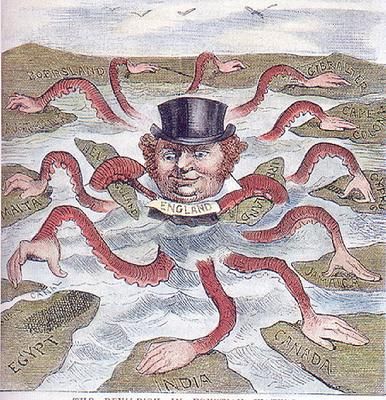
 In Quentin Skinner's celebrated history The Foundations of Modern Political Thought he writes that:
If the history of political theory were to be written essentially as a history of ideologies, one outcome might be a clearer understanding of the links between political theory and practice.
In Part II of this series I highlighted how a common objection to the political theory of social Darwinism is that it was a misapplication of Darwin's science to already existing ideas. A second objection is that there is no core theoretical framework that would make the theory a coherent set of principles. A political theory only possesses utility if its general principles exist independent of the thing to be explained. Without this the theory is a mere amalgamation of tenuously related ideas that do not form a unified structure.
If social Darwinism is a valid political theory, it would stand to reason that some basic predictions could be made about someone's political practice given the theory they follow. For example, as the cognitive scientist George Lakoff has so brilliantly described in his book Moral Politics, liberals and conservatives follow recognizable patterns in their support for social policies based on the political theories they adopt (see my post The Nature of Partisan Politics for a full discussion). However, as I mentioned in Part I, the "social Darwinism" of Theodore Roosevelt and Herbert Spencer contradicted each other on two of the fundamental tenets of the theory. An important guideline for political history (and one that is required in science) is that if a theory doesn't explain a given phenomenon it is effectively useless.
![Reblog this post [with Zemanta]](http://img.zemanta.com/reblog_e.png?x-id=4f933da2-596e-4aa3-a201-b6015ac248a6)
Unlike such theories as Capitalism, Marxism, or Catholicism (which should be understood as fundamentally different from a scientific theory--there really should be a different name to distinguish them), there was no single text or agreed upon corpus that could be pointed to as defining social Darwinism. Richard Hofstadter's solution was to emphasize Herbert Spencer and the American Episcopalian minister William Graham Sumner as his prime examples and then to reference all other social Darwinists, in one way or another, to the influence from these primary figures. However, while scholars universally acknowledge Spencer as central to any definition of social Darwinism and have filled multiple volumes of critical analysis based on his views, every word Sumner ever wrote on the subject was cited in Hofstadter's book, and his single chapter on him is less than sixteen pages.
When looked at as a whole, as Robert Bannister did in the journal History of Political Economy:
Sumner was not guilty of celebrating a "struggle for existence," nor did he believe that Darwinism justified the dog-eat-dog practices he observed about him. Nor did he really, as some critics have charged, equate might and right, reducing everything finally to social power. . . Like many caricatures born in polemic, the resulting
portrait makes poor history.
Furthermore, Halliday's argument for "making Social Darwinism and eugenics synonymous" (see Part I) has become problematic for multiple authors, even those who argue for the utility of the term. Why would eugenics be a key component of laissez-faire social Darwinism when Progressive Era reformers were just as likely to endorse it? This is further compounded given that numerous socialists likewise advocated eugenics, such as Karl Pearson, George Bernard Shaw, and Edward Aveling.
There were also religious arguments for eugenics, then called "human stirpiculture," that were advocated as early as 1833 and were based on key passages in the Bible. According to Christine Rosen in her book Preaching Eugenics, during the late nineteenth and early twentieth centuries "the Bible became the most popular cultural reference point" for promoting eugenics.
By 1899, Reverend A.O. Wright, secretary of the Wisconsin State Board of Charities, was warning of "knots of defective classes" of people who had produced "a whole population of criminals, paupers, idiots and lunatics." Later, as the president of the National Conference of Charities and Correction, he offered a vision of the new philanthropy that would dispatch those "defective classes" to state-sponsored colonies, where they would no longer risk fouling the hereditary pool. "Unless we are prepared for drastic measures of wholesale death or equally wholesale castration," he said, "we must cut off defective heredity by the more expensive but more humane method of wholesale imprisonment."
Christian charity notwithstanding, eugenics was embraced around the world in a variety of contexts--sometimes linked to social Darwinism and sometimes not--in societies ranging from Bolshevik Russia to Republican Brazil to Nazi Germany (in the latter case, despite the protestations of Christian and Muslim propagandists, there was no connection between Darwin and Hitler). Rather than emerging from a coherent theoretical framework, eugenics gives every indication of being simply "tacked on" to Hofstadter's original critique of the laissez-faire conservatives.
An additional objection to social Darwinism as a coherent theory is that no historical figure can be associated with the full theory as it's defined. Imperialism, for example, is one of the four key components of social Darwinism (see Part I). The American historian William L. Langer first popularized the biological justifications used for an aggressive foreign policy in his influential Diplomacy of Imperialism (1935) and which, according to Paul Crook, "later textbooks often uncritically followed." In his paper "Social Darwinism and British 'New Imperialism': Second Thoughts," Crook writes that Langer's strongest case rests upon two men who undoubtedly used Darwinist language and concepts: Benjamin Kidd and Karl Pearson.
It is ironic that Kidd and Pearson have tended to be lumped together in this debate, given that Kidd loathed Pearson's starkly survivalist worldview and his amoral eugenics. . . . [Kidd's] view of empire was not one of jingoistic expansionism, but of a rather restrained and paternalistic trusteeship. His social theory was not aggressively "Social Darwinist" but had much in common with the reformism of "New Liberals" . . . Pearson's genocidal militarism alienated liberals and moderates, and even put him out of step with many in eugenicist circles where he wielded most influence, while his socialism was counterproductive for conservative imperialists. He seems generally to have been considered something of a crackpot and a maverick, and there is little evidence that his views made a serious impact on the colonial debate.
That such divergent figures should adopt some similar biological rhetoric in their support for imperialism may speak more to a shared culture than any kind of consistent ideology. Hofstadter acknowledged this when he stated that most arguments for nineteenth century imperialism didn't need any inspiration from natural selection.
Neither the philosophy of force nor doctrines of Machtpolitik [power politics] had to wait upon Darwin to make their appearance. Nor was racism strictly a post-Darwinian phenomenon. Gobineau's Essai sur l'égalité des Races Humaines, a landmark in the history of Aryanism, was published in 1853-55 without benefit of the idea of natural selection. As for the United States, a people long familiar with Indian warfare on the frontier and the pro-slavery arguments of Southern politicians and publicists had been thoroughly grounded in notions of racial superiority. At the time when Darwin was still hesitantly outlining his theory in private, racial destiny had already been called upon by American expansionists to support the conquest of Mexico (p. 171).
What Hofstadter argues is that some of Darwin's terminology was merely used as "a new instrument by theorists" in order to support their preexisting biases. A fairly weak criteria upon which to base one of the main pillars of a political theory. However, despite these internal inconsistencies in logic, the third most common objection by scholars may be the most damning indictment to the theory. There is very little documentation that social Darwinism had any influence on thinkers in the nineteenth century.
References:
 Bannister, R. (1973). William Graham Sumner's Social Darwinism: A Reconsideration History of Political Economy 5 (1), 89-109
Crook, P. (1998). Social Darwinism and British "new imperialism": Second thoughts The European Legacy, 3 (1), 1-16 DOI: 10.1080/10848779808579860
Rosen, C. (2004). Preaching Eugenics: Religious Leaders and the American Eugenics Movement, Oxford: Oxford University Press
Chris at Mixing Memory had a pretty entertaining review of Lakoff's "The Political Mind" going, but it ended with chapter 3. Unfortunately he disappeared in 2008. At any rate, he calls into question Lakoff's cognitive dichotomy as an explanation for liberal vs conservative beliefs.
So, this is not a refutation of "Social Darwinism," but a chronology of "Social Darwinism" asserting that "Social Darwinism" is a misnomer?
But is "Social Darwinism" true?
I would argue no. But I would rather have a framework in which to argue, as I am neither an evolutionary biologist nor a sociologist.
Christopher, I thought the point of this series of posts was to demonstrate that Social Darwinism as a coherent ideology does not exist. If you want to know if Social Darwinism is "true" (whatever that means), you must first define the term. There is no accepted definition, and people with completely opposing political programs have been described as Social Darwinists.
I am fascinated from an european standpoint, on how much of this discussion is a non-starter, or maybe even a non-topic. Having spent most of my career in the US or under the science dominated by the US, how "backward" a lot of this discussion on Darwin mixed with "social" is. Pretty much for most of continental Europe, its pretty clear, that you can transform societies at lightspeed compared to anything that nature is capable of doing, if you choose to apply one of the possible methods to get rid of the nasty pockets in a society. This also brings me to the point, that in the US, the belief is still alive an well, that "slums" such as South Central L.A. are the natural state of things and there is not much one can do about it. This idea that somehow, a laissez-faire approach to society will magically fix things. As contrary to natural selection, there is no good mechanism in place to address that will automatically move a society forward. But by simply ignoring problems or fencing them in or moving to the suburbs, the US has successfully managed to try to coherently address problematic spots. I guess the idea that you can always move west is coming to an end, as even the west runs out square miles.
I would agree that the essays seem to illustrate nicely how Social Darwinism is not a valid and unified political theory involving the Hofstadter/Halliday criteria.
On the other hand, these criteria (particularly eugenics and laissez-faire) might still allow "Social Darwinism" as an umbrella category; that is, identifying a group of social movements that attempted to apply the science of evolution to the engineering design of society, with the individual social movements all sharing some of these traits, but not necessarily each having them all.
On the gripping hand, I'd still prefer the term "Social Spencerism" for most of the example groups, as the blame for their sins sits closer to where it belongs.