

 jjacquet |
History repeats itself. Boy does it.
This was never more evident than after I finished reading Charles Wohlforth's The Fate of Nature (2010), which has a few ominous chapters dedicated to the Exxon Valdez oil spill. Wohlforth was a journalist who covered the spill in the field and after reading his account, I was humbled by the realization that none of my observations of the BP oil spill were orignal. The landscape is almost exactly the same, except for the fact that BP is going to wind up paying less money for a bigger disaster and that photoshop didn't exist yet, so Exxon couldn't…
jjacquet |
Let's briefly compare the Exxon and BP spills.
Exxon oil estimated to have spilled into Prince William Sound: 11 million gallons
BP oil estimated to have spilled into the Gulf of Mexico: 172 million gallons
So when we talk about how BP's Oil Spill Bill Could Dwarf Exxon's Valdez Tab we should remember that BP's oil spill also dwarfed Exxon's. And is the assertion that the tab is bigger even true? Well, in nominal and real terms, yes.
Cost of the Exxon clean up: $2 billion (1989 dollars) or $3.58 billion (2010 dollars)*
Cost of the BP clean up: $6.1 billion (2010 dollars)
But if we…
jjacquet |
Read an interview I did with Mongabay about the Gulf Oil spill more than a week ago (apologies for the lag time). Also watch for a comparison of the Exxon Valdez and Gulf oil spills coming soon...
 jjacquet |
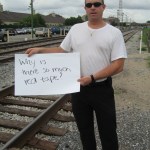
In a humble effort at citizen journalism, we went around New Orleans and other parts of the Gulf asking people what they thought of the BP oil spill. Most of victims don't have voices, but here is what a few of the humans thought (they wrote down their opinions or, on occasion, dictated it to us). For the collection, see the Flickr set. If you would like to add your photo and thought to the fray, please email me at guiltyplanet at gmail dot com.
Josiah & Kejeaun, Jennings, LA
Don Houghton, New Orleans, LA
Joshua Carter, Clayton, TX
John Smith, New Orleans, LA
Zack Vincent, Brent…
 jjacquet |
BP says oil flow has stopped as cap is tested, although we're not sure when there will be a permanent solution. But even if they manage to stop the oil, can BP stop the hate?
Many people are certainly angry at BP. The Facebook Boycott BP page had 350,000 followers in early June and is now up to 825,000 people. BPGlobalPR, an adbusting on Twitter, has more than 186,000 followers. In New Orleans, there were many anti-BP t-shirts. British people we met in New Orleans were hiding their accent. William Wilson from Lincoln, England said this:
Soon after the spill, BP began strategizing…
 jjacquet |
In the French Quarter of NOLA, shirts about the spill are a hot item. Here are a few favorites around town. For more, check out our Flickr set devoted to oil spill t-shirts.
 jjacquet |
"The bucketheads are here," Jeff Holmes radioed back to his camp in Grand Bayou Village, a totally bizarre and charming outcropping of homes built on salt marshes that Holmes is worried will disintegrate under a thin but suffocating blanket of oil that is creeping up the bayou. That is, in part, why he has volunteered to take us out to film the bay as part of the Louisiana Bucket Brigade's Grassroots Mapping Project, which is helping citizens use balloons, kites, and other simple and inexpensive tools to produce their own aerial imagery of the spill (which is then pieced together by GIS…
jjacquet |
Even before I knew what it was, I never wanted a blog, because I didn't like how the word sounds. Similarly, the term scibling (which refers to bloggers on scienceblogs.com) always creeped me out. And yet, here I find myself, a scibling and a blogger for more than three years in SEED's network and more or less content. Ask anyone and you'll find I'm fairly uninvolved, rarely take a position, do not contribute to the forums or make a fuss.
Last Wednesday, I saw an email from SEED editor Adam Bly, which everyone knows about by now, in which he defended SEED's decision to allow PepsiCo a…
 jjacquet |
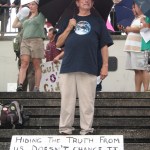
Tonight we made our way to Cafe du Monde in the French Quarter to witness the New Orleans gathering of Worldwide Protest BP Day. The drizzling weather probably served to separate the men from the boys, as they say, and so good intentions and half-baked messages ran high (see photos from the protest on Fickr).
There were plenty of people opposed to the use of Corexit and one woman rightfully demanded to know why it was banned in Europe but still legal in the U.S. (read more about this issue on the ProPublica blog). There were accusations that the President was doing nothing and that…
 jjacquet |
Here is the dead wildlife tally as of yesterday:
As you can see, birds are hit hardest (or most often discovered). So we headed to the International Bird Rescue's Buras, LA operation, where they take many of the oiled pelicans, gulls, and terns.
Most of the birds spend 2-3 weeks in recovery and they spend the first week very stressed out due to all the human handling. Because of the stress, the Bird Rescue Center often let the bird rest 5 days or so before they begin the cleaning process. Then the oiled birds get washed with Dawn dish soap, hosed with water, and treated with tender care…
 jjacquet |
Who: BP, the Deepwater Horizon oil rig (owned by Transocean but leased to BP), and Haliburton (responsible for plugging holes in the pipeline).
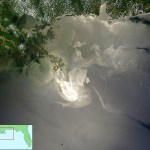
What: The largest offshore spill in U.S. history. The numbers are fuzzy but estimates are somewhere between 35,000 to 60,000 barrels of oil per day. Today is day 80 of the spill, which means somewhere between 2.8 million and 4.8 million barrels have gushed into the Gulf. More incredible, the U.S. uses around 20 million barrels of oil per day. The oil spill so far, massive as it might be, represents only 15-25% of one day in U.S. oil consumption.…
 jjacquet |
Jessie and I made a beeline for New Orleans. We stopped only for gas and a night's rest. In Pachuta, Mississippi, we couldn't resist photographing this sign at a gas station (not BP -- we won't be stopping at BP):
 jjacquet |
President Obama called it "the worst environmental disaster America has ever faced." So I thought I should face it and head to the Gulf. With me is Jessie Lozier, who I have known all of her 18 years (here we are in 1998 and today at our hotel in the French Quarter). As a future biologist and possible veterinarian/science journalist, I thought this would also be good for her to see. We'll be blogging from our trip regularly over the next ten days. I am also now on Twitter. More soon...
jjacquet |
Almost every hour I receive some new piece of information that I want to write about on this blog. And yet, as you'll notice, the posts are spotty. The truth is, there is simply too much to criticize. Just consider the oceans this week.
The IWC met to discuss whether to reopen commercial whaling, which, in terms of ethics, is a return to the Middle Ages. Reporters are still calling Daniel Pauly to get him to address the debate (there is no debate) that whales eat all of our seafood (of course they don't; we do). Apparently, the IWC did not reach an agreement so things remain the same.…
 jjacquet |
This month, the U.S. Justice Department opened criminal and civil investigations into the BP oil spill. Will BP executives go to jail?
The Times has a nice piece on the potential 3-15 years BP executives could serve, suggesting that mid to senior-level managers at BP are most at risk of criminal prosecution for "gross negligence". We know BP's CEO Tony Hayward has no fear of jail time and most people I speak to are very skeptical that any of the BP executives will spend time in prison, despite this Facebook page with more than 1300 members calling to arrest Tony Hayward NOW.
The ecological…
jjacquet |
It is nice to see science and art getting along. The World Science Festival's
event Eye Candy demonstrates how science can help
us understand some of our notions of beauty. Art is equally useful to science,
especially to scientists who envy the artist's ability to parlay an idea into
something visual—something that does not make too many demands on
their audience's time.
Most people are unaware of human impacts on the oceans, such as
overfishing, pollution, and invasive species. This deficiency is in part due to the
ocean itself—the opaqueness of the surface transmits a deceiving
tranquility—…
jjacquet |
Jennifer Jacquet joins us from Guilty Planet. Jennifer is a postdoctoral research fellow working with the Sea Around Us Project at the UBC Fisheries Centre.
It is nice to see science and art getting along. The World Science Festival's event Eye Candy demonstrates how science can help us understand some of our notions of beauty. Art is equally useful to science, especially to scientists who envy the artist's ability to parlay an idea into something visual—something that does not make too many demands on their audience's time.
Most people are unaware of human impacts on the oceans, such as…
 jjacquet |
Since it's Sunday and a week since I last blogged (forgive me Father, for I have sinned...), I thought I would keep on the church theme. No nunchuks this week (not even this kind), but I did want to share a study on how money is collected in churches can affect giving.
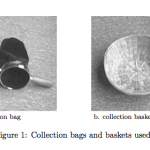
Economist Adriaan Soetevent collected data from 30 different Baptist churches in the Netherlands. The churches usually use closed collection bags (left) but, for 29 weeks, half of the churches were randomly chosen to replace the closed bags with open baskets (right). With the baskets, neighbors can observe each other 's…

 jjacquet |
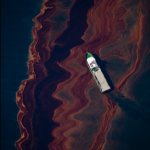
The people my mom works with wanted to know what I thought of the oil spill. Are there alternatives to: it's a catastrophe? In America, land of nutbags, there are always alternatives. Texas Governor Rick Perry called it an 'act of God' (BP has amassed almost as much power). But really, there is only one position. It's a disaster.
The Atlantic ran a really nice summary piece on how the spill has changed public opinion, including less support for offshore drilling (down from 62% to 46%), particularly from Floridians (55% now reject it; still a bit low, don't you think?). Of course, in…