

Somewhere in my mind, I like to try and construct a timeline of all of human history. Yes, there's the obvious stuff, like the discovery of fire, the learning of what foods will and won't kill you, the domestication of the dog, and all the similar things that led us to become successful hunter/gatherer tribes. Yes, these were incredibly important steps, which allowed us to do things like eat more meat without getting sick through the power of cooking, find out that some poisonous plants are actually edible when you either boil them or eat only the proper part (hi, rhubarb), and the start of obtaining mastery over an animal, which was supremely useful in hunting and guarding watch.
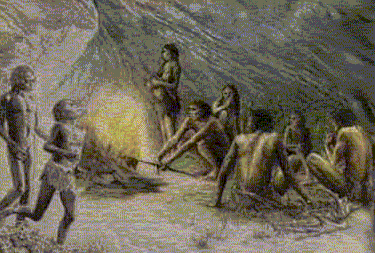
But it's only very recently in human history that we began to move past the hunter/gatherer stage -- past the stage of living in small tribes -- and form larger societies. How did we develop into the creatures we are today from living in small hunter/gatherer tribes? It hasn't been that long, and I've got an appropriate song for the weekend to help bring us there:
So, what brought us out of hunter/gatherer societies and into larger, more specialized ones? Pretty simply, agriculture. It's only in the last 10 or 12 thousand years that humans began planting and sowing their own crops, and started controlling their food. Although this may have first happened in the fertile crescent, it quickly spread all over the world. Interestingly enough, this is contemporaneous with the end of the last ice age, suggesting that wild food was plentiful until the most recent climate change forced us to change the way we lived.
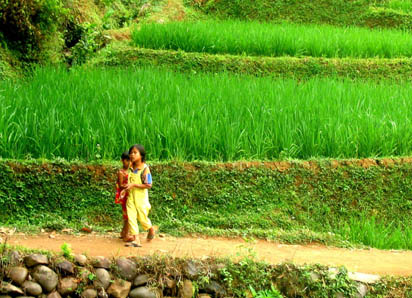
Growing large areas of crops attracted two major things: many other people and large herbivores. Why many other people? Because one person, at maximum, can take care of 2.5 acres of land (about 2 full soccer fields). But on that land, you can grow enough food staples to feed 100 people for a year. So you're going to attract other people. Other, hungry people. But you're also going to attract mindless, feeding ruminants as well.
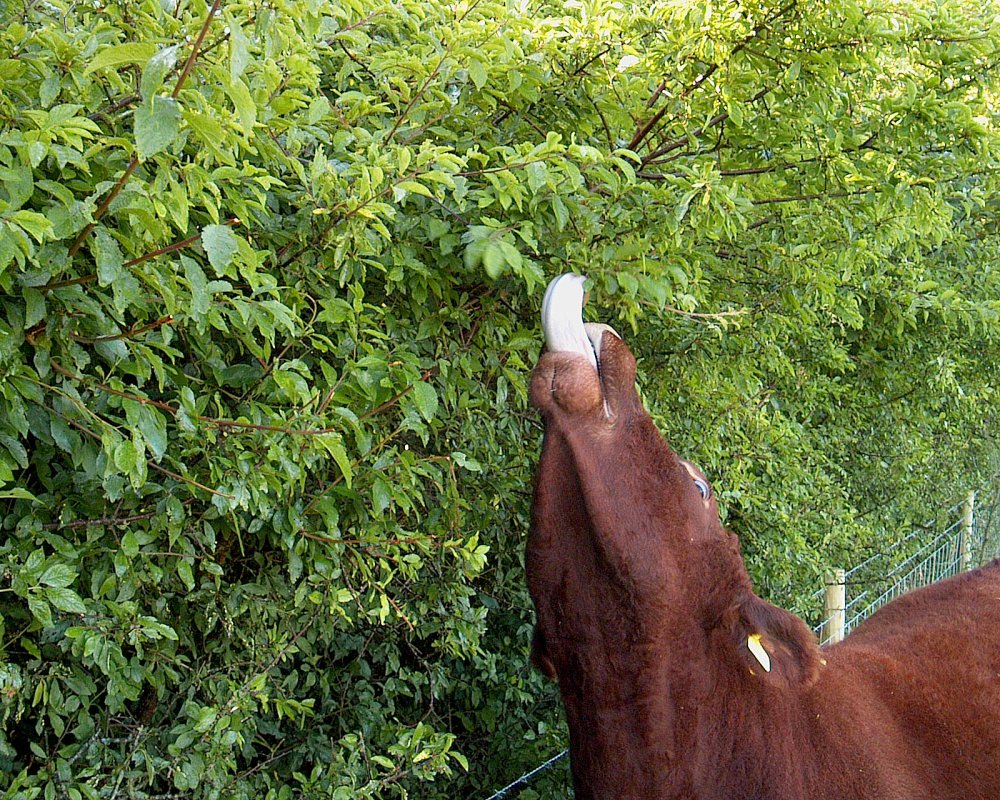
It wasn't long before people figured out that they could not only hunt these animals, but also herd and breed them; herding appears to go back within 2,000 years of farming. So, in addition to warriors and farmers, we now had herders. And of course there was conflict: the story of Cain and Abel is as old as the story of modern society.
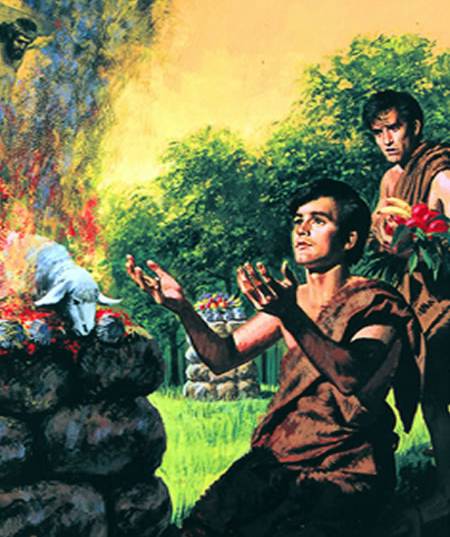
So, what came next? What was the next step in human development?
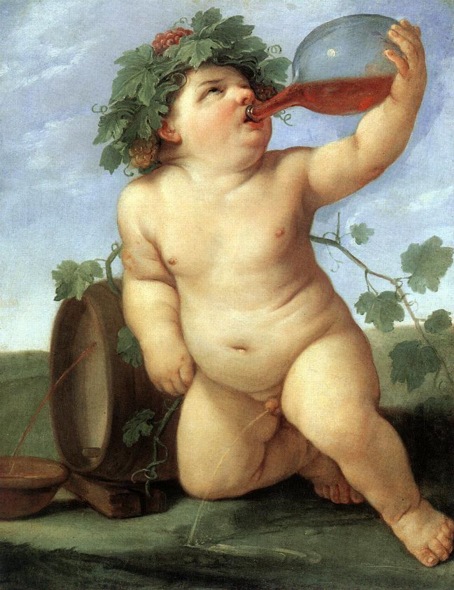
Wine? That's right, wine. How do we know? The oldest pottery-shards that survive -- from earlier than 5000 B.C.E. in Iran -- have Calcium Tartrate (a.k.a. evidence of cream of tartar) on them, a by-product of wine-making! About 1,500 years before the wheel. So the timeline of human history looks like this:
- Food,
- Tools,
- Fire,
- Art,
- Dogs,
- Farming,
- Herding, and
- Alcohol!
It's hard to argue with all the success we've had as a species over the last 7,000 years. Is it possible that this is the cause of it all?
Of the horse which pulls the small plow and makes a small fertilizer behind, we are crossed in the tractor which walks(works) 24h / 24h and 7/7, to make profitable. Because the population is expansive whereas lands are not it. They needs to manage the fresh water of the rivers which gets lost in the sea (!). The farmers feed the world, but the farmers disappear! What shall eat t we tomorrow?
Du cheval qui tire la petite charrue et fait un petit fumier derrière, on est passé au tracteur qui marche 24h/24h et 7/7, pour rentabiliser. Parce que la population est expansive tandis que les terres ne le sont pas. Ils faut gérer l'eau douce des rivières qui se perd dans la mer (!). Les agriculteurs nourrissent le monde, mais les agriculteurs disparaissent ! Que mangera t on demain ?
Do you know why Yahwe favoured Abel's sacrifice to Kain's?
The general explanation is that because Abel sacrificed blood (i.e. meat), which pleased Yahweh more than burnt vegetables.
I knew that wine was old, but I would not have guessed that it predated the wheel.
@sili: Of course - god knew that Cain just wasn't Abel, just as Emmanuel Kant but Kublai Khan. For those fanatical adherents to scatological humor, the South Park description of John Edward is equally suited to the god of the old testament.
Well, I know the 'in-world' explanation.
I was looking for some relation to the conflict between farmers and herders mentioned.
Sili,
As far as I know, it comes down to this: meat is tastier, more nutritious (at least as far as nutrient, calorie, and protein density goes), and also harder to come by than fruits, vegetables and grains are.
Herders allowed for more meat to be available, but also didn't have enough food on their own to feed themselves. Farmers had control of the staple foods, but couldn't procure the meat for themselves. There were often wars over the land and crops, as well as raids on the herds.
God demands small amounts of the good stuff (meat and wine) in almost all cultures; it's the best of his bounty.
Alcohol, in the form of beer, was more healthy than water, specially in you lived in a proto city with poor sanitation. It was easier to catch a deadly bacteria or debilitating parasite drinking water than alcohol. Beer has vitamins, minerals and is nutritious. And I think it was a good anti stress potion, considering they lived in places threatened by lions, bad tempered beasts and worst tempered nomads.
Abstinence from alcohol was unwise and unhealthy!!
Oh, those good old days.
I can always enjoy some Jerry with my science. I love this blog.
5
Well, I know the 'in-world' explanation.
I was looking for some relation to the conflict between farmers and herders mentioned.
http://www.ladyshoesstore.com/
5
Well, I know the 'in-world' explanation.
I was looking for some relation to the conflict between farmers and herders mentioned.
http://www.ladyshoesstore.com/
ok, we all know that we're great in the way we evolved-
but doesn't anyone else wish we'd stayed in small hunter-gatherer tribes, taking care of the land so it would feed us? the thing that really gets on my nerves is that we're killing the thing that supported us from the begining, and with it we're killing a lot of other animals. for example, we're melting the polar ice caps! i mean, come on! i can't help but wonder, if there is a god, why didn't he see this and put an end to it? and why didn't WE see it and put an end to it? if any one has the answers - please tell me!!!!
5
Well, I know the 'in-world' explanation.
I was looking for some relation to the conflict between farmers and herders mentioned.
http://www.ladyshoesstore.com/
5
Well, I know the 'in-world' explanation.
I was looking for some relation to the conflict between farmers and herders mentioned.
http://www.ladyshoesstore.com/
5
Well, I know the 'in-world' explanation.
I was looking for some relation to the conflict between farmers and herders mentioned.
http://www.ladyshoesstore.com/
5
Well, I know the 'in-world' explanation.
I was looking for some relation to the conflict between farmers and herders mentioned.
http://www.ladyshoesstore.com/