

In the 1940s, the Big Bang theory was first conceived and detailed. But, to quote Niels Bohr,

We are all agreed that your theory is crazy. The question which divides us is whether it is crazy enough to have a chance of being correct. My own feeling is that it is not crazy enough.
One of the staunchest opponents of the Big Bang idea was Fred Hoyle, an outstanding, prolific scientist in his own right.

In the 1950s, Fred Hoyle found it inconceivable that all of the heavy elements in the Universe -- practically everything we find on Earth -- would have been made in the Universe's infancy. He thought, instead, that there must be a much simpler source of these heavy elements, one very close to home. Any guesses?

Of course! The very process that powers the Sun -- nuclear fusion -- is the only process in the Universe that turns the light elements of the Big Bang (Hydrogen and Helium) into the heavy elements we have on Earth today. There's a brilliant scientific paper, co-authored by Hoyle in 1957, showing how all of the elements heavier than Lithium (which is only element #3!) are made in greater abundances in stars than in the big bang. How? Just by fusing the light ones together. (Click for your own, hi-res nuclear physics chart.)


This man -- somehow overlooked for a Nobel Prize -- was legitimately the father of not just stellar nucleosynthesis, but of explaining how every living thing came to be.
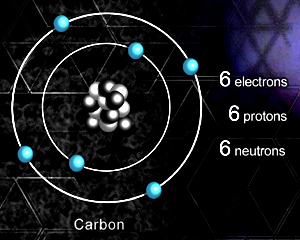
What? Are you serious, Ethan? Yes. He explained how every living thing came to be, because, as far as we know, life requires carbon. And Fred Hoyle was the one who figured out how this must happen.
Here's the deal. Carbon has 6 protons and 6 neutrons in its nucleus, for a mass of 12. In the Big Bang, things are hot and dense enough that any two nuclei can collide. But to make Carbon from a sea of Hydrogen (mass 1) and Helium (mass 4), you would need to have three Helium atoms collide at once. Why? Because there is no stable nucleus with a mass of 8. You can't make Beryllium-8 and then whack it with Helium, because Beryllium-8 doesn't exist. (Well, it decays after 10^-17 seconds, so for all intents and purposes, it doesn't exist for long enough to be interesting.)
So if we couldn't make this during the Big Bang, Hoyle reasoned, we must have made it in stars. Carbon exists, he said, and it must have been made from hydrogen and/or helium alone. So he proposed a new process, never seen by nuclear scientists before, the triple-alpha process. If you have three helium nuclei close together, like in the center of a star, you can fuse them together to make Carbon, like so.
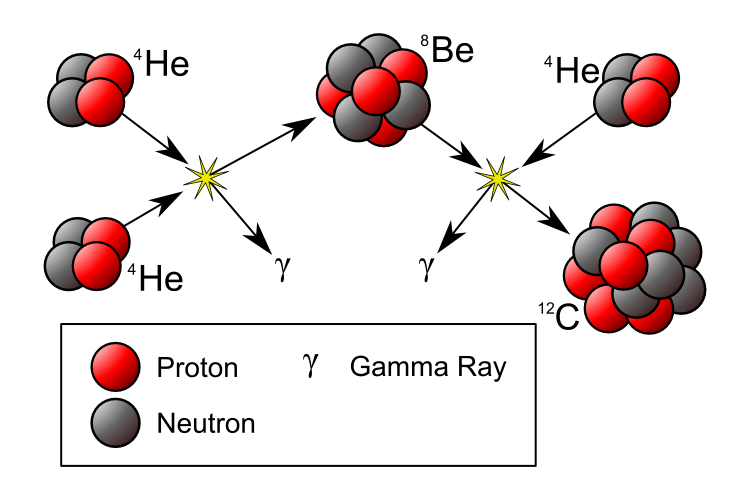
Here comes the part that makes Fred Hoyle the man of the 1950s for me: he did the math, and found that if you add up the mass of 3 helium nuclei, it turns out to be more massive than a carbon nucleus. So, Hoyle reasoned, there must be an atomic resonance of carbon that is almost exactly equal to the combined mass of three helium nuclei. One of his colleagues, Willie Fowler, looked for it, and found it, almost exactly where Fred Hoyle said it would be. This is now known as the Hoyle State.
This is the only instance in all of scientific history that the anthropic principle has been used to successfully predict anything. And for this, Willie Fowler won the Nobel Prize, and although he credits Fred Hoyle tremendously, Hoyle was left out. Somehow, understanding where practically all the matter on our world comes from -- and on all worlds, for that matter -- didn't merit it.

Why? Because for all of his contributions, for all of his innovation, and for all that he advanced our understanding of the Universe, he did something that was unforgivable in a scientist.
He loved his Steady-State Theory so much that he refused to accept the Big Bang, even when the evidence became overwhelming. And the evidence became overwhelming in 1964; Hoyle railed on against the Big Bang until his death in 2001. He would speak at conferences, declaring,
We live in a fog,
calling the leftover glow from the big bang a "mysterious fog" that his steady-state model simply didn't explain. Not only didn't, but couldn't. Serious scientists pointed out irreparable flaws in this model, making it incompatible with our observations. And our observations support this:
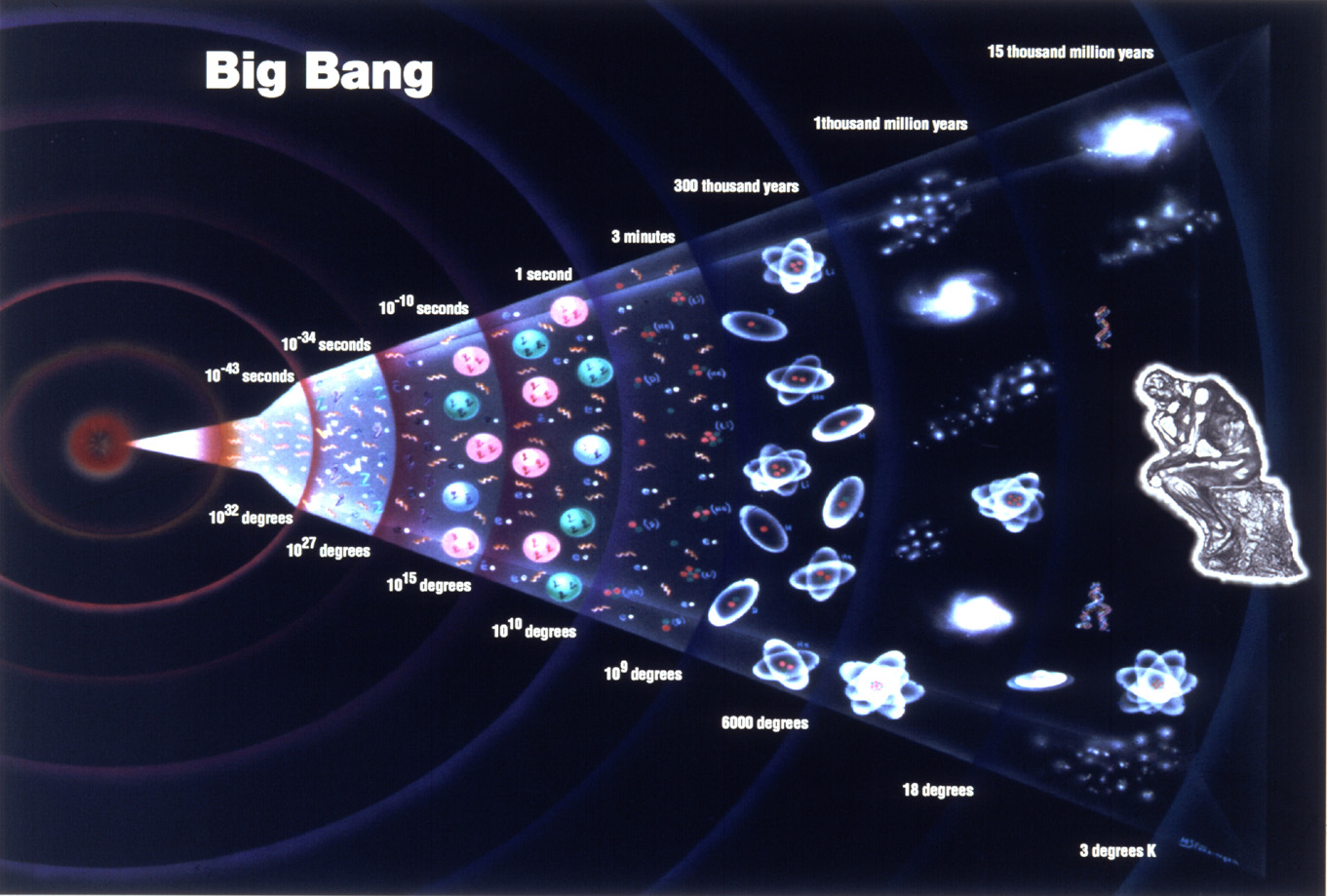
The real tragedy is that this brilliant man simply couldn't accept new evidence and adjust his world-view accordingly. And so he died in ignorance, clutching onto his discredited theory, in futility, for nearly the last forty years of his life. As a scientist, I don't believe in string theory, extra-dimensions, technicolor, chaotic inflation, proton decay, or fundamental scalar particles, among other things. But if the evidence comes in validating these theories, I hope I'm savvy enough to change my world view, rather than hang on to my old prejudices. And this may come sooner rather than later, depending on what turns up at the LHC!
"And so he died in ignorance..."
After reading your post, I think this is a bit harsh. Might "And so he died in continued denial ..." be more appropriate?
Very interesting bit of history.
Disbelieving the Big Bang (as he was first to call it) was not the strangest thing Sir Fred was occupied with; or rather, it required some rather baroque epicycles. I went to a lecture he did at the University of Sydney in 1983, mainly about how all the interstellar dust was composed of bacteria and viruses. Apparently, as the universe expands, the matter that has to pop into existence between the stars to maintain constant average density is not simply hydrogen atoms as he first thought. Once the presence of complex organic molecules in space was established by spectroscopy (that much was real, anyhow), he matched the size distribution of dust particles (inferred from scattering of starlight) to that of common bacteria. Then, in an epiphany after a bunch of people came down with viral symptoms at a conference he and Wickramasinghe organised in Sri Lanka, he started believing viruses came from space too. "May as well be hung for a sheep as a lamb," as he said in that broad Yorkshire accent.
There are a whole suite of mental illnesses that involve obsession with germs (washing behaviour in OCD, etc) and belief in control by extraterrestrial agents. Yet Fred was mostly a solid down-to-earth chap. He should have got the Nobel, for sure. And the Ignobel too.
When I was in junior high, I went to a seminar by William Fowler at the University of Chicago. At that time (the early 80s), the U. of C. hosted a seminar each spring for junior high science students in the Chicago area. He presented his work on stellar nucleosynthesis (although in a watered down version, because the audience was 7th and 8th graders). Since I was only barely a teenager, at the time I had no appreciation of the significance of this seminar (although I do remember being facinated by it). Of course, I now recognize the great honor that it was to have heard him speak. I did end up with a career in a branch of physics (fluid mechanics, which depending on whom you talk to is either engineering or physics, but I am a member of the APS), so I like to think that in some small way, this seminar affected my career choice. Thank you Professor Fowler!
Tragedy? Hoyle will be remembered forever for having named the Big Bang theory. That's not tragedy.
I don't understand why you're focusing on the shortest-lived of several nuclei with mass 8. According to this table , Lithium-8 has a half-life of 840 ms. (Lithium-8 is also a possible decay product of Beryllium-8 .) The table for Boron also shows a Boron-8 isotope with a half-life of 770 ms. (I don't think these two isotopes affect the main thrust of your argument, but why pick on Beryllium-8 instead?)
Ethan,
In the text of your blog you state:
Here's the deal. Carbon has 6 protons and 6 neutrons in its nucleus, for a mass of 12. In the Big Bang, things are hot and dense enough that any two nuclei can collide. But to make Carbon from a sea of Hydrogen (mass 1) and Helium (mass 4), you would need to have three Helium atoms collide at once. Why? Because there is no stable nucleus with a mass of 8. You can't make Beryllium-8 and then whack it with Helium, because Beryllium-8 doesn't exist. (Well, it decays after 10^-17 seconds, so for all intents and purposes, it doesn't exist for long enough to be interesting.)
If 8Be isn't around long enough for something to fuse to it, then why in the figure below it is that the case that is illustrated? Seems like you're contradicting yourself.
Perhaps you might clarify the triple alpha process? Is this a 3 body collision? Those are pretty uncommon in the world of chemistry I see things from. Perhaps 3 body collisions are more common than usual in the core of a star?
Many years ago (about 1964 actually) I went to a public lecture by Fred Hoyle on the Arrow of Time. I found it interesting and informative. Many years later I was working at the Anglo-Australian Observatory when he visited and gave a talk. It was the same talk, just warmed over. No noticable new material. I was very disappointed. From the iconoclastic powerhouse he had turned into a rather pathetic old man. (My one regret is that I didn't get him to sign my copy of Black Cloud. I never thought of it until too late.)
OTOH, he was the main power behind the establishment of the AAO and as such he managed to put one over the two governments who were paying for it. He arranged that the observatory was the personal property of the observatory board. In other words, they owned it, the governments didn't. For this reason he was (and presumably still is) a hero at the AAO.
Hoyle was also a devotee of the panspermia theory, which he co-hatched with Wickramasinghe. He loved that idea so much that he rejected evolution, making him brilliant, but also something of a whackaloon.
Richard,
The details, as always, are a little more technical. In order to form carbon-12, you need to have an "effective" three-body collision, which means you need to get 3 Helium-4 atoms together.
The way it actually works is you need for Energies/Temperatures to be high enough for the nuclei to have enough kinetic energy to overcome their mutual repulsion, and you need for the densities to be high enough to allow for these three helium nuclei to hit together in a timescale less than 10^-17 seconds.
In the big bang, the kinetic energy of the other particles in the Universe is too high, and when the Universe is dense enough to make it, it gets immediately destroyed by the energetic particles around it. By time it's cool enough for these heavy nuclei to be stable, it's too late, and the density is too low to form them.
But, in stars, the density and temperature are both high enough to form them, and they don't dissociate because there are no photons of high enough energy to cause nuclear fission.
Reminds me of a song... http://www.astro.virginia.edu/class/whittle/astr553/Topic16/t16_gamow_s…
Don't forget, Hoyle wrote some pretty cool science fiction too.
I have to agree with Richard. First you said that Beryllium-8 "doesn't exist" or at least not "long enough to be interesting." Then you say that every single carbon atom in the universe was formerly Beryllium-8 (if only briefly).
I'm not disagreeing with your science. But those descriptive statements seem mutually exclusive.
Ethan,
you state:
"This is the only instance in all of scientific history that the anthropic principle has been used to successfully predict anything"
I don't see connection between anthropic principle and finding Hoyle State. We know that carbon must have formed, beacouse we see that it exist in the world. Human being is not necessery to predict atomic resonance of carbon. Could you explain me that?
And yet I know him mainly for his 'tornado in a junkyard' antievolution stance. It shows being smart in one dimension guarantees nothing in other disciplines.
Was this after his mugging? I remember reading that after this happened he discovered he could no longer multiply two-digit numbers in his head. Since I routinely do this as a way to assert dominance over my "algebra you should have learned in high school, but didn't" classes, I find this anecdote particularly compelling. There's also the notion that not all that might have changed that would have relevance in his particular subfields in the intervening years; I have the book "The Nature of Time" which is really just a written-up symposium with participants like Bondi, Gold, Hoyle, et al and nothing strikes me as particularly dated there.
Kudos on Hoyle for writing the top hard-sf stories, "The Black Cloud" and "A for Andromeda". I've never seen anything like them before or since. I'm surprised that AforA hasn't been spivvied up into a 21st century summer blockbuster, hint hint.
Wrong, as Mirek said*: it doesn't start from the observation that we exist, it starts from the observation that carbon exists.
* Have comment numbers not yet arrived at this ScienceBlog? All others have them by now, AFAIK.
Wow. That would explain something! For exampleâ¦
Sort of. They believed the mass-extinction events were actually times of stupidly fast, overheated evolution caused by influx of interstellar viruses or some such stuff. They went on to assert that no "macroevolution" happened outside these episodes -- and, logically, declared the London specimen of Archaeopteryx to be fake.
And that's the textbook example of embarrassment. For starters, they didn't even seem to know how many specimens were known. They also knew nothing about anatomy, fossilization, preparation of fossils, or anything else. Classic pseudoscientist routine.
Hoyle should have got a Nobel prize and two, if not three, IgNobel ones. The only person who has got two IgNobel prizes so far is Jacques Benveniste for his "work" on the "information" aspect of homeopathy (look it up).
STARTALK
http://chataboutit.com/about/star-talk/
If you're looking for another great insight into the vast space that surrounds us, check out Neil deGrasse Tyson on his radio show, StarTalk. Tyson has made appearances on The Daily Show and The Colbert Report. He was named Sexiest Astrophysicist Alive by PEOPLE Magazine. Tune in on Sundays at 3 PM to Chat About It Radio for a relaxing afternoon discussing the mysteries of space!
That's cool. I have doubts and/or skepticism on most of those also. What are the "among other things" you allude to? (Besides the obvious - creationism, transubstantiation, virgin birth, resurrection, angels, fairies, teapots, etc.)
With all due respect I submit that the use of the term "believe" is not entirely suitable. Connotative, if not denotative, use of the term 'belief' implies a certain level, often a profound level, of independence from reason and evidence. Religion being the best example of the extremes of belief.
A better term might be "accept" because it seems to me to be less loaded in terms of an independence from evidence and reason. That you do not accept "string theory, extra-dimensions, technicolor, chaotic inflation, proton decay, or fundamental scalar particles, among other things" would seem to me a better representation of your objections being based on a lack of evidence. Instead of an excess of faith or personal irrational bias.
Bah.
Ignobels should be given to people who'll appreciate them.
(Is there anything you don't read, David?)
A further irony is that Hoyle is one person who did make the connection between McKellar's 1940 measurement of 2.3 K in CN lines and cosmology. This is written up in a 1950 review of a book by Gamow and Critchfield (1949, "Theory of Atomic Nucleus and Nuclear Energy-Sources"). Hoyle was one of the three inventors of the Steady State model which was the main competitor to Gamow's Big Bang model. Hoyle wrote: "[the Big Bang model] would lead to a temperature of the radiation at present maintained throughout the whole of space much greater than McKellar's determination for some regions within the Galaxy." The appendix with Gamow's cosmological model gives values from which To = 11 K can be computed, which certainly is larger than the observation of 2.3 K. But Hoyle did not consider Alpher and Herman's paper (1949, Phys. Rev., 75, 1089-1095) which gave two versions of the Big Bang, one with To = 1 K and one with To = 5 K. Thus the uncertainties in the cosmological parameters easily allowed for McKellar's CN data to be a confirmation of the Big Bang instead of a refutation of it. It seems that Hoyle's love of the Steady State and hatred of the Big Bang did not allow him to see the truth, and he missed the Penzias and Wilson Nobel Prize as a result.
But none of the participants in this debate ever looked further into the interstellar CN data, and thus the CMB remained undiscovered until 1965.
thanks for this--I'm a high school astronomy teacher and never knew of Hoyle's contribution to stellar nucleosynthesis! I just remember his ridiculing the BB and his ideas regarding viruses brought to Earth from space.
One nit-pick. You write "atomic resonance of carbon", but that is not what it is. It is a nuclear resonance -- that is, an excited state of the C12 nucleus that looks like Be8 + He4 -- roughly as depicted in the diagram in your article.
Neither Be8 itself or this state in C12 is bound. The C12 nucleus in this state will usually decay back to Be8 + He4 (with the Be8 subsequently decaying to He4 + He4) but it will sometimes emit a photon and decay to the C12 ground state.
Resonance means just what it sounds like: This process is more likely than just random simultaneous 3-body collisions because the nuclear force "wants" to assemble these objects. They hold together longer than colliding billiard balls would, making this 3-body fusion reaction possible.
It really was the insight of a genius to see how this could happen.
The lifetime of Be8 is long compared to most un-bound nuclear states by more than a factor of 1000, which is why it can be detected as a sequential decay, but short compared to a photon decay. This makes the process rare, but possible. Which is good: if it was common and easy, stars would burn He much faster and hotter than they do and we would not be here.
What prohibits the formation of C12 from Be9 and He3? Both of those are stable.
It sounds like three bodies which have a primitive analogy to resonances of the Trojan bodies- behold our second moon!
Anyway, Prof Hoyle FRAS was a very personable man and as I told him in 64 I still think his was the more correct theory.
I think he will be vindicated as time goes on and the current crop of cosmologists will cling to an ever complex and dying theory of which things like the LHC could use some minds as deep as his.
What is a Nobel Prize anyway but a political matter of prestige?
Strings and other ideas, especially how we view symmetry and geometry of the universe at large, are about as off the mark as certain field theories and point particles. There is at least a simpler theory that almost seems self evident.
I doubt there can be evidence from some experiments from reductionist and narrow views- we are in the golden age of cosmology in some ways yet are still in dimensions of flatland. Can we really dismiss or define anthropocentric with the general ideas of locality and non-locality. Let us at least head Einstein with his concerns of the experience of the "now".
Fred Hoyle was a brilliant mind. His denial of big bang theory is still to be proved wrong.
To a religious, God-fearing, Christian this all reads like satanic gobbledygook. Where is the humanity in all of these mantras about electrons and gama rays? You dont ever see them, feel them or taste them. who is to say they even exist other than within the gilded temples of "academics"?
No, all of these squiggles on blackboards are no different than the worst of the "magickal" languages invented by devil worshipping, satanic, and anti-human cults the world over.
We need a return to religious values, worship of Our Lord Jesus Christ, and a proper understanding that the Holy Bible is the ONLY book we ever need to read if we are to survive and enter the Rapture to come.
Seldon, I think our humanity is in the doing of finding out about the world, at least one aspect of being human. Of course, our humanity is also in people such as yourself you do not want to learn about the world but want to retreat from it. We humans are wonderfully complicated things, just like the rest of the universe that we are part of (I do not want to separate us from the universe, we are just as much part of the universe as anything else is).
I am sad that you cannot see how wonderful it really is but I accept that close mindedness as something humanity seems to be very good at. I do not think it is required but it appear to be a trait we very naturally slip into.
I read everything that's interesting and comes to my attention. Most ScienceBlogs only do so if they appear in the readers' picks or editor's picks or the "New on ScienceBlogs" feature...
If you had actually read the Bible, you wouldn't believe in the Rapture.
And yes, I can bring you an electron on a plate. It would be considered part of the plate, but still. Perhaps you should start by learning how to measure the elementary charge; I bet that's all explained on Wikipedia or at least a page linked to from it.
Gamma rays... if you get too many of them into your body, you get radiation sickness, which can lead to cancer or even directly to death. Don't tell me you can't feel them.
Who is to say any devils or gods exist?
No, seriously. What evidence is there? What theology is there that doesn't just hang in the air?
Something else you should read, random pronounceable letter combination, I mean, seldon takley: the book Unweaving the Rainbow by Richard Dawkins. You'll learn a lot. You'll learn a lot about the relation of science to astonishment, amazement, excitement, fascination, the sense of beauty, and other emotions.
Or just go over here to learn some fascination!!! You do not know wonder before you've read that.
Sure, but where would you get them from? At least He4 exists in relatively large quantities "in the wild".
This is some very interesting stuff, where can I find that picture of the big bang towards the end of this post, but bigger? I can't really read the text in it.. :)
Ah memories. I was priveledged to see him speak in the early 1970's. I was at Ohio State and he came through as a visiting professor. I remember him passionately defending his viewpoint, but being unable to explain the cosmic background. My memory of the talk is a bit fuzzy (wonder why), but I do remember him trying to promote his idea of spontaneous matter creation in a vacuum. That doesn't sound so far fetched now, but then, I was wondering if he had lost it. Me, an undergrad, questioning Hoyle. Ah, arrogance.
Alpher and Herman’s paper (1949, Phys. Rev., 75, 1089-1095) which gave two versions of the Big Bang, one with To = 1 K and one with To = 5 K. Thus the uncertainties in the cosmological parameters easily allowed for McKellar’s CN data to be a confirmation of the Big Bang instead of a refutation of it. It seems that Hoyle’s love of the Steady State and hatred of the Big Bang did not allow him to see the truth, and he missed the Penzias and Wilson Nobel Prize as a result.
But none of the participants in this debate ever looked further into the interstellar CN data, and thus the CMB remained undiscovered until 1965.
Hoyle, as I understand the history, was at first suspicious of George LeMaitre's primeval atom idea as a challenge to steady state theory (no beginning) which Hoyle espoused. His coining the term "big bang" was mocking LeMaitre's "veiled attempt" to buttress the Biblical "beginning" with ("pseudo") science.
As you stated, Hoyle was one to "do the math himself." In looking to disprove LeMaitre, he came to the conclusion that the math supported SOME kind of intentional design...while he did not become a garden variety religious person, he did state clearly that science supports something beyond standard understandings of evolution as the source of life and existence.
Some contend that his missing out on the Nobel as much about politics and his lending any sort of scientific credence to any challenge to evolution as any blemish on his life time of academic achievement.
That happens. Stephen Jay Gould is not identical, but not dissimilar, insofar as his punctuated equilibrium departure from status quo archaeological party lines was accused of too convenient a device for misconstrued support of religious interpretations.
TO: "Ought Thoughts"
In reading this blog I was hoping someone was going to bring mention to "George"...so thanks and if I may add a bit:
First there seems to be some difficulty in pronoucing his name and too in spelling it, it is: Georges Lemaître
Frankly, it is really much more: Monseigneur Georges Henri Joseph Édouard Lemaître.
There is a good article at:
http://gizmodo.com/georges-lemaitre-the-greatest-scientist-you-ve-never…
And if I may provide some of it here:
#####################
There's a perception that religion and science go together about as well as mayonnaise and marshmallows…. It is well known that on the eve of the Third Reich's rise, Einstein left his homeland of Germany for the United States. But few know that traveling with him was Belgian Catholic priest Georges Lemaitre, a man that Einstein greatly respected. Georges Lemaitre was a religious man, but also a great scientist himself, a cosmologist in fact. He studied the universe and, most notably, its beginnings. His research, beliefs, and conclusions greatly influence the way we understand our very existence today.
He served in the Belgian army as an officer during World War I. He performed admirably and, at the end of the war, he received a Belgian War Cross, an award for bravery on the battlefield.
He studied at the prestigious Harvard Observatory. During the same time, Lemaître earned a Ph.D in physics from MIT.
Unfortunately for Lemaître, his Nobel Prize-worthy paper (though at the time astronomers couldn't win Nobel Prizes for their work in astronomy as it wasn't yet considered part of Physics) had little impact on the scientific community due to it being published in a journal hardly read outside of Belgium. But one man in particular read it, Albert Einstein.
Many skeptics of the time did not agree with this origin theory. They believed that Lemaître's religious background clouded his scientific process. Essentially, what Lemaître was claiming, according to critics, was that something somehow had to have created the "primeval atom," leaving open the possibility of a greater being. In fact, Pope Pious XII proclaimed in 1952 that the big-bang theory affirmed the notion of a "transcendental creator" and, therefore, was in harmony with Catholic dogma.
As for Lemaître, he did not appreciate the Pope's assessment and argued vehemently with him over the issue, trying to get the Pope to stop using his work as an argument for creationism, preferring that his work stand on its own or not, without allowing religious ideas to cloud people's perception of it. (Ironically, given Lemaître's math and theories were generally sound given the state of scientific knowledge of the day, in many of these cases it was the dissenting scientists allowing their own bias's to influence their perception of Lemaître's work.)
#######################
Georges wrote one (small) book that I know of (I have a copy of it) “A day without yesterday”
One of the best ways I have found to search for info about Georges is to put his name into google and then request ONLY “images”…then click on the images and if interesting go to that associated web page. There is an ‘official’ Catholic web site that I had come across that went into detail about a radio broadcast(?) in which Fred Hoyle derisively chided Georges about his primordial atom idea (of the beginning) whereby Fred says: “Oh George, ya mean it’s like a big bang?!” And that’s how we got the term! I’m not totally sure of the quote but the account went something like that (I need to find that web page…but it was long ago and I can’t surf for it now). It seems to me that secular prejudice has reared its head (my opinion) and I find it disappointing that just because he word a ‘collar’ that people in academia stuffed Georges on a shelf hoping that the dust of history would cover him up and make him…forgotten. Glad this is changing. Science is a search for truth in a very strange world/situation, so strange that even Arthur Eddington (you should know of him!) commented: “the universe is stranger than you can suppose”. And with quantum mechanics…and physics at the plank limit…it’s beginning to look like we don’t have a CLUE what is really reality!
Hey Gordon,
Thanks for the spelling correction, all due respect to Georges.
Yes, his name is conveniently overlooked far too often in the entire conversation about the big bang and musings on the universe's beginning.
Curious how this real and true history is indeed overlooked - seems all information available ought to be factored into any such discussion.
Let's keep helping people get a bigger picture about this.
oughtthoughts.com
The evidence for the is not overwhelming. Read the nobel prize meeting minutes for the discovery of the cosmic background radiation. It was a political decision. They cooked the data. The latest data from Berkeley University puts great doubts in the theory in fact it proves the opposite Study the data. I think the scientists in Berkeley withdrew their assertions. Also the theory of nuclear synthesis does not explain the creation of neutrons of a very short half life even under high pressures exceeding that of our Sun. In fact we don't know how neutrons are formed and we can't even begin to make them in our labs. I have worked 40 years in the study of nucleosynthesis. Steven
The evidence for the Big bang is very flimsy. Read the 1964 minutes of the nobel prize comittee for the discovery of cosmic radiation after the big bang. It was a political decision. They cooked the data. The latest results from Berkeley are not conclusive either; in fact it proves the opposite. I think the scientists at Berkeley withdrew their first assertions that they confirmed the 1964 results.
Hoyle was very right. Carbon cannot be formed by natural forces in the sun or supernovae and it was not made just after the Big Bang. In fact neutrons cannot be formed by natural processes or in the lab (we've tried) their half life is too short to begin with; they are very unstable. It is not well understood why they are needed in the formation of Atoms. We still don't have a clue what is the structure of atoms and for that matter electrons or protons. I have spent 40 years studying nucleosynthesis. I am out of my wits. I think so was Hoyle.
All the work we have done up to now points out that matter (atoms, quarks, protons neutrons, and leptons) is made by forces yet unknown to science, or we do not understand the nature of matter. We need a new theory.
A lot of work is being done with Higgs Field in the search of magnetic monopoles and in the work of solitons. Up to now I have seen two dimensional models of the magnetic monopole bags. What about three dimensional modelling or the complex six dimensional wave theory. The six dimensional wave metric tensor is still to be analysed. Scientists are becoming lazy.