

Blue flower, red thorns! Blue flower, red thorns! Blue flower, red thorns! Oh, this would be so much easier if I wasn't color-blind! -Donkey, from Shrek
Earlier this week, I introduced you to the Red Controversy, the observations recorded around 2000 years ago in Europe asserting that the star, Sirius, appeared red.
Now, taking a look at Sirius today, it is clearly not red:
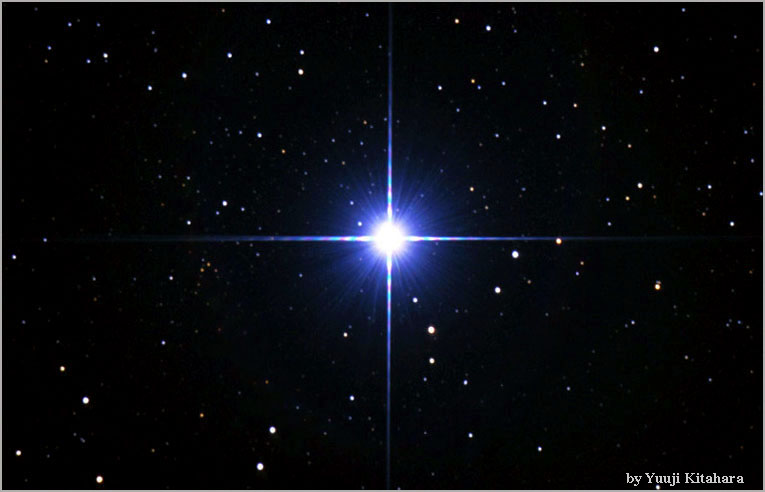
And, based on what we know about stars, they don't change color on timescales that quickly. Many of you put forth some very good ideas, and I thank you for the comments. In fact, the most common one was the very first idea considered by scientists who took this seriously: when anything is low on the horizon, it appears red. Case in point: the Moon.
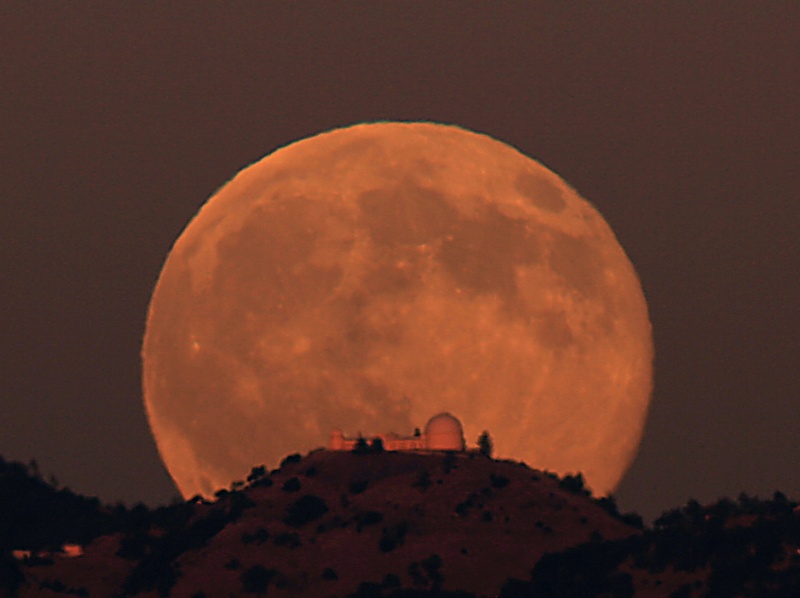
Would this be reasonable? The answer is, unfortunately, no. Why not? We see references to lots of other bright stars that reach similar positions above the horizon in the sky as Sirius does, and their colors are reported accurately. Also, the reddening effect of objects close to the horizon was well-known, and it's hard to believe that someone as astronomically knowledgeable as Ptolemy would fall for this. Moreover, Ptolemy lived in Egypt, where Sirius gets awfully far above the horizon and doesn't appear red at all during many times of the year.

Many of you also pointed out that particles in the atmosphere, such as intense volcanic eruptions, can change the apparent colors of astronomical objects. (In fact, we've talked about that recently.) But they wouldn't do it for hundreds of years; Horace, writing in Europe in the 1st Century BC, would not see the same thing as Ptolemy, writing in Africa in the 2nd Century AD. Although, this was a reasonable line of thought, especially considering that there is some evidence from China that they saw Sirius as white during this same time.
(As an aside, the argument that a later source stuck that sentence about Sirius being red in Ptolemy's work after reading Horace or Aratus (both poets) and deciding that Sirius belonged in that list of red stars as well is possible. However that assertion is impossible to confirm or refute, so it isn't talked about among scientists.)
So, what could have caused Sirius to appear red in the past, and are any explanations still feasible? There are three major schools of thought.
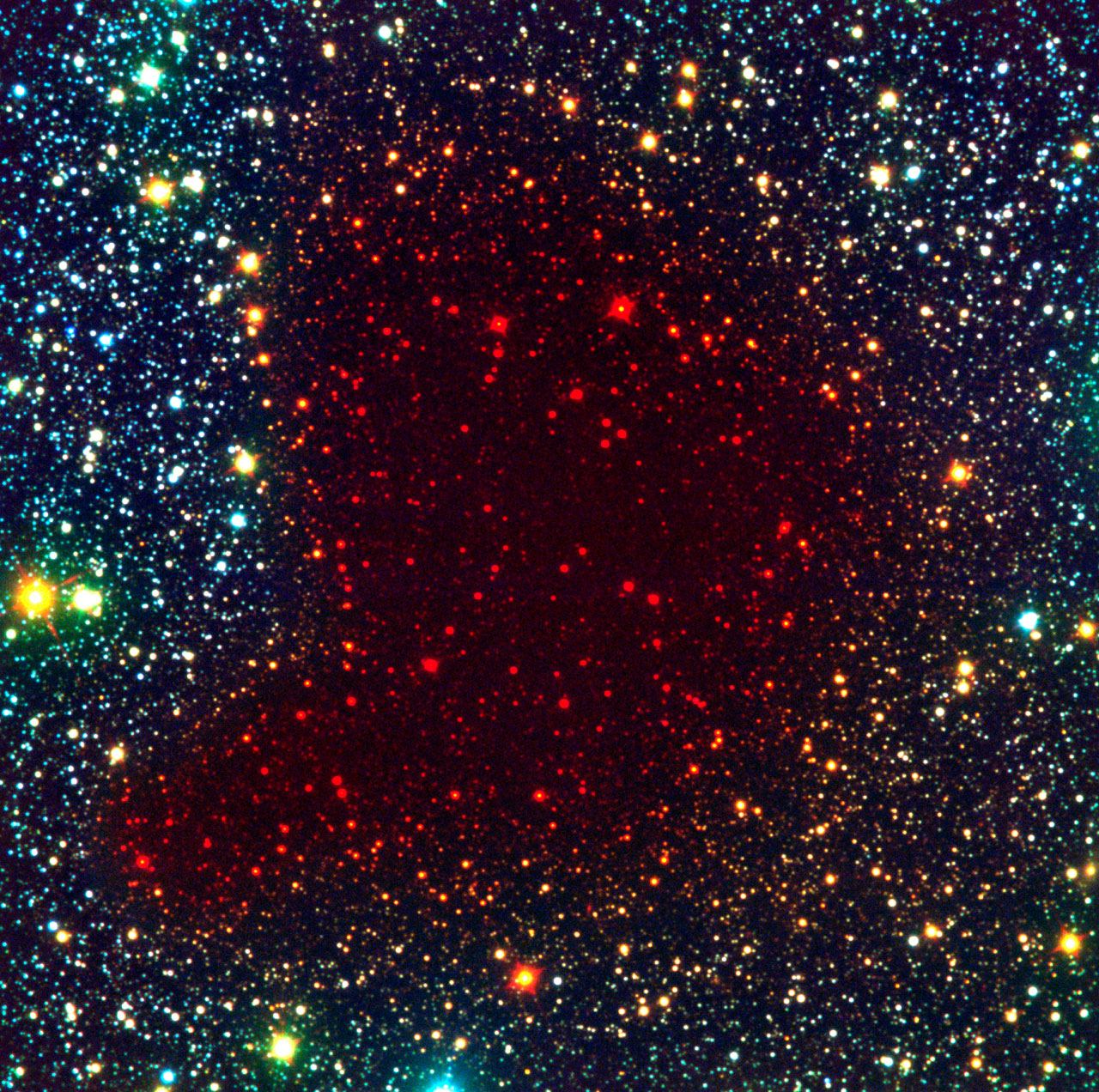
1.) Bok Globules. These relatively dense clouds of interstellar gas and dust move through our galaxy, blocking out starlight and definitively reddening the brightest stars behind them. This is an intriguing suggestion, because one could not only pass in front of a star, making it appear red, but it could move quickly enough that it could transit in just a few hundred years.
But the argument falls apart on one count: Sirius incredible brightness. Sirius is the brightest star in the sky, and it was reported as the brightest 2000 years ago as well. If you want a Bok Globule to be significant enough to redden it, it would dim Sirius enough so that, at best, it would be around the 15th brightest star in the sky. We also don't find any Bok Globules in that area of the sky, which hurts that argument significantly. Therefore this idea, although intriguing, is widely rejected.

2.) Sirius' binary companion. Sirius has a white dwarf companion, known as Sirius B. This star wasn't always a white dwarf, however! The way most Sun-like stars work is that they burn their fuel until they're exhausted, and then they expand tremendously and become red giants.
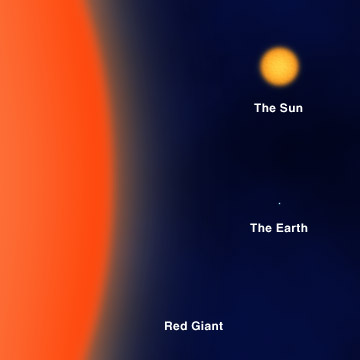
If Sirius B was a red giant 2000 years ago, then the Sirius system would have appeared extremely bright and red! But there's a tremendous problem: red giants live too long! Once a star is done being a red giant, it blows off its outer layers into a planetary nebula, and the center collapses into a white dwarf, like the Cat's Eye Nebula, below.
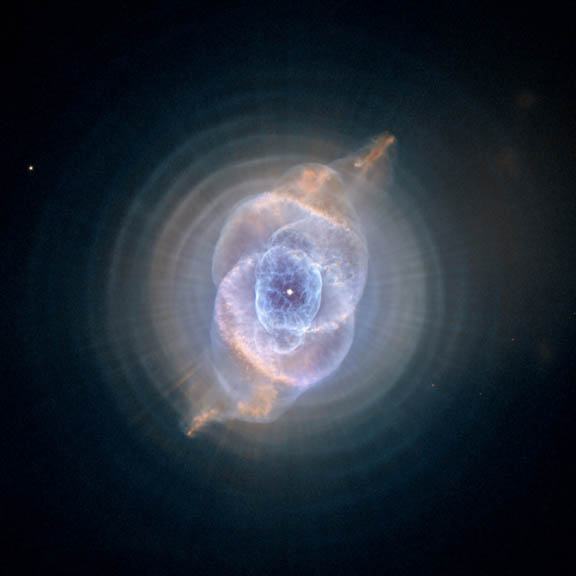
There is no evidence for a planetary nebula, and the timescale for this process to happen is measured in the millions of years, not the hundreds or thousands. Therefore, this idea, although incredibly interesting, cannot be correct.
3.) Maybe Sirius is a trinary star system. This would actually work, and -- perhaps most importantly -- it's observationally feasible! How, you ask? Imagine the Red Giant case from case #2. If there were another, denser star close to Sirius B (such as a neutron star or black hole), it could start stealing mass from the Red Giant!
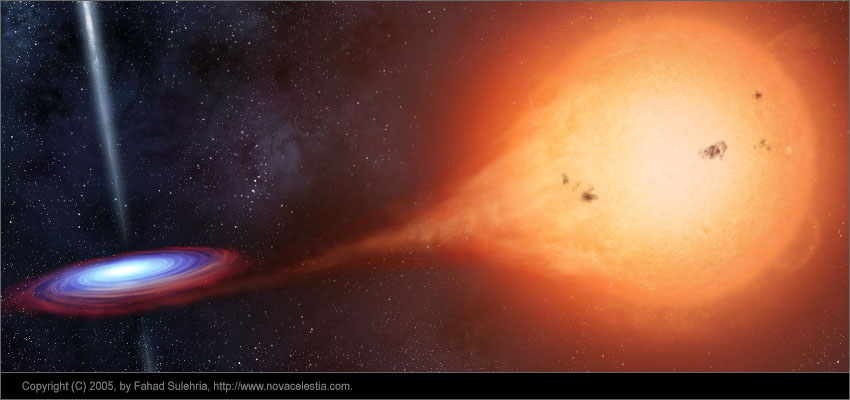
This process could be extraordinarily quick, and could feasibly strip Sirius B bare in just a few thousand years, leaving behind a cold, dead, white-dwarf core.
We don't yet have the technology to resolve Sirius B to the accuracy necessary to determine whether there is a third star close enough in to account for this, but what an interesting possibility!
It's very easy to dismiss someone else's observations, and most scientists do dismiss this ancient set of claims that Sirius was once red. But that doesn't mean it isn't worth taking a look at; if we do, in fact, discover a trinary companion to Sirius A and B, we'll be able to point to these ancient observations and actually verify that they were valid! It's definitely an outside-the-box claim, but this is one that may turn out to be right!
- Log in to post comments
Do we know of any other processes, involving stars, that have timescales on the order of 1000 years?
But, how do these answers explain the concurrent observations of Sirius as a white star in China? Any stellar process would surely change the observations of Chinese astronomers, would it not?
I agree with Andrew. It's not the 2000 years from Ptolemy to now that Sirius B has to be stripped of its red periphery, it's the time between Ptolemy and the ancient Chinese astronomers, and they were describing Sirius as being white from 700 BCE. I don't think that's the explanation.
It's an interesting thought, but....
We have 5 micron AO imaging data of Sirius B, though, and there's nothing around it (at least to my eye). So, probably rules out NS. Could be a BH, but you'd imagine there'd be remnants of the jets almost certainly formed from the accretion disk that you would see in X-rays or radio waves as the BH gobbles up the red giant atmosphere. Hell, that energetic a process would be VISIBLE here on Earth. It probably would give a bad sunburn as well.
Hmm, should probably work out sensitivity limits for the Sirius B data we have....
I think you are too quick to dismiss the horizon theory. As you note, Ptolemy lived in Egypt. There is only one source of fresh water available in most of the country: the Nile River, which floods annually. The timing of the floods was associated from the days of ancient Egypt with the appearance of Sirius on the horizon, as I said in the previous thread. That means that Ptolemy would have had specific reason to look for Sirius, and Sirius alone, on the horizon. If he had lived anywhere else (such as China), Sirius would not have carried that special meaning. Or, as somebody mentioned on the other thread, the comment might have been inserted by some other scribe who for the same reason was accustomed to looking for Sirius on the horizon.
As others have said, the contemporaneous Chinese observations of Sirius as a white star rule out any astrophysical explanation. The only possibilities are (1) some cultural factor or (2) observational or transcription error. Associating Sirius with seasonal flooding would be a cultural factor.
Eric's explanation sounds pretty plausible.
Of cours - apologies if this has already been suggested - it may be a linguistic problem rather than an astronomical one. I think "Basic Color Terms: Their Universality and Evolution" by Berlin and Kay has something on ancient Greek colour perception (Homer's infamous "wine-dark sea" and such like)....
Drat, I was wrong. However, this is a happy occurrence as I learned of a new stellar theory. Thanks!
Oops - guess I should have looked at the other article first....
Totally insane idea: remember The Mote in God's Eye?
I see two issues here. 1st, as others here have noted, if it's an actual change in color, then the Chinese observations should also show it as red, which they don't. 2nd, if there was a high density companion object siphoning off mass from the white dwarf, there would be an observal delta in the observed color that astronomers should have noted over time. Again, something we don't see.
There's other issues with a compact object stealing mass, but this hypothesis doesn't seem to match the observations.
I think the cultural/translational explanation seems most likely given the data.
None of these potential explanations explain why there was a difference in observation between Europe and China.
Steve G; "Totally insane idea: remember The Mote in God's Eye?"
Great! I'd love to have proof that intelligent life exists elsewhere in the Universe. Will we getting a visitor soon? I would have thought they should be here by now. 2000 years to do less than 9 light years seems rather slow.
Doc,
Keep the astronomical brainteasers coming. We all love astronomy (well the readership at least) and who doesn't like solving puzzles?
~C
Could a passing or perhaps a briefly formed black hole or the like effect an observable redshift to the extent of making sirius appear sanguine long enough for a qualified observer to "say it's so" while others who do not happen to be watching within that given window of opportunity would have to "say it's not so"? The situation with "B" and a speculated "C" might lend itself to some weird fluxuations at some point or another.
"We don't yet have the technology to resolve Sirius B to the accuracy necessary to determine whether there is a third star close enough in to account for this, but what an interesting possibility!"
Oh yes we do!
A massive unseen companion would peturb the Sirius A and B system, and Doppler measurements of A or B would pick up a third companion very easily, even with the WD and its broad Hydrogen lines. The orbital period of the WD is only 50 years!
Also, astrometry would have picked up anything as massive as a NS or BH, and the system has been studied for about two orbits.
That leaves a random interloper passing through as a third object, and as you are well aware, the impact parameter is absurdly tiny for this type of interaction in the Galactic neighbourhood.
There's never a TARDIS around when you need one ...
@14: Only a supermassive black hole could redshift an entire star appreciably. And if a star were that close to one, (remember that a visible redshift would mean the escape velocity at its position was a substantial fraction of the speed of light) it would either fall in, be ripped apart, or get hurled outward at a fantastic speed. In any case, this would all happen on a timescale of minutes or seconds, not years.
I think my explanation from the last post was too easily dismissed.
Stare at sirius during a time when the seeing sucks (i.e. stars twinkle a lot). You'll notice it seems to be changing colors, as diferent wavelengths get temporaily focused/defocused by atmospheric turbulence. So someone with preNewtonian knowledge of light (white was
thought to be a color, not a combination of wavelengths), might conclude that Sirius is all colors. Serious is at least a magnitude brighter than any other star decently viewable from mid north latitude, so the effect might be missed on the other bright stars.
If this conjecture is right, you might expect Sirius would also be found in lists of blue stars, and of green stars.. etc.
Also if there was a layer of smoke thick enough to turn objects red, Sirius might be the only star bright enough to observe the effect.
Keep the astronomical brainteasers coming. We all love astronomy (well the readership at least) and who doesn't like solving puzzles?
Well, I am afraid that says more about the biases of scientists than it does about reality. Any historian could tell you that that sort of thing happened all the time in the copying of ancient texts. It is a very plausible explanation of the "mystery." Only one person need have made the original mistake for the idea to get propagated, and sometimes all the copies of a text that we have today can be traced back to a single copy, made centuries after the original text was written (probably not because only one copy was ever made, but because all earlier ones have been lost). Furthermore, it is not necessarily impossible to confirm that something like this has happened, or at least find good supporting evidence. Sometimes, for instance, an expert can tell from subtle linguistic differences when a passage has been interpolated by a copyist from a later period. People make careers out of doing this sort of thing.
Nigel; "Well, I am afraid that says more about the biases of scientists than it does about reality. Any historian could tell you that that sort of thing happened all the time in the copying of ancient texts. It is a very plausible explanation of the "mystery." Only one person need have made the original mistake for the idea to get propagated, and sometimes all the copies of a text that we have today can be traced back to a single copy, made centuries after the original text was written (probably not because only one copy was ever made, but because all earlier ones have been lost). Furthermore, it is not necessarily impossible to confirm that something like this has happened, or at least find good supporting evidence. Sometimes, for instance, an expert can tell from subtle linguistic differences when a passage has been interpolated by a copyist from a later period. People make careers out of doing this sort of thing".
I think Nigel's explanation is the most convincing. After all, we do know what the scribes did with the New Testament gospels, and we do know that these scribes were trying to get the text right, being the "Word of God" after all. Bart Ehrman gave plenty of examples including in his books, including the bizarre family tree of Joseph which was written in 2 unequal columns, with Adam and God at the bottom of the second column, but above the foot of the first column. But the scribe automatically wrote them horizontally, so Adam and God both finished towards the middle of the list of forefathers.
Roger Ceragioli has published a few things on Red Sirius and one of the frequent problems is that the problems in translation and the cultural meaning of ideas. See http://articles.adsabs.harvard.edu//full/1995JHA....26..187C/0000219.00… for an example information
Continuing thoughts on this subject: A speculated black hole type of derived redshift need not occur in close proxmity of the star(s) Sirius itself. I suggest that such an effect could happen to the light originating from "Sirius" anywhere along the path existing between that particular source and the objective (us).
Perhaps the path of the light was diverged for a relatively short observational time which acted much (or perhaps exactly) as a prism does. This effect need not be a true "doppler effect" indicative of movement towards or away from us (the "ultimate and relative speed of light" notwithstanding) or pure gravational redshift, but might also result from gravitational lensing as through a prism or some effective variable density in space which could have actually occured very close to earth as opposed to at any distant time/location of Sirius. A "super-massive" black hole would therefore not be necessary to generate that which might have actually been only a relatively locally observed and short-lived event.
We also need to remain somewhat humble and realize that there are no actual "stars" per se that we can see and bear witness to from our own humble position or technology, but only tiny fractional specks of the light having been long ago emitted therefrom which have likely been subjected to any number of inner-stellar cruelties in addition to a stunning complexity of relative EM conflux/field movements across vast ranges of time and distance. Such matters we can only speculate upon as these long distance sensory perceptions are ultimately formulated as "real" within our minds.
I still don't understand how the mass stripping is compatible with observations. When the star exhausts its core hydrogen and begins hydrogen shell burning, the temperature of the core rises dramatically up to the helium flash. The core does not begin to cool until the envelope is gone, hence white dwarfs are born hot. How do you get to the current surface temperature (25000 K) in 1000-2000 years rather than the conventional 10^7 or 10^8 years?
I suppose you could argue that Sirius B was stripped as it entered the shell burning phase, but even the current remnant is sufficiently massive to ignite helium (helium core ignition mass is around 0.45 solar; Sirius B's mass is 0.98 solar). I don't see how to ignite the helium, strip the envelope, and cool the white dwarf in a few thousand years. The atmospheric extinction explanation seems (to me) to be the only viable one.
Egyptians expected the Nile flood to begin at that time of year when Sirius rose at the same time as the sun. The Nile flood was very important to them; it meant the difference between feast and famine. Consequently they were very interested in Sirius; they would watch the sunrise for days on end and the first time they saw Sirius, bingo! Because Sirius is the brightest star it can be seen closer to the horizon than any other and therefore when it rises it is the reddest star. Hence, Red Sirius. Three months later Sirius is high in the sky at sunrise and it is white, but nobody is interested in it then, so nobody mentions what colour it is. Three months later still it's on the horizon again, but people watching the sunrise have their backs to it and it could be green with purple polka dots for all they cared.
(The Egyptians had three seasons Winter, Summer and Inundation. They had a pretty good calendar but over the ceturies it got out of whack with the seasons, so actually observing the heliacal rising of Sirius was necessary for planning purposes.)
In 2007 I had a visual and photographic observation of a red flaring laser-type point source in the apparent vicinity of α CMa. Flares lasted at least 15 - 20 seconds with intervals between flares less than 5 sec. The other strange aspect was that the flares had a strange âmonoâ red color, it was similar to that of a laser. I would say approximately 6500A (H-alpha?). I hypothesize that the observed flares had only one strong spectrum emission line.
While I do not have the exact explanation of the nature of the event, my guess is that it could be a high proper motion red or brown dwarf, with an active chromosphere.
The event happened at approx. 9 PM GMT +2, on 18 Feb 2007. Observation took place near Kiev, Ukraine. It was a cold â 6 C night with no flickering of the stars even at the horizon.
Observed with a naked eye and with 50x15 binoculars. Photos captured with Film Camera Canon 500n with Sigma 28-200, and Digital Canon A70.
Yet her book is a bestselling blockbuster, while anti-Palin outfits like CBS, MSNBC and CNN are the least-popular TV news organizations in America. And as far as Republicans are concerned, Palin is infinitely more populari-tunes download