

"I want more muscles! I go to the gym three or four times a week with a personal trainer. I can afford that now. I can't put on weight though, no matter how much I eat." -Christopher Parker
Many of us struggle in all sorts of aspects of our lives: to balance work and leisure, friends and family, responsibility and fun. For nearly all of us, something eventually goes awry, and when it does, we suddenly can't meet all our commitments at once. Regardless of where you come from or what you like, this is a problem we all have to face at some time or another. For this week, I'd like to introduce you to Gangstagrass, a bluegrass-hip-hop band, which are honestly two genres I never thought I'd hear combined. Not only have they done so, they've done so phenomenally well, as you can hear by their song,
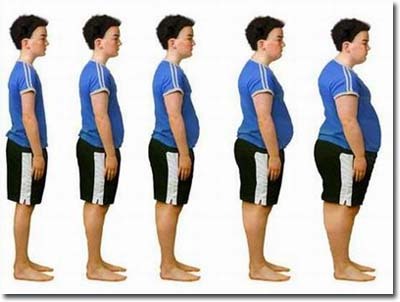
You start using the larger holes on your belts, you start asking yourself if you can have that dessert you've had your eye on, and you start trying to cut down on portion sizes, you avoid eating later in the day, and you even go back to counting calories.
And, if you're anything like me, you combine that reduced activity level with a calorie-restricted diet, you start feeling like crap. There are a whole bunch of different diets out there and a whole bunch of people and organizations -- including the USDA -- telling you what you should eat to be healthy. And, if you're anything like me, what you'd really want is the actual, scientific information as to how nutrition, your body, your diet, and fat gain/loss work.
And it just so happens that a couple of months ago, I got an email from Jonathan Bailor, asking me if I cared for an advance copy of his new book.

It turns out, unsurprisingly, that people like Christopher Parker, atop (you know, "I can eat whatever I want, my metabolism just burns it up"), are real. But it also turns out that, to a much greater degree than we normally think about, what we eat helps determine our metabolism. I'm going to give you the most basic redux of how your metabolism works:
- You get hungry, and so you eat some food that contains some non-zero amount of calories.
- Your body produces some amount of insulin, which helps deal with the sugars and starches in the food, and moves them into your cells where they're stored as fat.
- When your cells get the signal that the nutrition they need is coming in, your body produces leptin (only discovered in 1994!), which is the hormone that tells your body that you're full, and gives you the feeling that your hunger is satiated.
So if you want to eat healthy, you want to eat foods that don't aggressively spike your insulin, that do stimulate that feeling of satiety, and, of course, that properly provide the nutrients your body needs. Through a very clear presentation (two sample pages are shown below), this book tells you exactly what types of foods you should base your diet around (and what foods you should avoid) if you want to eat healthy, according to your body's metabolism. He develops his own index for determining which foods you should and shouldn't eat, and while the acronym (SANE) isn't the easiest to remember, learning what is good for your body vs. what's not good becomes very clear very quickly.

- Eat meals that are high in fiber, high in protein, and low in both sugars and starches. (That means your good "friends," complex carbohydrates, are not your friends at all!)
- Ideally, you'll get between 30% and 40% of your calories from protein. While this may sound like a "high-protein" diet to you, this is actually (according to your body) the amount you want for a balanced diet! (And no, you won't start seeing liver or kidney problems until that number gets up above something like 60%!)
- As far as foods go, you should be eating vegetables as the base of your food pyramid (or as 50% of your plate). Lean proteins (like fish, chicken, lean red meat, egg whites, etc.) should be the next most common, followed by fruits, nuts, and legumes.
- Eating too much fat is bad, but so is eating too much sugar or starch. Whole fruits are not bad, so long as you're eating the vegetables and lean proteins that you should be eating. Fiber-free juices and sodas are what you want to avoid!
Over the past couple of months, I've worked to incorporate these changes into my diet, to just make this part of the way I live. It's fortunate for me that I like cooking, and that I have access to some pretty amazing ingredients (and a couple of pretty amazing farmers who supply me with all sorts of vegetables year-round) at my disposal. My meals have gotten a lot healthier, I feel a lot better, and my clothes are fitting better, too. In fact, here's one of yesterday's pictures from the 2012 West Coast Beard & Mustache Championships:
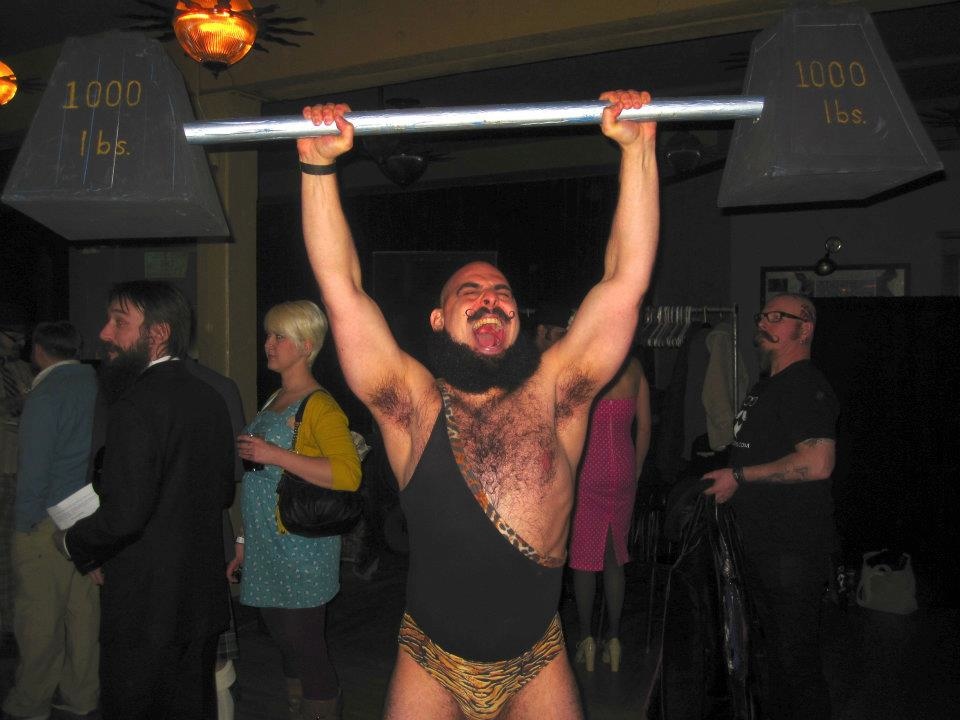
Image credit: Plutarco Calles. I took 2nd place in the Partial Beard category!
Learning how your body deals with food and how the different types of calories and nutrients you put into it makes me strongly recommend The Smarter Science of Slim for anyone looking to improve their diet and learn how what you eat affects how your body reacts to it. The fourth and fifth sections -- about the US Government and Corporate influence -- are only okay, and the sixth and seventh sections read like a personal diet and exercise guide, which were a little bit of a turn-off to me. But the solid science of the first three sections, which were the meatiest part of this book, definitely are worth it for anyone who wants to adopt a positive, healthy-eating lifestyle for the rest of their lives!
Now, if you'll excuse me, I've got a delicious, healthy dinner to cook...
1/3 of all heart attacks occur in people with cholesterol level below 180. Essentially 0% of heart attacks occur in people with cholesterol below 150.
You can't get cholesterol below 150 on an animal based protein diet. "The four-ounce chicken breast with skin is worth 188 calories, 49 percent of which are from fat." i.e. meat whether from fish, fowl or cow is never lean.
50% to 80% of their calories from fish, cheicken breast, lean beef, lean pork egg yolks, and cheese are from fats.
Also, the human body has zero need for dietary cholesterol; human bodies produce all the cholesterol that we need.
Even a diet consisting only of boiled potatoes provides all of the cholesterol and also all of the protein a human needs.
There is no medical disease associated with lack of protein; because it is impossible (except in starvation) not to get enough protein.
Yes, yes, low sugar, low fat, low salt diet.
Of course many world class athletes are vegan, e.g. from Joe Namath to Billie Jean King.
The China Study by T. Colin Campbell, Ph.D. has been the difinitive nutrition study for many decades. http://books.google.com/books?id=KgRR12F0RPAC&printsec=frontcover&dq=th…
@OKthen:
THE VERY NEXT LINE FROM YOUR SOURCE (you know, the one you didn't quote): "The skinless chicken breast is worth 118 calories, with 11 percent of calories coming from fat."
USDA lean beef is no more than 35% calories from fat, pork is even lower. A can of tuna fish is about 6% calories from fat.
Where are you getting your information???
The whole "avoid wheat" meme is doing the rounds right now. I've gone (as far as I can) wheat free. Lost weight without even trying. Lots of anecdata to other positive effects like the easing of joint pains, reduction in depressions and diabetes. I'd recommend giving it a shot to see if it works for you.
@2 hibob
Big oops, sorry I stand corrected on the amount of fat in meat, fish. Thank you.
It took a while to find useful information on cholesteral and fat in foods. Here are two useful links for anyone trying to lower fats and cholesterol.
Preventing Heart Disease Cholesterol http://www.fauxpress.com/kimball/med/heart/h3/choles.htm
Fat Calories in Foods
http://www.naturodoc.com/library/nutrition/fatcontent.htm
Once again, @2 is correct about my big oops in @1.
a lot of myths about food are busted, including the most common one: that restricting your calories and upping your exercise is a solid plan for losing weight, particularly in the long term
I know you know that when Calories in = Calories out, you cannot gain weight. Do you mean it is not a "solid plan" because it is likely to fail? I'm concerned that a high protein diet is not good for you.
Top really easy tips from me: Never shop when hungry. Never buy any food that can be eaten straight away without cooking (fruit excepted). Dropping bread is good, too, because it makes you drop the butter that goes with it.
Ethan: Congrats on your 2nd place finish at the beard show! Your costume is great. Although - if we're talking about weight - if you're gonna go for the old-timey strongman look, you should be sporting a bit of a gut for accuracy.
Some of the ideas in this book sound great (though not original). One problem I have with the book (via your description only) is the macronutrient breakdown. You say the diet is low in carbohydrate and fat, and has 30-40% of its energy from protein. This raises the question, what makes up the majority of the diet (that 60-70% that is not protein)? If it's not fat and not carb, what is it? (Surely he doesn't advocate filling in this gap with alcohol!) Let's say the actual diet is 35% protein, 35% carb, and 30% fat. That is not a low-anything diet. So I'd like to see how the numbers actually add up.
(Fiber is a carbohydrate but does not count significantly towards energy since most of it is not absorbed by the body).
@OKThen, the China Study has been thoroughly rebutted: http://rawfoodsos.com/2010/08/06/final-china-study-response-html/
"There is no medical disease associated with lack of protein; because it is impossible (except in starvation) not to get enough protein." Patently false. It is certainly possible to be protein-deficient; one such disease is kwashiorkor [sic], which is defined as protein malnutrition despite sufficient caloric intake. I can also imagine a vegetarian or extreme dieter who avoids protein-rich foods becoming protein deficient.
Tom @9, who said this plan was advocating low fat or low carb? Low in sugar and starch (particularly compared to the USDA diet) is different from a low carb diet. Vegetables and fruits make up a big part of the foods I eat.
But it's worth noting that fat and carbs, if you don't think about them, can add up fast. What I was trying to describe is that most people eat a high fat and/or high carb diet without really thinking about it.
AC @8, depends on who the strongman in question is.
Noel @6, your metabolism is more complicated than the calories in = calories out equation would allow for. It's one of the central myths that Bailor very effectively destroys.
No, you cannot gain weight unless you eat more calories than you burn, and excercise does burn calories. Metabolic physiology is not simple, but those facts are.
@9 Tom J.
The China Study is still the definitive nutrition study. See wiki references.
Yes, the Food Industry attacks began as soon as the book was published. But do we expect, the cheese or beef industry to be any more likely to acknowledge the harm of their product than the alcohol, tobacco industries.
The China Study is this (wiki):
""The China Study" of the title is taken from the China-Cornell-Oxford Project, a 20-year study conducted by the Chinese Academy of Preventive Medicine, Cornell University, and the University of Oxford, described by The New York Times as "the Grand Prix of epidemiology." T. Colin Campbell was one of the project's directors. The study examined mortality rates, diets, and lifestyles of 6,500 people in 65 rural counties in China, and concluded that people with a high consumption of animal-based foods were more likely to suffer chronic disease, while those who ate a plant-based diet were the least likely. The study was conducted in China because it has a genetically similar population that tends to live in the same way in the same place and eat the same foods for their entire lives.
The authors conclude that people who eat a plant food/vegan dietâwhich avoids animal products such as beef, pork, poultry, fish, eggs, cheese, and milkâwill minimize or reverse the development of chronic diseases. They also recommend adequate amounts of sunshine to maintain sufficient levels of vitamin D, and dietary supplements of vitamin B12 in case of complete avoidance of animal products and to minimize the usage of vegetable oils. They criticize low-carb diets, such as the Atkins diet, which include restrictions on the percentage of calories derived from complex carbohydrates."
The book documents dozens if not hundreds of additional studies that correlate chronic diseases (e.g. heart attacks, diabetes, etc.) with increasing animal based diets.
"one of the strongest predictors of Western diseases was blood cholesterol with a statistical significance level equal to or exceeding 99.9 percent certainty."
"The authors describe their eight principles of food and health:
1)Nutrition represents the combined activities of countless food substances. The whole is greater than the sum of its parts.
2)Vitamin supplements are not a panacea for good health.
3)There are virtually no nutrients in animal-based foods that are not better provided by plants.
4)Genes do not determine disease on their own. Genes function only by being activated, or expressed, and nutrition plays a critical role in determining which genes, good and bad, are expressed.
5)Nutrition can substantially control the adverse effects of noxious chemicals.
6)The same nutrition that prevents disease in its early stages can also halt or reverse it in its later stages.
7)Nutrition that is truly beneficial for one chronic disease will support health across the board.
8)Good nutrition creates health in all areas of our existence. All parts are interconnected."
Wiki gives a good summary of the book The China Study: http://en.wikipedia.org/wiki/The_China_Study_(book)
"No, you cannot gain weight unless you eat more calories than you burn, and excercise does burn calories. Metabolic physiology is not simple, but those facts are."
One fact you're missing is that your metabolism reacts to your diet, Noel.
Seems you're rather simpler than your facts.
"Metabolism reacts to your diet" - does not change the facts as stated; if you burn fewer calories, you need to eat fewer calories, but exercise increases metabolic rate. There are a lot of factors to consider. I know that physiology is complex - I mentioned that fact. And there's no cause for rudeness.
if you burn fewer calories, you need to eat fewer calories, but exercise increases metabolic rate.
Which certainly is true as far as it goes, noel, but it's not taking into account that metabolism slows when calorie intake drops even in the presence of exercise. Blame all those generations of ancestors that needed to be able to flee predators even when up against famine, if you must, but most of us are remarkably efficient at putting on (and keeping) weight.
(Not that exercise is terribly efficient at burning calories anyway... if the Internets are trustworthy, a 180lb male has to jog for half an hour just to burn off one Starbucks Tall latte.)
-- Steve
Some of the ideas in this book sound great (though not original). One problem I have with the book (via your description only) is the macronutrient breakdown. You say the diet is low in carbohydrate and fat, and has 30-40% of its energy from protein. This raises the question, what makes up the majority of the diet (that 60-70% that is not protein)? If it's not fat and not carb, what is it? (Surely he doesn't advocate filling in this gap with alcohol!) Let's say the actual diet is 35% protein, 35% carb, and 30% fat. That is not a low-anything diet. So I'd like to see how the numbers actually add up.
(Fiber is a carbohydrate but does not count significantly towards energy since most of it is not absorbed by the body).
@OKThen, the China Study has been thoroughly rebutted: http://rawfoodsos.com/2010/08/06/final-china-study-response-html/
"There is no medical disease associated with lack of protein; because it is impossible (except in starvation) not to get enough protein." Patently false. It is certainly possible to be protein-deficient; one such disease is kwashiorkor [sic], which is defined as protein malnutrition despite sufficient caloric intake. I can also imagine a vegetarian or extreme dieter who avoids protein-rich foods becoming protein deficient.
Ethan, another great book that is chock full of actual information about the body's different metabolic pathways is "Body by Science" by John Little and Doug McGuff.
FWIW I was vegetarian for twelve years. But now I include animal protein, restrict simple carbohydrates, and pursue high-intensity strength training. I've never felt better as I near 40, I would personally never go back to vegetarianism.
""Metabolism reacts to your diet" - does not change the facts as stated;"
I never said that it changed them, just that you were guilty of neglecting facts that pertained to your assertions.
Metabolism is a reactive system, complicit in the calories in requirement, therefore of core importance of how you can change "calories in" and still get no change in weight. Which makes your "correction" of Ethan patently ridiculous.
@16 Tom J.
Intersting you mention " one such disease is kwashiorkor [sic], which is defined as protein malnutrition despite sufficient caloric intake."
Let see what "kwashiorkor" is: http://en.wikipedia.org/wiki/Kwashiorkor
"Kwashiorkor ( /kwÉËÊiËÉrkÉr/) is an acute form of childhood protein-energy malnutrition... "the sickness the baby gets when the new baby comes",[4][citation needed] and reflecting the development of the condition in an older child who has been weaned from the breast when a younger sibling comes. Breast milk contains proteins and amino acids vital to a child's growth. In at-risk populations, kwashiorkor may develop after a mother weans her child from breast milk, replacing it with a diet high in carbohydrates, especially starches, but deficient in protein..."
"Cases in the developed world are rare... The defining sign of kwashiorkor in a malnourished child is... protein deficiency, in combination with energy and micronutrient deficiency, is necessary but not sufficient to cause kwashiorkor... The condition is likely due to deficiency of one of several types of nutrients (e.g., iron, folic acid, iodine, selenium, vitamin C), particularly those involved with anti-oxidant protection. Important anti-oxidants in the body that are reduced in children with kwashiorkor include glutathione, albumin, vitamin E and polyunsaturated fatty acids. Therefore, if a child with reduced type one nutrients or anti-oxidants is exposed to stress (e.g. an infection or toxin) he/she is more liable to develop kwashiorkor... One important factor in the development of kwashiorkor is aflatoxin poisoning. Aflatoxins are produced by molds and ingested with moldy foods..."
"In a study of twins from Malawi, kwashiorkor affected one twin in 50% of a study group, but both twins only 7% of the time. When gut bacteria from the twins were transplanted into germ-free mice, the mice receiving bacteria from affected twins lost more weight on a typical Malawian diet consisting largely of corn flour and water with some vegetables. It was speculated that transplantation of fecal bacteria may help affected children."
So that's kwashiorkor. Yes babies need breast milk.
So Tom J. can you point me to an adult disease involving protein deficiency?
First, sorry for the double post--my original one wasn't appearing after multiple refreshes so I thought it didn't go through.
@OKthen, "definitive" is in the eye of the beholder. There are numerous major problems with the China study documented in the link I sent; not going to argue further than that. :)
Ethan: "Low in sugar and starch (particularly compared to the USDA diet) is different from a low carb diet. Vegetables and fruits make up a big part of the foods I eat."
Low in sugar and starch = low carb. As I've explained, fiber is a carbohydrate that does not contribute significantly to energy balance, so sugars and starches (and oligosaccharides, which are in between) are the only carbs that count! A high fiber, low starch, low sugar diet is typically not considered a high carbohydrate diet, no matter how many grams of fiber you are eating.
Ethan: "Tom @9, who said this plan was advocating low fat or low carb?"
You did. You implied that the diet was both low-fat and low carb when you said: "Eat meals that are high in fiber, high in protein, and low in both sugars and starches [carbohydrates] and "Eating too much fat is bad." Further, you described a diet of vegetables, lean proteins, fruits, nuts, and legumes. Except for nuts, of all of these tend to be very low in fat.
There are only 4 sources of energy at the chemical level: fat, digestible carbohydrate, protein, and alcohol. My point is, since you say to minimize non-fiber carbohydrate and fat, one would expect each of those to make up less than 1/3 of the energy in the diet. Yet you say protein makes up 30-40%. 60-70% of your diet, therefore, must be (carb + fat), and it's therefore not low in either macronutrient.
Given the limitations on protein that you mentioned, carbs and fat are the main variables at play in a human diet. So a diet really cannot be both low-carb and low-fat, proportionally speaking. It has to be one or the other. This is all I'm trying to say.
"Eat meals that are high in fiber, high in protein, and low in both sugars and starches [carbohydrates] and "Eating too much fat is bad."
When you're eating 200% RDA of sugars and processed accessible starch (or, if American, 400%), then it really depends on whether you describe "low carb" as "low compared to the overwhelming excess normally eaten" or as in "lower than that which makes a normal daily diet" (as opposed to a "losing weight dieting diet").
Tom,
I eat about 5 fruits a day, usually including a good sized apple, a banana, an orange and a pear (and some dried dates/raisins). Right there, that's about 30 grams of carbs per serving fruit. Throw in a number of root vegetables -- carrots, beets, and/or sweet potatoes -- and that'll give you another 30-50 grams easy. Legumes like beans? Plenty of carbs in there, too. Just because these foods are high in fiber, have no added sugar and aren't grain-based (i.e., starch for the sake of starch) doesn't mean there aren't plenty of digestible carbs in there. If you wanted to pick nits, I suppose you can make the argument that I'm eating sugars with my fruits and starches with my vegetables and legumes, but I'm talking about avoiding added sugar, soda, juice, molasses, HFCS, etc, as well as breads, crackers, rice, white potatoes, etc.
As for fat? Most lean sources of protein still have a good amount of fat in them: whole chickens, extra-lean ground beef, lowfat greek yogurt, etc. Plus, I eat cheeses, avocados, salad dressing, and I cook my food in (mostly) olive oil. I would say that even on my lowest-fat and lowest-carb days, I'm getting 25% of my calories from fat and 35% of my calories from carbs.
Bailor calls this a balanced diet, but compared to the actual diet than an average american eats, it is significantly higher in protein, lower in fat, and lower in carbs. But it is not a low-carb diet the way atkins is, and it is not a low-fat diet the way the USDA diet is.
Ethan, thanks for the clarifications.
Wow@21 and you bring up a good (and to most of us, obvious) point that the standard American diet is so poor as to make almost any other diet look healthy and low-something.
Sorry for my nitpicking. Some of these terms have proper meanings that I'm used to in the nutritional literature. When I hear sugar I think of anything that ends in -ose (other than "comatose"), including all the sugars naturally occurring in plants. You were talking about added, refined sugars, quite another story. Same goes for "starches" meaning amylose and amylopectin, versus "starches" meaning a grain- or tuber-based dish in a meal.
So the main thing I'm taking from Bailor is that he's advocating a low-processed food diet with plenty of protein, rather than focusing on minutiae of macronutrient ratios. I completely agree with that approach.
Indeed, there is excellent evidence that just about any diet based on traditional, nonindustrial foods can be healthy, including very high-fat (e.g., the Inuit and Masai) and very high carbohydrate diets (e.g., the Kitavans and other Pacific Islanders). Humans really are quite adaptable to a huge variety of foods--but not to "edible food-like substances" designed purely for corporate profit, convenience, and shelf life rather than wholesome nutrition.
Thanks for starting the discussion. I love this topic. :)
@9 Tom J
The link you send us to refuting The China Study is a biased link.
"The notion that the incidence of ischemic heart disease (IHD) is low among the Inuit subsisting on a traditional marine diet has attained axiomatic status. The scientific evidence for this is weak and rests on early clinical evidence and uncertain mortality statistics."
Your half-truths mixed with psuedo-reasonableness is not convincing.
Also you have still refused to answer the question: "So Tom J. can you point me to an adult disease involving protein deficiency?"
Tom J. @9, etc..
You posted a link to a rebuttal of The China Study by T. Colin Campbell. That link was to Denise Minger's blog. As it turns out, T. Colin Campbell has personally written a response to Denise's rebuttal of The China Study.
Here is T. Colin Campbell's response to Denise Minger via Tynan.
"Dear Tynan,
"I donât have time to review every comment but did quickly scan the text. This analysis seems very impressive, especially given the writerâs young age with no training in nutritional science (see her web page).
"She claims to have no biasesâeither for or againstâbut nonetheless liberally uses adjectives and cutesy expressions that leaves me wondering.
"As far as her substantive comments are concerned, almost all are based on her citing univariate correlations in the China project that can easily mislead, especially if one of the two variables does not have a sufficient range, is too low to be useful and/or is known to be a very different level of exposure at the time of the survey than it would have been years before when disease was developing. There is a number of these univariate correlations in the China project (associations of 2 variables only) that do not fit the model (out of 8000, there would be) and most can be explained by one of these limitations.
"A more appropriate method is to search for aggregate groups of data, as in the âaffluentâ vs. âpovertyâ disease groups, then examine whether there is any consistency within groups of biomarkers, as in considering various cholesterol fractions. This is rather like using metanalysis to obtain a better overview of possible associations. I actually had written material for our book, elaborating some of these issues but was told that I had already exceeded what is a resonable number of pages. There simply were not enough pages to go into the lengthy discussions that would have been requiredâand I had to drop what I had already written. This book was not meant to be an exhaustive scientific treatise. It was meant for the public, while including about as much scientific data and discussion that the average reader would tolerate.
"She also makes big issues out of some matters that we had no intent to include because we knew well certain limitations with the data. For example, only 3 counties (of the 65) consumed dairy and the kind of dairy consumed (much of it very hard sun-dried cheese) was much different from dairy in the West. It makes no sense to do that kind of analysis and we did none, both because of the limited number of sample points and because we discovered after the project was completed that meat consumption for one of the counties, Tuoli, was clearly not accurate on the 3 days that the data were being collected. On those days, they were essentially eating as if it were a feast to impress the survey team but on the question of frequency of consumption over the course of a year, it was very different. Still, the reviewer makes a big issue of our not including the data for this county as if I were being devious.
"In short, she has done what she claims that should not be doneâfocusing on narrowly defined data rather than searching for overarching messages, focusing on the trees instead of the forest.
"I very carefully stated in the book that there are some correlations that are not consistent with the message and, knowing this, I suggested to the reader that he/she need not accept what is said in the book. In this very complex business it is possible to focus on the details and make widely divergent interpretations but, in so doing, miss the much more important general message. In the final analysis, I simply asked the reader to try it and see for themselves. And the results that people have achieved have been truly overwhelming.
"One final note: she repeatedly uses the âVâ words (vegan, vegetarian) in a way that disingenuously suggests that this was my main motive. I am not aware that I used either of these words in the book, not once. I wanted to focus on the science, not on these ideologies.
"I find it very puzzling that someone with virtually no training in this science can do such a lengthy and detailed analysis in their supposedly spare time. I know how agricultural lobbying organizations do itâlike the Weston A Price Foundation with many chapters around the country and untold amounts of financial resources. Someone takes the lead in doing a draft of an article, then has access to a large number of commentators to check out the details, technical and literal, of the drafts as they are produced.
"I have no proof, of course, whether this young girl is anything other than who she says she is, but I find it very difficult to accept her statement that this was her innocent and objective reasoning, and hers alone. If she did this alone, based on her personal experiences from age 7 (as she describes it), I am more than impressed. But she suffers one major flaw that seeps into her entire analysis by focusing on the selection of univariate correlations to make her arguments (univariate correlations in a study like this means, for example, comparing 2 variablesâlike dietary fat and breast cancerâwithin a very large database where there will undoubtedly be many factors that could incorrectly negate or enhance a possible correlation). She acknowledges this problem in several places but still turns around and displays data sets of univariate correlations. One further flaw, just like the Weston Price enthusiasts, is her assumption that it was the China project itself, almost standing alone, that determined my conclusions for the book (it was only one chapter!). She, and others like her, ignore much of the rest of the book. Can any other diet match the findings of Drs. Esslestyn, Ornish and McDougall, who were interviewed for our book (and now an increasing of other physicians have done with their patients)? No diet or any other medical strategy comes close to the benefits that can be achieved with a whole foods, plant based diet.
"I also know that critics like her would like nothing better than to get me to spend all my time answering detailed questions, but I simply will not do this. As we said in our book, no one needs to accept at face value what I say. Rather, as we said in the book, "Try it" and the results will be what they are. So far, the reports of positive benefits have been nothing less than overwhelming.
"I hope this helps, although it was written in haste.
Colin"
OK that is T. Colin Campbell's via this link http://tynan.com/chinastudyresponse
So are Denise and Tom J. shills, lobbyists or part of the PR arms of the food industry that would like to discredit the China Study? Well you decide for yourself.