

 terrasig |
Click HERE to come to our new home:
cenblog.org/terra-sigillata/
Please update your bookmarks and see this farewell post about our departure from the ScienceBlogs community after four years and this inaugural post at CENtral Science.
CENtral Science is an online forum associated with Chemical & Engineering News, the weekly publication of the American Chemical Society that covers, "science and technology, business and industry, government and policy, education, and employment aspects of the chemistry field." The majority of the bloggers there are Ph.D. staff writers for the magazine…
 terrasig |
But never fear! Click HERE to come to our new home:
cenblog.org/terra-sigillata/
Please update your bookmarks and see this farewell post about our departure from the ScienceBlogs community after four years.
The 234-ton load of Holy Cross Church is transported across the North Carolina Central University campus to make room for their new nursing building. The former primary place of worship for Durham's Black Catholics was relocated to a site near the home of founder, Dr. James E. Shepard, and will serve as a community center. This photo is from a gallery shot on April 23, 2010, by Harry…
 terrasig |
So, readers know that I went out West this past weekend to visit colleagues at the University of Colorado, spend some thinking time at the southern Colorado ranchland endowed to us by the late PharmDad, and - most prominently - visit PharmMom and PharmStiefvater on the occasion of her 70th birthday. I'm extremely grateful to my wife, PharmGirl, MD, and the illustrious PharmKid for holding down the fort and handling the emotional and practical issues of the little genius starting 3rd grade on Monday.
When Mom told me she'd been following the aftermath of Pepsigate/sbfail, she asked, "So, what…
terrasig |
With great sadness, I announce that my colleague, Bora Zivkovic (aka Coturnix), is departing from ScienceBlogs.
However, his long-awaited analysis of the Pepsigate #sbfail episode is superb and he provides an unparalleled history of science blogging, its relationship with the legacy media, and his views of the future. He ends on an optimistic note, so I hope that his leaving the network is a GoodThing for both him and his family.
Bora has been and will continue to be a great blog mentor. I am most fortunate to know him in real life as well.
I can't help thinking that this is another nail in…
terrasig |
Altered Alerted by fellow blogger, Drugmonkey, I learned that insightful commenter, namnezia, has launched his own blog, Take it to the Bridge, with this great intro post on the blog and blogname (I like blog names that make you think.)
For those who began reading us for our discussions of underrepesented minority groups in the sciences, namnezia holds forth on the awkwardness of minority status in the university:
[S]oon after starting my job I promptly ended up in a list of "faculty of color". In fact, I am the only minority in my department, and one of a handful in my entire division. Now,…
terrasig |
This is not good. Not good at all.
On Friday, Paul Goldberg of The Cancer Letter reported on an investigation into Duke cancer researcher, Anil Potti, MD, and claims made that he was a Rhodes Scholar - in Australia. The misrepresentation was made on grant applications to NIH and the American Cancer Society.
The Cancer Letter, a $375/year go-to newsletter on cancer research, funding, and drug development, has made this issue free at this PDF link.
News & Observer higher education reporter, Eric Ferreri, has a nice overview of the situation. Potti has been placed on administrative leave by…
 terrasig |
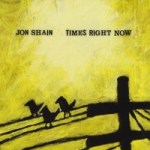
Jon Shain and his Trio will be performing this evening (Saturday, July 17) at The Soul Cafe in Durham, NC, together with Washington, DC's The Grandsons and Pat Wictor. The Soul Cafe is an alcohol-free venue near Durham's Brightleaf Square. Sadly, I'm out of town and can't attend - but you should. Click here for more information on tonight's show from Jon's Facebook page.
Times Right Now is the 6th album by Piedmont Blues guitarist Jon Shain since he went solo in 1998 after a decade with his folk-rock group, Flyin' Mice, and their spinoff, WAKE.
Shain's album covers as much diverse ground as…
 terrasig |
Pardon me for taking up science blogging space today to send out special wishes of love and congratulations for my Mom on the occasion of her birthday-of-special-note.
The artwork provided by her granddaughter above (©2010 PharmKid) contains a subliminal message about the significance of today's birthday. I will have the pleasure of delivering the original work of the artist to the birthday girl this weekend.
For those of you who don't know PharmMom, she's nothing short of incredible having raised my sister, then deciding when we were in elementary school that she wanted to serve the greater…
terrasig |
Today, I refer you to an excellent post by Peter A. Lipson, MD, at the blog, Science-Based Medicine, entitled, "HuffPo blogger claims skin cancer is conspiracy."
The post focuses on an article by someone who contends that the link between sunlight and skin cancer is a conspiracy by dermatologists and the cosmetic dermatology industry. Dr. Lipson's highly insightful analysis about the "interview" process and how doctors must act these days on behalf of their patients concludes:
This article shows a misunderstanding of journalistic ethics, medical ethics, and medical science. It's a disaster…
terrasig |
In remarking Sunday on coverage of the synthetic marijuana products in The New York Times, I totally missed that a more detailed article appeared the day before in The Washington Post.
With contributions from Aaron C. Davis, the article by writer Michael W. Savage provided an insight into Spice use in Adams Morgan and around the District. The second page of the online article goes into much more detail than the NYT article by addressing the pros and cons of state approaches to outlaw the compounds and products.
Savage also included commentary by Marilyn Huestis, chief of chemistry and drug…
terrasig |
Overnight, Malcolm Gay posted an article that appears in this morning's Sunday edition of The New York Times regarding synthetic marijuana products.
"Incense" blends such as K2, Spice, Black Mamba, and Wildfire Extreme are sold legally in most states in the US but have been illegal in Europe for over a year. These herbacious products are sprayed with one or more compounds originally synthesized in the laboratory of Dr. John W. Huffman at Clemson University. The compounds carry his initials followed by a number, such as JWH-018. The chemical structure of the compounds are different from the…
terrasig |
If you're tired of talking about the debacle that was PepsiCo's paid blog that was sprung on us here at ScienceBlogs earlier this week, please carry on elsewhere.
However, this episode is certainly the talk of both scientists and journalists. I suspect that this case will be discussed and dissected in the coming months at conferences and in journalism classrooms around the world.
Two questions have arisen in the last few days between discussion with my wife and fellow bloggers that have not been answered. One has a true answer while the other is more of a value judgement:
1. PepsiCo's Mehmood…
 terrasig |
In the midst of all of the PepsiCo #SbFAIL events of the week (here and here are my two contributions), I totally missed checking in on my blog traffic statistics this week. But every Saturday morning I get my weekly e-mail report from SiteMeter, the service I use to track how y'all get to the blog, what search terms you use, etc.
Yes, sometime during the week we drew our one millionth pageview since starting up here at ScienceBlogs four years ago last month. It's small potatoes compared with other bloggers at the network, some of whom draw a million page views every two weeks or two months…
 terrasig |
Toxicity reports are re-emerging in southern California this week after a dozen hospitalizations of kids using teas made from a fragrant flowering plant called Angel's Trumpet. A tea made from the plants is used to produce hallucinations, but they can progress to extremely unpleasant experiences. Moreover, Angel's Trumpet can be deadly, accelerating the heart rate and causing fatal cardiac rhythmic disturbances and bronchoconstriction that can trigger asthma attacks in sensitive individuals.
Angel's Trumpet is one of a series of plants in the Brugmansia genus that make a variety of muscarinic…
terrasig |
Given the events of yesterday about corporate sponsorship in the objective landscape of science journalism, I found it ironic that my research collaboration meeting at the University of North Carolina at Chapel Hill brought me to their beautiful FedEx Global Education Center where I enjoyed an iced pomegranate tea.
However, I was feeling badly about midday from a combination of the high temperatures and, more significantly, high ozone levels that gave me some respiratory problems from my longstanding asthma issues that preceded LungMutiny2010.
The dream
So, I took a nap and had a dream. I…
terrasig |
Yesterday, the ScienceBlogs arm of Seed Media Group announced that they would be hosting a blog written by members of PepsiCo's research and development leadership team. From the Food Frontiers blog:
PepsiCo's R&D Leadership Team discusses the science behind the food industry's role in addressing global public health challenges. This is an extension of PepsiCo's own Food Frontiers blog. All editorial content on the blog is overseen by ScienceBlogs editors.
The opening post was written by ScienceBlogs "editor" Evan Lerner:
As part of this partnership, we'll hear from a wide range of…
terrasig |
Many moons ago in blog years, RealJournalist&trade and Not Exactly Rocket Science blogger Ed Yong queried his readers to learn who they were and why they read him by answering some questions in the comment thread. Now that he has moved over to Discover, Ed has launched his query anew and blog brother DrugMonkey has tagged other science bloggers to do the same.
Why?
Well, I actually asked readers for similar input back in December when I celebrated my 4th anniversary of writing Terra Sigillata. We're now drawing about 1,300 people dialing up our blog daily yet only a good post will draw…
 terrasig |
Purty, innit? I got the raspberry one pictured above.
Disclaimer: This is not a corporate product review. I purchased my Kodak Zi8 for full retail price two months ago for $179.95. However, you can get it now for $129.95 at Kodak and everywhere else on the web. It was a fantastic deal at the old price - an incredible deal at the new price. It allows one to take fantastic quality, image-stabilized, 1080p HD movies that you can then watch on the TV.
However.
Editing the movies for posting on the blog is pissing me off no end.
I have a 24-minute interview with University of Pennsylvania…
terrasig |
I just walked outside my little dead-end neighborhood of 17 or so houses, almost exactly the number of my childhood neighborhood in northern New Jersey.
The houses and lots are a little bigger since money goes further in North Carolina. And yeah, sure, a state professor's salary is a bit better than that of a printing press mechanic or registered nurse in the 1970s.
But there is a huge hole in my 4th of July experience.
There are no kids riding on their bicycles with American flags taped to their handle bars, ever the risk of poking out one's eye - something that could probably get a parent…
terrasig |
The 75th anniversary of Alcoholics Anonymous has brought out a spate of legacy media articles about the organization, most singing the praises of an unscientific movement begun during The Great Depression that still forms the basis of many clinical drug and alcohol addiction treatment programs.
My post Thursday on Brendan Koerner's Wired article brought out a very thoughtful commenter and sharp writer, friendthegirl. I learned that ftg writes the blog, Stinkin' Thinkin': Muckraking the 12-Step Industry.
Stinkin' Thinkin' was started with the intention highlighting the quackery and abuse that…