

 jgoldman |
If you didn't catch the message, this blog has moved!
You can find The Thoughtful Animal over at the new Scientific American Blogging Network!
Please remember to add or change the link to my blog in your blogrolls. The new URL is:
http://blogs.scientificamerican.com/thoughtful-animal/
If you use an RSS reader, such as Google Reader, the new feed is: http://rss.sciam.com/thoughtful-animal/feed/
 jgoldman |
In March 2010, I was invited to leave behind the relative obscurity of my wordpress blog for the warm community (and increased visibility) of ScienceBlogs. What a tremendous honor and opportunity that was!
But there comes a time in the life of every blogger when one must say goodbye to one's current home, and move across town. Today is that day. Several months ago, when my friend and mentor Bora Zivkovic officially invited me to join the new Scientific American Blog Network, I simply could not refuse the offer.
So, starting today, you can find The Thoughtful Animal over at the new…
 jgoldman |
This weekend saw a trip to the boardwalk and beach in Santa Monica. There are often sailboats out on weekends, and I was hoping to get some good shots with my new telephoto zoom lens.
Unfortunately, it was very, very hazy. The light was bad, everything was very washed out, and it was hard to get any real color. Luckily, I've gotten better and better (and had some good advice from friends) on doing some digital post-processing. The key, it seems, is to play to the strengths of the photo. Too hazy? Perfect for black and white.
Here is the before shot, as it was taken.
And here is the after…
 jgoldman |
I'm on Google+.
After a couple days of playing with it, I haven't quite identified what it is for, or at least how I'm going to use it differently from twitter or facebook, but so far I am generally impressed - it's easy, intuitive, and fast. It also allows you a level of selective privacy that - while possible to achieve - is very clunky on Facebook. It only took me 10 minutes on the web interface and another 10 minutes after downloading the Android app to figure out how it all worked. And Google+ is already far better integrated into the mobile user experience than Facebook is (though this…
jgoldman |
Here are my Research Blogging Editor's Selections for this week.
To start us off this week, Neuroskeptic discusses a new study that attempted to use a computer to translate therapists' notes into psychiatric diagnoses. Could it be that certain language used by therapists or their clients could predict the severity or duration of a mental illness? The study has problems, but it's an interesting idea to consider, more generally. Machine-Readable Psychiatry.
It is well known, according to Daniel Ocampo Daza of the Ego Sum Daniel blog, that "smokers tend to have a lower body-mass than non-…
 jgoldman |
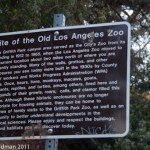
The LA Zoo wasn't always in as nice a facility as it is now. The "old" LA zoo was built in 1912 and was in use until 1965, when it moved to its current location just a couple miles away in a different area of Griffith Park. It's open to check out, and is adjacent to a picnic area. There are fenced off areas, but all the fences have giant people-sized holes in them. We thought of it more as: "enter at your own risk."
From the picnic area you can actually approach and walk around what used to be the public viewing area of the bear enclosure.
There is also some sort of old barn, with what I…
 jgoldman |
A version of this post was originally published on my Wordpress blog on March 15, 2010. Click the archives image to see the original post.
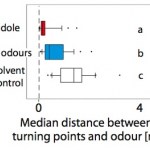
Most animals, at some point in their day-to-day lives, face the same problem. After they've gone out in search of food, they need to find their way home. But some of the places where these critters live lack any real visual landmarks - like the open ocean or wide expanses of desert. Instead of relying on vision, some animals have developed the ability to use olfactory (scent-related) cues to aid in navigation. Seabirds can detect subtle changes in the…
jgoldman |
Here are my Research Blogging Editor's Selections for this week.
Social hierarchies are pretty complicated to navigate...so why have them at all? Read about The Status Paradox at Psych Your Mind.
ADHD well known, but how might an ADHD diagnosis interact with being an athlete? What should practitioners of sports medicine know about it? Bill Yates discusses this at his Brain Posts blog: ADHD and the Athlete.
Do fish feel pain? It's not a trivial question, especially if you are aware of what is on the dinner table. At the Fish Addict blog, grad student David discusses a new report on pain and…
 jgoldman |
You've probably had a conversation that goes something like this:
Person A: "My dog is sooooo amazing!"
You: "I mean, dogs are awesome and all, but what's so amazing about this particular dog?"
Person A: "He just understands me. It's like he knows what I'm thinking and what I need."
You: "Do you think he's just maybe responding contingently do your overt displays of emotion?"
Person A: "Listen, man, I'm telling you: my dog can read my mind!"
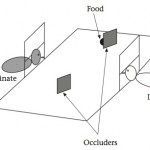
No matter on which side of this sort of argument you tend to fall, the question of whether or not domestic dogs can read human minds is an interesting…
jgoldman |
Here are my Research Blogging Editor's Selections for this week.
"Most neuroscientists would subscribe to the sensorimotor hypothesis, according to which brains mainly evaluate sensory input to compute motor output," writes Bjorn Brembs. But is it possible that the sensorimotor hypothesis is just the result of some laboratory artifacts?
"What happens to a pig if it has a gene for autism?" This is the question that Neuroskeptic addressed earlier this week. Do Pigs Get Autism?
What is it that makes an invasive species so successful at invading a new ecosystem? At NeuroDojo, Zen Faulkes asks…
 jgoldman |
Looking for a great Father's Day gift? How about the gift of Open Lab? Get it for 20% off if you buy it by Monday, June 13. Click the graphic below to head straight to the Lulu page for the 2010 edition of The Open Laboratory.
 jgoldman |
Hopefully this here blog will get back into the regular rhythm of posting in a few days. Until then, enjoy these photos from Oakland, Portland, and Seattle.
These pictures, and the rest in the photo set are my first serious attempt at actual photography. Check it out!
jgoldman |
Why write again what Bora has already written?
The great science blog 3 Quarks Daily has announced the voting for it's third annual prize for the best science writing on blogs. Last year, the judge was Richard Dawkins. This year, once the voting by the public narrows down the choices, the finalists will be judged by Lisa Randall.
Check out the nominees and then vote for your favorite.
So this year, several of my posts were nominated. Vote for one of mine, or vote for another, but definitely vote.
Voting closes Wednesday at 11:59pm eastern time (8:59pm pacific time), so do it soon!
jgoldman |
Here are my Research Blogging Editor's Selections for this week.
Snacking on fertilized duck eggs features prominently in the first editor's selection for this week. Food-related disgust and moral disgust: are they related? Find out at this Genealogy of Religion post, Foreign Ideas & Moral Indigestion
Jon Brocks outlines a proposed change for the upcoming DSM-5, which would recategorize kids who were previously given a "Pervasive developmental disorder - not otherwise specified" as having "social communication disorder." Well worth the read, at Cracking the Enigma.
"Many studies in…
jgoldman |
I was traveling last week, and I'm traveling again this week, so the posting is fairly sparse around here at least until after the weekend.
In the meantime, enjoy this awesome video. It was shot at Tswalu Kalahari Game Reserve. The camera was left on the ground to record lion movements. A curious lioness found the camera and I'm sure you can guess what comes next.
(h/t Casey Rentz)
jgoldman |
Here are my Research Blogging Editor's Selections for this week.
You're running down a corridor in a castle that's under attack by terrorists. Or are their neuroscientists, trying to figure out just how it is that people get involved in the narrative "flow" of a video game? Neuroskeptic explains how your brain gets in on the game.
Reality TV might be good for more than just entertainment. Is it possible that reality TV could actually engender romance among the participants, even on shows (like American Idol) that aren't about romance itself (like The Bachelor)? At the new PsySociety blog,…
 jgoldman |
Is this a difference in kind or in degree?
Image: The earth comes into view just below Endeavour, as it undocks from the International Space Station.
 jgoldman |
Earlier this month, the Jet Propulsion Laboratory in Pasadena, California had its annual two-day open house. For a laboratory complex that has the same acreage as Disneyland, it was just as crowded as the House of Mouse on a busy summer day. What a refreshing sight it was to see so many people - couples, families, grandparents and grandchildren, groups of teenagers - coming to a scientific laboratory to learn about space and science!
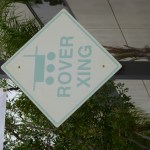
And how awesome to see hundreds of people in line for... not a roller coaster and not a parade, but a chance to see the next Mars Rover, Curiosity!
And…
 jgoldman |
The always-fantastic blog 3 Quarks Daily has opened up nominations for its third annual prize in science blogging. This year, the contest will be judged by Lisa Randall, and there will be three winners.
Posts can be nominated by bloggers or readers, and if any of you wanted to nominate one of my posts I would be grateful. Or, of course, nominate any other!
Here are the relevant details:
Please nominate your favorite science blog entry by placing the URL for the blog post (the permalink) in the comments section of this post. You can also add a brief comment describing the entry and saying why…
 jgoldman |
"Nearly 50 percent of Americans have been mentally ill at some point in their lives, and more than a quarter have suffered from mental illness in the past twelve months. Madness, it seems, is rampant in America."
This is how Richard J. McNally opens his new book, What Is Mental Illness? Earlier this year, David Dobbs of the Neuron Culture blog at Wired, recommended that I try to get my hands on an advance copy of this new book by McNally, a Professor of Psychology at Harvard. Well, I did indeed manage to get my hands on a galley copy of the book, thanks to the fine folks at Harvard University…