


 kbonham |
A little over 4 years ago, I joined up with three friends from grad school and launched a brand new science blog, "We, Beasties!" The name was meant to be a play on a phrase from Paul de Kruif's somewhat tongue-in-cheak translation of the first-ever microbiologist Antonie von Leeuwenhoek's term "Animacules." von Leeuwenhoek was the first human being to glimpse the world of life invisible to the naked eye, and de Kruif, 400 years later, dubbed those minuscule replicators "wee beasties." Of course, we now know much more about our microbial companions, including their immeasurable impact on…
 kbonham |
Can you be skeptical about GM but believe in climate change? So asks Alice Bell in The Guardian. The answer is of course, "Yes," but you can also be a fundamentalist Christian while believing in evolution and being a great scientist, so being able to hold two things in your brain at the same time is not a useful measure of logical incompatibility. One can be right about one thing and wrong about the other.
But let's get to the real issue raised in Bell's piece, the use of the term "anti-science" to describe opponents of genetically modified organisms (GMOs):
When people use the…
kbonham |
A couple of weeks ago, I gave a talk for
Tonight, I'm presenting at the Science In The News (SITN) Spring lecture series. If you're in the vicinity of Boston, you can come watch at 7pm in Pfizer Auditorium, located in the Mallinckrodt Chemistry Lab, 12 Oxford Street, Cambridge MA 02138.
If you can't show up in person though, SITN is now broadcasting live via google hangouts. Check out this page for details, and I'll try to upload the video feed here around 6:30 ET.
Start about 22min in
kbonham |
On Thursday, I had a post published on Scientific American's guest Blog about claims that genetically modified food crops could contain allergens. In it, I am critical of the Union of Concerned Scientists (a science advocacy and policy organization), for what I read as misplaced opposition to genetic engineering:
The UCS’s concern about the dire state of our food system is well-founded, and I applaud their efforts to get out in front of the policy debate. There’s just one problem: they oppose using all of our technology to help combat this problem. Specifically, I’m talking about…
kbonham |
Two weeks ago, the Heritage Foundation (a conservative think-tank) released a position paper based largely on the academic research of one Jason Richwine. The conclusion (roughly paraphrased): Hispanic people have lower IQ's than white people, so an overly permissive immigration policy will drag down the US economy.
Ethically, this conclusion is a deep affront to my liberal* sensibilities. The idea of basing our public policy on racism and bigotry is abhorrent.
Politically, this is dangerous territory. This is especially true after the 2012 election, when republican politicians were…
 kbonham |
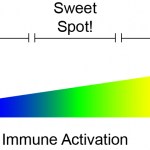
Every time I see an ad for some remedy that "Helps BOOST the Immune System!" I die a little inside. It's not just that these products are often homeopathic bull*, but (as I've mentioned before), boosting the immune system can actually be a terrible idea. The immune system is a finely tuned instrument, and too much can be just as bad too little. Too much immune activation leads to allergies and autoimmune disorders like multiple sclerosis (MS) or lupus. We don't know exactly why, but the prevalence of these "hyperinflammtory disorders," where the immune system is over-…
kbonham |
Ok, this is a little different, but it's annoying, so I'm going to talk about it.
Let me begin by saying I love the Union of Concerned Scientists. They've been wonderful advocates on climate change for decades; they are media savvy, they train scientists to be media savvy, and they push the media and policy makers alike to understand the scientific consensus. When it comes to climate change, I trust them over just about any other source.
Which is why it's so disappointing that they are so wrong on genetically modified organisms.
Several years ago, UCS decided to branch out…
kbonham |
Not going to report, since the facts will probably change before I hit publish, but these links should remain useful:
Google people finder - for folks that can't get in touch with friends/relatives
Boston Globe-run form for people looking for or offering places in the city
Lots of folks offering help on twitter via #BostonHelp
Mayor's hotline for people looking for friends/family 617-635-4500 (via the globe)
Anyone with videos/pictures of the route (could be evidence) call 800-494-TIPS (also via Boston Globe)
Red Cross is not looking for blood donations now, but would love you…
kbonham |
Ever wondered if we could identify someone by their breath? How fast you can propel a rocket using fusion power? If you can shoot at a plane with lasers and cause the pilot to burst into flame? Watch AskScience Live!
Despite some technical hurdles with the G+ event, I'd say it went well last night. If you weren't able the join us live, the video is now up on youtube.
It's my birthday today, and if you didn't get me anything, you can make it up for me by just watching this :-)
kbonham |
I'm trying something new.
For several years now, I've been contributing to an online community called r/askscience. It's a place where curious people can ask questions, and have them answered - often with great, yet understandable detail - by expert scientists that have a passion for explaining their work. It's an amazing forum, and I'm continually astounded that so many scientists are so willing to donate their time and expertise to educate people, and that so many people are interested in hearing them do so.
Unfortunately, not everyone that would appreciate this sort of thing are using…
kbonham |
Science
- There's a new flu strain running around in China. As is often the case, Maryn McKenna over at Wired has the most important piece to read.
- Allie Wilkinson's piece in Ars Technica about a climate change's irreversibility, but not inevitability... it's a weird distinction, but it makes sense.
- Another good post from Keith Kloor on GMOs, but I'm not a fan of equating Monsanto with GMOs. One is a company, the other is a technology. Just because the technology is used by the company, that does not imply that the two are related.
Not Science
- The most important video I've seen in a…
kbonham |
My blogging has been slacking, but I'm still reading a bunch that I just don't have time to comment on. So I'm going to experiment with a link dump at the end of the week. This first one features a couple week's worth of posts - feel free to start a discussion in the comments
Science
- Keith Kloor has a couple of posts in the past few weeks about GMO scaremongering. I waded into the comments there, with varying levels of coherance. I'm working on an analogy about GMOs and rockets... more on that later maybe.
- Maryn McKenna continues in her tradition of being terrifying on the antibiotic…
 kbonham |
For this week's OAS Wednesday, I thought I'd try to highlight some research that's in my field. As a result, I will likely be more prone than usual to lapsing into jargon and assuming knowledge that I shouldn't (or maybe I'll over-correct and get too simplified). Please let me know if anything needs clarification.
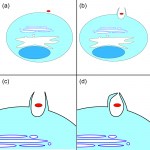
In real estate, they say that the three most important things to consider are location, location and location. The same could probably be said about many aspects of biology, including the immune system - if you get a cut on your toe, you don't want inflammation in your kidney.…
kbonham |
[This is my latest review for Download the Universe]
Honor Thy Symbionts, by Jeff Leach. Kindle
In 2003, the Human Genome Project--an effort to sequence every gene in a human being--was completed. The success, announced to great fanfare, was supposed to herald a new era in health care. Unfortunately, the promises of personalized medicine, in which treatments are tied to a person's genetic sequence, have not yet come to fruition. A few of the reasons for this are obvious (at least in hindsight). Knowing the location and sequence of a gene is one thing, knowing what it does is quite…
 kbonham |
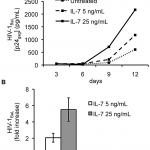
One of the things that bugs me most in pop-sci and woo-woo science is the obsession with "boosting" the immune system. The immune system is in a constant balancing act - tip it too far one way and even normally harmless bacteria become life-threatening. But tilt it too far in the other direction, and you can end up with things like allergies and autoimmunity. And some pathogens have learned to take advantage of your normal immune responses, meaning that "boosting" your immune system can sometimes do more harm than good. A good case-in-point is a recent paper published in PLoS Pathogens:
IL-7…
 kbonham |
[This past fall, I taught a course at Emerson College called "Plagues and Pandemics." I'll be periodically posting the contents of my lectures and my experiences as a first-time college instructor]
One of the biggest challenges in organizing this class was figuring out how to incorporate readings into the class material. Since I wanted to give the students a firm grounding in evolution as a way to understand infectious disease, one of the required textbooks I assigned was Carl Zimmer's excellent introductory textbook The Tangled Bank.
Unfortunately, I felt I only had a couple of…
 kbonham |
I spend a lot of time thinking about the scientific method. I don't mean that thing you learned in high school, where you make an observation, form a hypothesis, design an experiment etc etc. That's certainly part of the scientific method, but the linear formula that freshmen are typically forced to memorize sucks the life and interest out of what it is that my colleagues and I do on a daily basis.
Source: The fantastic "How Science Works" from UC Berkeley (click image)
The process of doing science is messy and complicated, and most of the time it doesn't work. There are false starts, bad…
 kbonham |
A "potentially historic" blizzard is barreling down on us here in New England, and is poised to drop up to two feet of snow on Boston. All of the schools in the area preemptively closed, our public transit system is shutting down at 3:30pm, and trying to buy groceries last night was bedlam. The snow is just now beginning to fall. Winter in New England can be rough, especially for a California-raised boy like me. It's not just because of the snow and cold, it's also the influenza and common colds.
Source - Flickr user "Placbo"
The fact that the rate of some infections can vary by…
 kbonham |
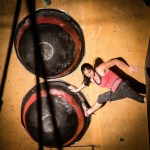
It occurred to me after I posted my piece last week about rock climbing and arthritis that all of the photos of climbing were of men. This was purely coincidence - I was editing photos of last week's competition in reverse chronological order, and I'd only finished the photos of the Men's finals by the time I was done with the post.
But I think it's important to note how amazing the women were as well (and it gives me an excuse to post more of my photography). In fact, this year, I thought that the women's bouldering problems were more interesting, and better demonstrated the skill and…
 kbonham |
In any physical activity, there is always the risk of acute injury - cuts, scrapes, bruises, and even broken bones are often par for the course. For some extreme sports like rock climbing, where you voluntarily drag your body hundreds of feet into the air on the side of a sheer rock wall, athletes are even willing to risk death.
Me following up a 5.9 in Rumney, NH... probably not risking death.
Those acute sports injuries can sometimes grab headlines, but people are increasingly becoming aware of the long-term consequences of physical stress on the body. Football and hokey players can…