
Could something be perceived if there is no sensory system which is dedicated to it? For everyone except parapsychologists, the obvious answer is no - but this raises questions about the ability to perceive short temporal intervals, for which there appears to be no dedicated sensory system.
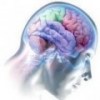
In their newly in-press TICS article, Ivry and Schlerf review the state of the art in cognitive modeling of time perception - perhaps the most basic form of perception which has no sensory system dedicated to it.
Ivry and Schlerf review the attractive qualities of time perception modules, such as the pacemaker-accumulator model and so-called "spectral models" (e.g., neural oscillators with different periodicities, or the use variability in neuronal conduction delays to perceive duration). Ivry & Schlerf report that their motivation for modular models is based on the fact that time perception "transcends" the modality of a stimulus. (However, as they mention later, there are many cases where auditory and visual duration estimates significantly differ.)
Ivry & Schlerf support the idea that the cerebellum is this dedicated time perception module (the "cerebellar timing hypothesis") with evidence that patients suffering cerebellar damage are impaired on a variety of tasks involving timing, but similar evidence has accumulated for the roles of right prefrontal regions and the basal ganglia. Ivry & Schlerf resolve this by advocating a distributed network for time perception, in which some components are dedicated (the "pacemaker" - the cerebellum, in their view) and others are domain general (basal ganglia and prefrontal cortex, which they refer to as "working memory to store temporal information", but might just as easily correspond to the "gate" and "accumulator", respectively).
Ivry & Schlerf contrast this proposal with those advocating "intrinsic" mechanisms for time perception, which propose that more general-purpose mechanisms (such as self-sustaining activity in the PFC and posterior parietal cortex) may be recruited for time perception in the absence of a dedicated neural system.
Ivry & Schlerf then review a variety of evidence showing modality-specificity in time perception, which would seem to support the intrinsic timing variety of models. However, they argue that intrinsic time perception should not be so broadly disrupted by focused brain damage, and that crossmodal transfer of time perception training should not occur. Regarding the latter, there is apparently remarkable specificity in training of duration discrimination.
Can time be described by changes perceived? If there is absolutely no time perceived, time has not passed? If this is true, then perception of time can be tied to the part of the brain that handles short term memories or perhaps the one that handles and compiles information from the rest of the senses?
The credit loans seem to be useful for guys, which want to start their career. As a fact, that's easy to get a college loan.
Did you mean "Could something be perceived if there is no sensory system which is sensitive to it?" ?
A wee but critical omission (this had me befuddled for a few moments): "Could something be perceived if there is [NO] sensory system which is sensitive to it?"
Don't you mean "if there is *NO* sensory system which is sensitive to it"?
Hey, so I find the research on time perception extremely interesting, although it's hard for me to sort through all the jargon right now. The one thing about time perception that bugs me - is how fast time seems to pass (it seems to be passing as I grow older, and this could be due to more than just the effect where "a single more year of your life becomes a smaller fraction of your life" effect. I dunno, my basic point is this: how can we tie in the research to, say, mapping out how "fast" time passes in our perceptual system?
Ah!
Could something be perceived if there is no sensory system which is dedicated to it?
You mean like:
weight
distance
speed
humidity
pressure
stability
etc.
Point taken, derek, but
weight: proprioception
distance: binocular visual processing
speed & stability: vestibular system
humidity: skin sensation
pressure: sound pressure in the ear
time: ???
Seems to me that since all modalities process input in real-time, any can be used to perceive and measure time. We can measure time as the span between two visual, auditory, or tactile stimuli.
Right, so that is one proposal, but then you'd expect to see illusions where time proceeds more quickly with a greater event rate in a given modality. I don't know if such illusions have ever been reported, but it would be really interesting to try! Anecdotally speaking, time do seem to crawl when nothing's happening...
There are numerous other possibilities though, for example that a) there is a central pacemaker, such as the cerebellum, or b) attention itself can function as a timekeeper in a gated accumulator, corresponding to cortico-striatal loops...