

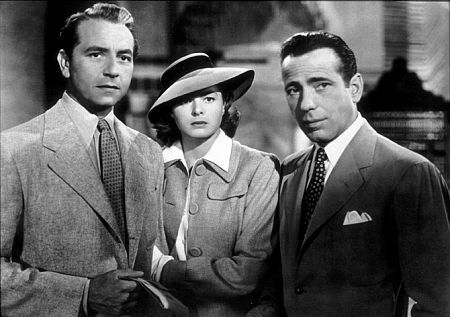
In the classic film Casablanca, the drama hinges on Ilsa's choice between two men: her kind and supportive husband or her rugged and passionate ex-lover. In a moment of abandon, Ilsa returns to her lover's arms only to later change her mind and choose the more stable life she would have with her long-term partner. But what if something as simple as a pill had caused Ilsa to feel differently and make the opposite choice?
In a new paper in the journal Trends in Ecology and Evolution biologists Alexandra Alvergne and Virpi Lummaa at the University of Sheffield in England raise the possibility that taking the birth control pill could affect a woman's choice of who she chooses to have sex with as well as her choice of a long-term partner. Could modern reproductive technology cause women in Ilsa's position to make a choice they might later regret?
Past research has shown that women have a variable strategy where sex is concerned. While most women will engage in sexual behavior throughout their cycles, during their most fertile phase women often demonstrate very different choices over the qualities they find attractive in the opposite sex. The birth control pill, these researchers suggest, alters the hormonal cues that evolution has shaped as part of female sexual strategy.
Over the past decade more than 75% of all studies looking at cycling mate preferences have shown that, during their most fertile period, women prefer more masculine and symmetrical male features and are particularly attracted to men showing dominance and competitiveness. It is during these times in their cycle that women have shown the greatest likelihood of cheating on a partner (what Alvergne and Lummaa refer to as "extra-pair copulations") or engaging in a one-night stand. However, during the infertile parts of their cycle women tend to prefer less masculine faces and are more attracted to males that make better long-term partners and devoted fathers.
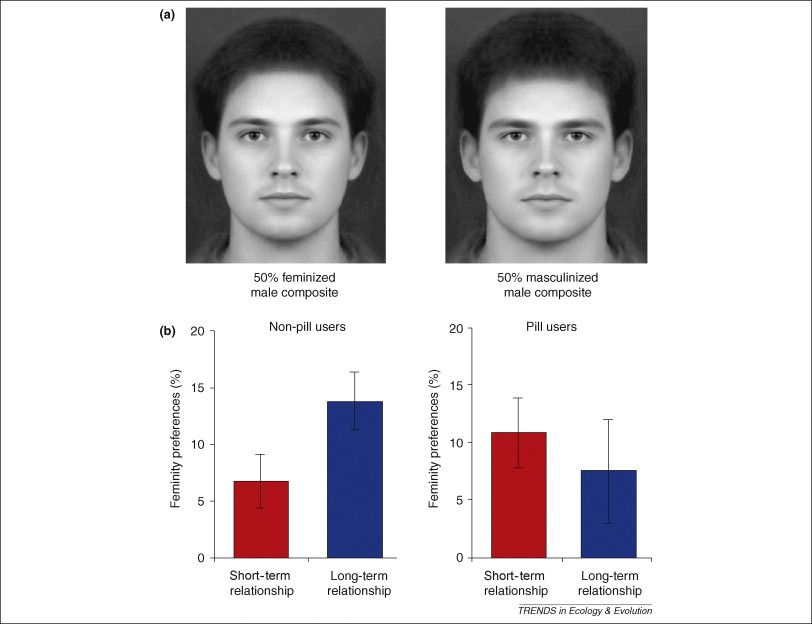
Women who aren't on birth control prefer less masculine faces for long-term relationships.
Image from Alvergne and Lummaa (2009)
This "dual sexuality" is likely part of women's evolved sexual strategy to both have her cake and eat it too. Given the time and resources that are required of females in both reproduction and lactation, a supportive partner would be an important asset in a woman's reproductive success. But the traits that make for quiet evenings and good conversation might not be the best for the survival of her offspring in a difficult environment. In this case, the extra-pair copulation allows women to shuffle the genetic deck and increases the likelihood that some of her offspring will make it to reproductive age themselves. While, for many people today, the closest they'll ever get to the African savanna is Banana Republic, our bodies are still operating under the same assumptions they have for the past million years.
The trouble with oral contraception, Alvergne and Lummaa suggest, is that by altering the normally cycling hormones women will certainly prevent pregnancy, but they might inadvertently be altering their choice of what qualities they're attracted to. As they explain in their paper:
New evidence suggests that the pill, by eliminating oestrus, changes the natural cycling preferences in women for markers of both genetic quality and compatibility in mates as well as natural cycling attractiveness to men. As compared with normally cycling women, pill users show no or weaker preferences for facial and vocal masculinity. For instance, the preferred face shape is more masculine during the high conception-probability phase of the menstrual cycle in non-pill users, but pill users do not show similar preference.
The concern of the researchers is that a woman who gets involved with a guy while on the pill might find that she's no longer compatible with him once she stops later on in the relationship. Imagine waking up next to your boyfriend, or even your husband, one morning only to discover that you're just not that into him. While female comedians make such scenarios commonplace in their stand-up routines, Alvergne and Lummaa suggest it could be a serious reality for modern women.
However, before discarding the rest of this month's pack into the waste bin, it's important to know that these concerns have yet to be proven, or even tested. While the hormonal aspects of women's sexual choices are well demonstrated, as are the modifications that result while on birth control, the potential impact of these different choices remains an untested hypothesis. However, since birth control has been such an important invention for so many women today, it would seem that these studies would be of great concern to pill manufacturers:
Given the centrality of relationship satisfaction and offspring quality in the subjective well-being of women and mothers, drug companies marketing hormonal contraception should be encouraged to institute large-scale clinical trials investigating behavioural and psychological side-effects potentially associated with oral contraceptives, and any possible maladaptive side-effects of pill use on mate choice, attractiveness, relationship satisfaction, divorce probability and offspring health.
If these problems were associated with Viagra you can be certain that millions of dollars would be devoted to this research. But, as is often the case where women's issues are concerned, medical research and consumer options are profoundly limited. Alvergne and Lummaa's research suggestion would, however, be an important step towards fully understanding the health and emotional well-being associated with different contraceptive technologies. 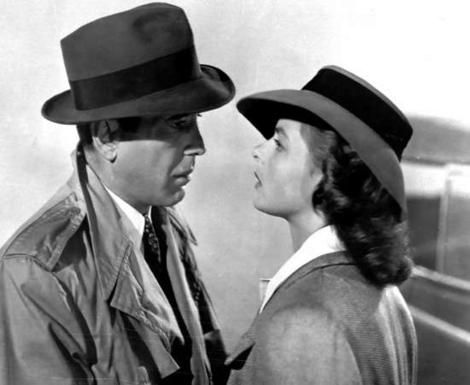 Standing on the tarmac between the two men in her life, Ilsa is confronted with one of the great struggles of human sexual evolution. As she says to her lover before leaving him to join her husband, "With the whole world crumbling, we pick this time to fall in love." If Ilsa's conflict between partners is any indication, sexual relationships are difficult enough without having additional factors messing with your decision-making ability. Natural selection may not dictate every aspect of our lives--biology is not destiny after all--but the long arch of our evolutionary history has powerfully shaped how we experience the world today. As we continue to develop techniques that hack our biology to make life more compatible with our modern desires, it's important to keep the long view of our evolution in mind. As Sam the piano player reminds us, "the fundamental things apply as time goes by."
For more on Dr. Lummaa's work see my post: Why Do Women Experience Menopause?
UPDATE 1: Razib at Gene Expressions has linked to this post with a graph depicting a rise in divorce rates since 1960. He doesn't state his reasoning behind it, but several readers assumed he was suggesting that birth control was responsible. There is no evidence for any such link.
UPDATE 2: Razib has clarified his position and agrees that any link between birth control and divorce rate has no basis. Reference:  Alvergne, A., & Lummaa, V. (2009). Does the contraceptive pill alter mate choice in humans? Trends in Ecology & Evolution DOI: 10.1016/j.tree.2009.08.003
Hmmm. Is this research suggesting that men who look "more masculine" should be deemed unsatisfactory marriage material? That only men with "less manly" features and traits make good fathers and actually stick around? How's *that* for sexism and gender bias? What's a so-called "man's man" to do? Sleep around as much as possible, I suppose.
check this out!
Although I have always thought this type of research is thought-provoking, I am a tad surprised that writers of the topic very rarely point out that the qualities that lead a woman to think a man is attractive and to 'select' him are not necessarily the same qualities that lead a woman to KEEP him. A 'one night stand' CAN result in conception, but it often takes more than one try. So then the real question is how male behavior, not appearance, affects female choice (while on the pill or not). That type of research, alas, is much harder to conduct.
I was warned by several other women that taking the pill had caused severe emotional changes for them. Doctors, however, seemed dismissive of these concerns, and I trusted their professionalism. Years later, I stopped taking the pill and was amazed at the sudden increase in libido, energy and quality of life I experienced. Despite the convenience, I would never, ever take it again. In retrospect, when I was on the pill, I felt unmotivated, depressed and half-numb the whole time, but the effect built up so slowly I was barely aware that anything was wrong. It disturbs me to think that many other women may be living permanently in that state. Unfortunately, there is no money for the medical industry in people not taking medication.
lix: I'm going to introduce you to a concept called anectodal evidence. Meaning the side effects you experienced were true for you but it's a stretch to think "many women" are living permanently in a state of depression while taking the pill becaude *you* did. My own anecdotal evidence suggests the opposite: my quality of life has never been better than when I started to take the pill. Not having to worry that much about being pregnant could do that to a woman!
Lix - I'm very sorry for your experience. I'm also completely horrified that your doctor never suggested the pill as a possible cause of your depression: mood changes, especially depression, are well documented. It is relatively unusual (at least for it to be reported!), but given the huge number of women taking the things it is quite a big sample nonetheless. What makes it worse is that it's often the case that a different hormonal contraceptive, with slightly different drugs, will be fine for the patient. I know this because I had an iatrogenic suicidal episode when I first tried the pill (from a base-line of severe and intermittently suicidal depression). My doctor's response was not perfect (very unsympathetic), but she did try me on a different combined pill a couple of months later, which I kept on for a couple of years without trouble (now I'm on a progesterone-only pill, and was perfectly fine switching to that one too).
Lix, I read your post and that sounds exactly like what I've experienced on the pill! I too have heard similar stories from several women and I do think lots of women experience the numb depressed feeling thanks to the pill, although, as doctors ignore it and never suggest it might be the pill, a lot of women would never know what to blame. After an unsuccessful 7-year relationship with a man I 'selected' while on the pill, I met my current husband while off the pill. I started taking the progesterone-only pill after we'd been together for a little while, and I went off him in a matter of days. Luckily we caught on that what had changed was that I was on the pill! I went off it, and tried an IUD that releases small amounts of progesterone instead. That had the same effect, though less severe and it took a few months to happen. As long as I'm in my natural cycle, we're totally in love. I'm never ever going near hormonal contraceptives again!
Her husband is a leading Resistance fighter hunted by the Nazis - I don't think he could really be described as lacking "ruggedness" or passion; her ex-lover is a nightclub owner. I don't think it was about stability, but loyalty and commitment (and different kinds of love).
via When Harry Met Sally:
I have asked him to clarify his position but he has yet to do so.
i responded in the comments. i did have a personal engagement most of this day, so i had to neglect the blog ;-)
If these problems were associated with Viagra you can be certain that millions of dollars would be devoted to this research.
A questionable assumption at best. I doubt you could point to objective evidence to support it. How many 'millions' of dollars has been spent on men's sexuality after taking Viagra?
I suspect this is a potential minefield no matter what the results. Marketers of birth control my find themselves sued for infidelity and marriage failure liability. Moves to pull the products would be taken as a (conservative) attempt to limit women's choices, while keeping it on the market will be seen by some of the same people as 'callous disregard' for women's health.
Thanks for the clarification Razib. Cheers.
Considering the incredibly varied factors involved in mate selection and individual personality, almost none of which we actually understand, aren't we getting ahead of ourselves by creating all these new ideas on birth control and mate selection, when they're based on ideas that have pretty questionable foundations?
These tests performed are working from a system of assumptions that are specious at best. Why even bother with these birth control studies? They're not going to tell us anything of actual value, except get the researcher's name in the paper and hopefully keep their jobs going... but hey, while we're at it, I think phrenology is worth another look, too.
Evolutionary psychologyâs obsession with mate selection always raises my hackles. It is, pardon my pun, a sexy topic and the academic fame is hard to resistance. Unfortunately, the science is often subpar and this example is no exception.
One of the hallmarks of human evolution that should not be ignored is the evolution of culture. However, the analysis of its effect is frequently sidelined if not ignored entirely in these studies. They do readily admit that in many traditional societies, women cannot chose their social partners, and thus must sneak about to get the good genes. But, Alvergne and Lummaa admit that they cannot get solid evidence from humans because of ethical issues â itâs a little taboo to ask whoâs the actual father (see Box 1).
So as the next best thing by their standards, they cite Gangestad et al. 2002 in which women are asked to fill out a questionnaire regarding their attractions to various men, partner or not. And their sample: 51 undergraduate women from the University of New Mexico. The evolution of human mate selection derived from 19 year olds.
That passes for science? And it goes on! One of the key studies showing that males are more attracted to cycling females and not as attracted to the women that are on the pill involved lap dancers and their patrons. Also in Albuquerque, only steps from the University of New Mexico. Wow. Perhaps this sample is not very representative of the breadth of humanity.
I wonder what Foucault would thinkâ¦perhaps the language of science has given these researchers the power to construct this "reality." I wouldnât go that far - not all science is a construction - but I do think that these studies have a long way to go towards truly demonstrating anything about the long arch of evolution affecting our mating choices today.
@Nancy: That's a very important point, thanks for bringing it up. Far too many studies on human cognition and sexuality are conducted at universities where the sample size is chosen primarily from the undergraduate body and surrounding community. However, there have been multiple studies on female proceptivity during the most fertile phase of their cycle and nearly all of them record similar results. I'm highly skeptical of the lap dance study myself. It had some interesting results (significantly higher tips when the only differing variable was where they were in their cycle) but I agree that it definitely shouldn't be extrapolated to humanity as a whole. But when hormone levels are quite clearly involved in human mate choice, don't you think it's a worthwhile endeavor to find out how adjusting hormone levels affect this?
Seriously, I think it's the bombardment of anime & manga into America, reflecting the Japanese ideal of masculine beauty (which is to look as androgynous as possible) & the fact that girls around the world are growing up on it that alter their preferences for femme looking men.
I work for both a suicide hotline and a walk-in clinic (mostly serving young adults under 25). The lack of information they get about the side effects of hormonal birth control, especially anxiety and depression, is staggering. I am fully for birth control, but I cannot think of another medication that would be acceptable with such high incidents of such dramatic side effects, and with such little warning. I'd say about 75% of the girls I talk to don't even make the connection until after they switch methods (or go off them altogether) â they blame their feelings on a new relationship, school year or job. As with most people who are depressed, they aren't wonderful at self-analysis.
And the treatment they get from doctors â not just for psychological side-effects (which, it should be noted, are listed as 'minor' in most of the literature that comes with the packaging), but for 3+ months' worth of bleeding â can be pretty horrible, too. Especially if these people only have so much money and time to see a doctor.
I'd be curious to know how many other medications that cause three months of bleeding and panic attacks would be classified as par for the course â and how many adult men would be expected to continue work or school under those conditions.
As an MD, I suggest looking at the studies at Boston University that clearly showed that The Pill wreaks havoc on libido and sensitivity to male stimuli in a large fraction of women. There are also other studies over the years showing the same horrible scenario. Any woman who experiences libido loss or depression while on The Pill, should discontinue The Pill -- under physician supervision of course -- and verify it was the cause of the symptomatology.