

"It is the supreme art of the teacher to awaken joy in creative expression and knowledge." -Albert Einstein
Last month, an interesting conversation happened on the topic of the most difficult course that a student takes in their studies.

Image credit: Steve Perrin / University of Michigan MSIS.
The question, of course, was asking about most difficult in terms of the course content that the student must learn. In any field, there are plenty of options to choose from, and while an individual student's mileage may vary, teachers and professors tend to learn very quickly just which courses (and what course material) students have the most difficulty gaining a working understanding of. On that topic, I have to agree with Chad that, for an undergraduate physics major, the advanced electromagnetism course is the toughest.
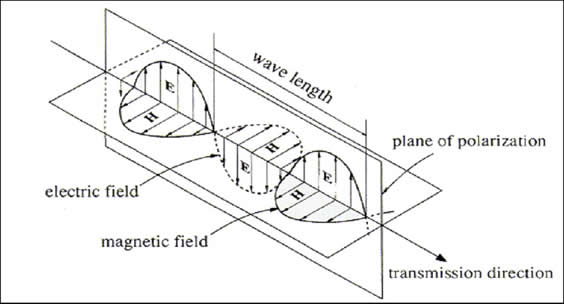
Image credit: Mike Willis.
But I thought it'd be much more interesting -- on behalf of all teachers at all levels -- to take on the following question:
What is the most difficult course to teach?
Having taught a huge variety of courses over my life, ranging from public secondary school to high school to public and private Colleges and Universities, I have to say that the courses with the most difficult content are by no means the most difficult courses to teach.
In my experience, the most difficult course to teach is the one where you, the teacher, cannot control what or how you are teaching.
Image credit: Mr. Lawrence / Eagles4Kids.com.
There are a handful of qualities that are basically required of an individual to be a good teacher; qualities for which there are no substitute. A good teacher -- in my experience -- must be:
- Competent: with the curriculum/subject matter that they're teaching,
- Attentive: to the skill level, needs, and abilities of the students,
- Prepared: to explain, demonstrate, and challenge students in a variety of ways,
- Empowered: to teach the material in whatever way, however unorthodox or creative, they see fit, and
- Self-aware: of their own strengths, weaknesses, abilities and limitation.
As you're probably all aware, there have been recent pushes in education to micromanage teaching methods and implement standards-based learning, like this is going to accomplish something meaningful.
Let me share two important secrets with you.
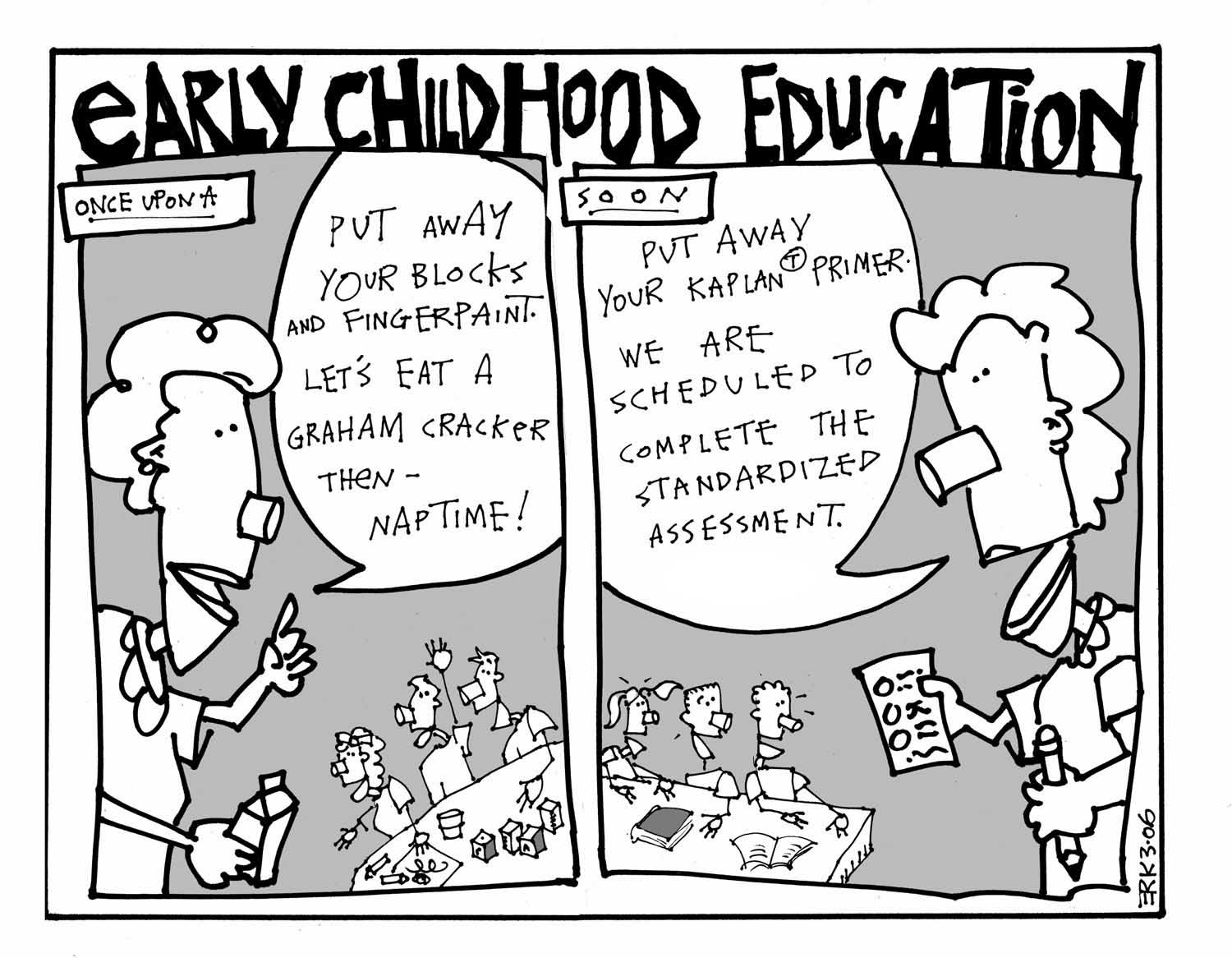
Image credit: Eric Joselyn, retrieved from thenotebook.org.
1.) There is no amount of control you can take away from a bad teacher that will turn them into a good teacher.
2.) There is nothing worse you can do to a good teacher than take away their autonomy as to how and what they teach to their students in their classrooms.
That's it. We've all had experiences of good and bad teachers that have been seared into our memories, but all of my best experiences would never have happened if my education was as micromanaged as many classrooms are today.
And that's truly a shame. Because the best courses I've ever taught are -- at least from my perspective -- college-level introductory astronomy and the advanced electromagnetism course mentioned above.
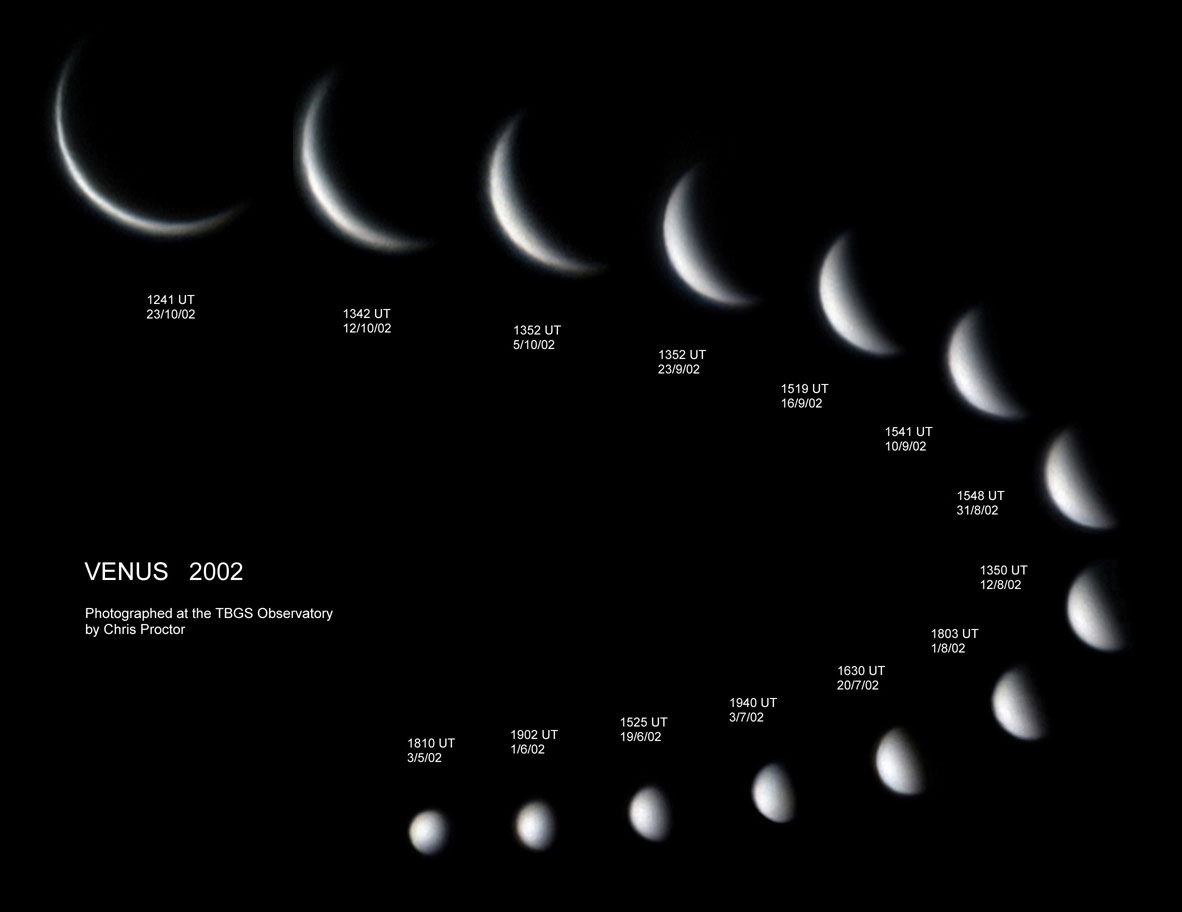
Image credit: Chris Proctor, retrieved from spacestationinfo.com.
For both of those courses, I had complete creative control over everything: the material covered, the assignments, the exams, etc. I could take the journey that I not only chose with my students, I could tailor that journey to their needs and abilities, my strengths, and all the other obligations and necessities that came up.
And we had a ball. They got to learn skills and take on challenges that they wouldn't have been confronted with anywhere else; they got an experience that was unique to having me as their teacher. And it was a joy, for me, too. On the other hand...

Image credit: MemeCenter.com / Austin Powers.
what was the most difficult course I've had to teach? That would have to be the introductory physics course geared towards non-majors. The curriculum is simply too rigid and comprehensive to do a high-quality job in the time allotted to do it. It is a curriculum that has been unreasonably standardized for the skill level of most students. As a result, a teacher is either forced to skip many important topics that students will be held responsible for, or to expose the students to a great deal of material without the time necessary to teach for mastery. Either way, it's a losing proposition, and one that a great many teachers (and students) resent.
If you want your children to get the highest quality education possible, don't forget this lesson. Demand competent, attentive, prepared and self-aware teachers, and make sure you empower them to do the best job that they can do!
Ethan, I think that it might be better to ask the question as "Which class do the most students have difficulty with?" I found junior E&M to be relatively easy, but my four semesters of undergraduate quantum mechanics went downhill from so-so to abysmal.
I never could get the hang of the math, to the point where one professor told me that I was the first physics senior in history to be incapable of math involving integers and half-integers.
To this day, the idea of a ClebschâGordan coefficient can make me wake up screaming in the night.
"If you want your children to get the highest quality education possible, don't forget this lesson. Demand competent, attentive, prepared and self-aware teachers, and make sure you empower them to do the best job that they can do!"
How do we demand it when the teachers who are not competent, not attentive, not prepared, etc are the ones with tenure? I'm actually thinking more at the middle/high school range than college but any insight is welcome.
Presuming facts not in evidence, Thomas.
Substantiate your claims.
As a High School teacher, who is tenured, I hope I can address Thomas' concern over the impact of tenure. Tenure makes one difference for teachers, and that is the application of due process before termination. If a bad teacher is allowed to stay in a position, it is the fault of that institution's administration for not fulfilling their most important duty. There is a wide-spread misconception about tenure which endangers it's most important role; granting the freedom to stand up to the micromanaging Ethan discusses in this article. Without the security tenure grants, expect to lose any teacher perspective in the reform debates.
Yes, yes.
Now let's be perfectly clear on one thing.
Ethan is a good teacher.
Thank you Ethan for teaching us.
To Ethan's list: "Competent, Attentive, Prepared, Empowered, Self-aware"
I would explicitly add: Respectful, Curious, Patient, and Do No Harm
Anecdotally, I hear from my colleagues that the introductory physics classes are the least desirable to teach, as Ethan says in the post. A lot of it is because these are service courses which people from many different majors stake because it is required of them (and few of these students are physics majors). This gets you into conflicting requirements because the essential material for major A will only partially overlap the essential material for major B. About the only class that is (sometimes) considered less desirable than intro physics for science and engineering majors is intro physics for pre-meds: you have to teach to the standard med school syllabus, in a class full of people who are notoriously competitive, and you can't resort to calculus the way that you can with science and engineering majors.
But I can well imagine that K-12 teaching is even worse. School teachers in the US are not paid especially well, nor are they granted much respect in society. Not surprisingly, the result is that teaching tends to attract people who are less than top-notch. A few people go into teaching out of idealism, but many of these people burn out. And while sheer numbers dictate that a K-12 teacher will have less control over the curriculum than any college instructor, the trend has been toward reducing the teacher's ability to control what is taught. High-stakes standardized testing is among the worst culprits, but not the only one.
E&M? Seriously?
For me, it was Solid State Physics....
Glen, I never had to take Solid State as an undergrad (it was an elective), and most programs don't require it for the major. I took a couple of astrophysics courses and nuclear/particle instead. It made taking statistical mechanics in grad school tougher, but I never really had a strong interest in Solid State, and I've never regretted the education decisions I made.
For what it's worth, from my list of five, I should have ordered them:
-Self-aware,
-Prepared,
-Attentive,
-Competent, and
-Empowered.
Didn't see it at first. :-(
I taught high school special ed for eight years and a course called Facing History And Ourselves (FHAO.org), for two years. Loved it. I loved it because for ten years I got to teach students, and the parameters of the course were left up to me. One "contractor" hired not by the County, the School Board, and certainly not by the Principal; but by the State, mandated that every teacher had to assign a certain essay on a certain day and grade it the same way ETS would. Oh - and those were only essays we were allowed to assign.
I quit. Now I teach for free.
History has always been a tough subject to teach well (for me, at any rate), as it's difficult to isolate an event and investigate/understand just the event itself. An analogy might be teaching/learning about equations of motion in various dimensions: everything's at STP, there's no such thing as friction. It's sometimes extraordinarily difficult to stay focused, avoid too many enthralling yet distracting tangents (how much did the Affair of the Diamond Necklace really affect the French Revolution?), and provide a lesson that's engaging (court intrigues and political machinations), important (the rise of populist liberty), and applicable to today's society (increasing wealth disparity and the disconnect of the political plutocracy).
@wow that wasn't meant as an absolute statement though it certainly came out as one. I just meant in the instances when a bad teacher has tenure what is one to do.
@Sturge, thanks for that info.
OK, Thomas, but that might be the same as me talking about the "problem" of so many women being so infatuated with me, I'm unable to walk through the pile of discarded knickers to get to work.
I.e. it WOULD be a problem if such an underwear-drift occurred, it's just not going to have happened.
Now, an example of a case where tenure is abused is with Wegman and the GMU.
THAT, however, is only because he has powerful backing who like what he says.
Michael Mann, with tenure, has a much harder time of it, being investigated (for no *rational* reason) all the time.
It's not tenure, it's the political/monetary connections that cause your stated problem.
And I don't think teachers get much in the way of that weight of backing.
@wow that wasn't meant as an absolute statement though it certainly came out as one. I just meant in the instances when a bad teacher has tenure what is one to do.
@Sturge, thanks for that info. That' doesn't seem to be the popular interpretation (for parents anyhow) as to how protected tenured teachers are but I take your word on it. And I'm certainly against micromanaging curricula so I'm glad there is protection for teachers. I'm not against job security for anyone, just over-security, if you will, and from what you're saying that doesn't sound like its the correct interpretation of tenure.
@wow, I'm not really sure what you're getting at. Are you suggesting that there are no bad teachers with tenure, ("it's just not going to happen")?
I have had and my child has had abusive teachers. I mean that literally. Some have been or were removed and some remained. The only difference apparent to the people outside the HR department is that the ones that were removed were new and did not have tenure. In some cases the reason given for not removing others is "they have tenure, we can't". Maybe that's not true, but it is what we were told.
I'm open to believing that's not an honest answer and it's just a case of connections or an ineffective administration. I'd have a hard time believing it's political or monetary when it comes to a 4th grade teacher though.
I fully admit I'm not privy to the HR discussion or the innermost workings of tenure so these are certainly the observations of an impacted outsider which have to be taken with a grain of salt.
In any case I'm still not sure what you're point is. As a generalization teachers are treated horribly by my opinion and should have far more importance in society as well as being much better paid. By no means does the fact that they're underdogs mean there aren't bad apples.
@Thomas - If I may.
It starts with making your child your partner, and with a full understanding of mutual expectations.
Meet with the teacher. Be nice, but define your expectations (Document!).
You work the plan and monitor (Document!).
Get to know other parents who are familiar with the teacher (Document!).
If the situation persists call (yes call) a meeting with the teacher and the Principal. You don't want to leave the meeting without a different teacher (Document!).
Yeah, it's not easy, and by the time it's done, your child has moved on, and people will murmmer everytime you walk through the office. Just remember, you pay them.
In my third decade of teaching high school science after a decade as an oilfield geologist, I can state with certainty that if a principal/district wants to get rid of a tenured teacher, they will get what they want. It's a process and can take up to a couple of years but it can be done.
Here in Florida, a PSC (professional services contract, the equivalent of tenure) is no longer available to teachers who entered the system this school year. Those of us who have it are going to be forced to chose between keeping our PSC or going with the merit pay system which requires becoming a year-to-year teacher if we want to be eligible for financial rewards.
Hmmmm...keep my PSC and be assured of employment for the 7 or 8 remaining years I need to get full retirement or go for the merit pay option in which any bonuses I get are 50% dependent on the performance of my students on standardized tests in math, writing and reading? Tough decision...
But to take on the topic of this post, I loved teaching a course on technology that I created from scratch without a textbook or mandated curriculum. Students loved it too and when the course went away, I was heartbroken.
Thanks for the feedback, everyone. And sorry for hijacking the topic, Ethan.
I'm not a teacher so I can't comment myself. My wife is a preschool teacher and has specialized in early childhood education for well over a decade. I wonder how she would answer the question. Very different course material. ; )
I agree that teachers should be free to teach in an semi-autonomous fashion, developing methods and techniques to improve learning and inspire students. I also feel, however, that the outcome of the methods and techniques need to be evaluated. Without real data to back up claims there can be no real and continous improvement in teaching and learning, just running around in circles chasing the latest teaching or textbook fad.
Surely being required to integrate Creationism into ANY science class is the most ridiculous and debasing form of macro(sic!)management?
"in which any bonuses I get are 50% dependent on the performance of my students on standardized tests in math, writing and reading"
This, however, is the wrong metric.
It leads inevitably to learning how to pass the test, not learning.
Teaching results take a decade or more to reveal themselves. And that needs to be reflected in the method by which their success is measured. Look at the results of education reflected in the "capitalist" reasoning for education to be publicly funded and universal.
If, by the time those statistics come out you see a level higher than commensurate with the current spending levels, then teaching should be given more money to spend.
If the results are not worth the money being spent, then either change what is being done (i.e. fix the process) or reduce spending and entitlement until parity is met.
Teaching IS NOT a business and doesn't make profits or year-on-year growth.
Think of teaching (if you MUST put it in capitalist terms) with spending on the CEO pay. You want the best to enable the company to do better. Think of your children as you do of that CEO. Spend the best to get the best. Skimp and lose.
"@wow, I'm not really sure what you're getting at. Are you suggesting that there are no bad teachers with tenure, ("it's just not going to happen")?"
Nope.
I'm saying that being unable to get a bad teacher thrown out is not a problem since there is little political clout in keeping a disliked or incapable teacher in employ.
There are bad teachers, but they get kicked out, tenure or no.
The actual abuse of tenure security only occurs when political fallout outweighs the disgruntlement of the citizens affected.
With Wegman, this is definitely the case since he has high powered backing.
But teachers get no such backing. Any such educator with backing would be given a MUCH better paying job with that clout behind them. cf. George W Bush and his multiple failures as executive in several companies.
@Thomas, your are very welcome. Education reform hits so many politcal hotbuttons that it quickly becomes very emotional, its wonderful to see reasonable discourse on the topic.
@dorght I could not agree more. Any outcome of meaningful reform in the US must answer the following questions; Do we educate everyone (equity) or do we educate well (rigor)? Also what is the most efficient balance of autonomy and external control. Since we Americans make our decisions in a democratic fashion, the politician who promises the best of both worlds (while slashing budgets)is likely the one who gets support. The important decisions are made by those outside the classroom, who either never taught or taught briefly 20+ years ago. Its ironic that the same outrage we see in this election cycle over politicians potentially making medical decisions for you and meddling in the doctor-patient relationship is not mirrored in education, where non-educators and ex-educators have been meddling in the teacher-student relationship for years and continue to do so unchecked.
"Which class do the most students have difficulty with?"
That would be whichever class was most-badly taught, which in my case was continuum mechanics - elasticity and fluid dynamics.
Amazingly, I actually went on to do a PhD in astrophysical magnetohydrodynamics.
The experience of teaching older students (especially post-high school) is very different from teaching in a K-8 classroom. As a young, inexperienced teacher, I loved teaching a proscribed curriculum, especially for math. I am very good at math and enjoy it a lot, but I am glad that I did not spend most of my time designing math lessons, setting the timeline for learning concepts, etc. Kids need individual attention, and I spent a lot of time focusing on the kids and their needs (math-related and otherwise). Let someone else decide whether I teach fractions or exponents first, which supplies I will need, etc.
In my personal experience, I remember my best classes by remembering the kids, not the activities or specific learning objectives.
As an aspiring young teacher who is relatively new to the field, I've found that teaching courses that are discussion-based seem to be quite challenging. For me, it is much simpler to prepare a lecture with various teaching tools (i.e. power point, videos, etc.) because I can do much of the work ahead of time. In a discussion class, it is much harder to predict what students will contribute and whether or not they come prepared to class. One of my solutions is to assign a detailed, meaningful textbook as required material for the class. I've discovered that Education eBooks [http://www.ebookmall.com/categories/education] is a great resource that helps to offset the outrageous costs of textbooks and help more students have access to necessary resources for their own personal preparation.