

"They will see us waving from such great heights
'Come down now,' they'll say.
But everything looks perfect from far away
'Come down now,' but we'll stay." -The Postal Service
Whether you're under urban, city skies, where only a few dozen stars are visible on a clear night, or beneath some of the darkest skies on Earth, the Universe is out there, and you can get started discovering it, right now, for yourself. You can have yourself, as Bishop Allen would sing,
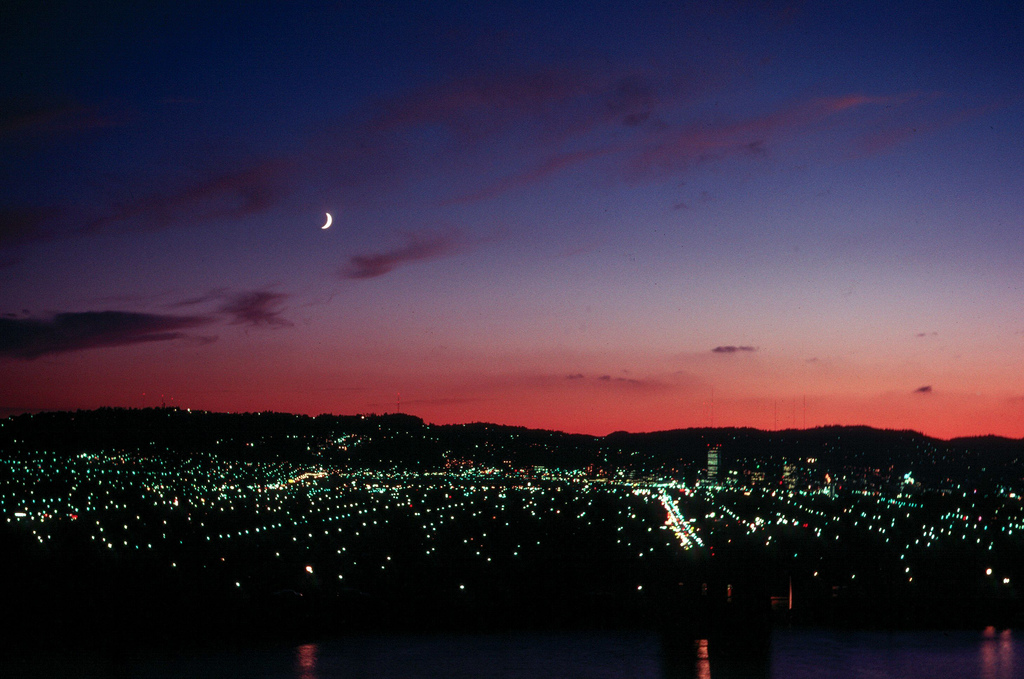
Image credit: FocusX7 / B. Emmerling on flickr.
When the Moon sets and the neighbors turn off all their lights, I can get skies that are darker than purely urban skies: maybe all the way down to (lower is better) a seven on the Bortle dark-sky scale.
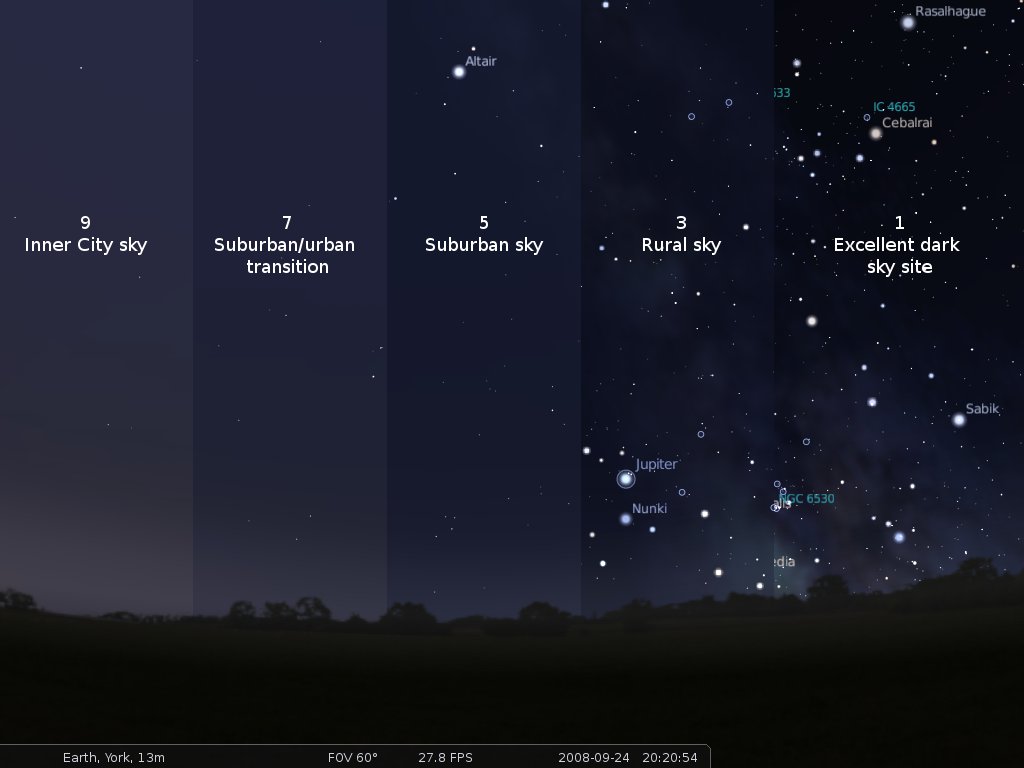
Image credit: Stellarium.
But even with only the most major constellations and asterisms visible, there's still plenty to see, even in the city, if you're interested in exploring the night sky. Darker skies will only net you more (and fainter, dimmer, and more diffuse) objects, of course, so you'll want equipment that will be versatile. Normally, people just starting to take an interest in it have a large number of things they want, some of which they don't even realize they want. What are they?
- You want something relatively inexpensive, because no one wants to blow a lot of money on something you're not even sure you'll like.
- You want something that's quick easy to set up and take down, so that you'll use it often, even late at night, when you're tired and/or unmotivated.
- You want something where the optics are high-quality, because you want to see out into the Universe, not a scratchy, blurry haze.
- You want something with a lot of light-gathering power, capable of seeing as much as you can for the skies that you have.
- And, let's face it, you want something that's durable, because you never take as good care of your stuff as you wish you did.
So, what would I recommend to a beginning skywatcher? I gave some general advice once before, but let me share with you the best astronomy present I've ever, personally, bought for myself.
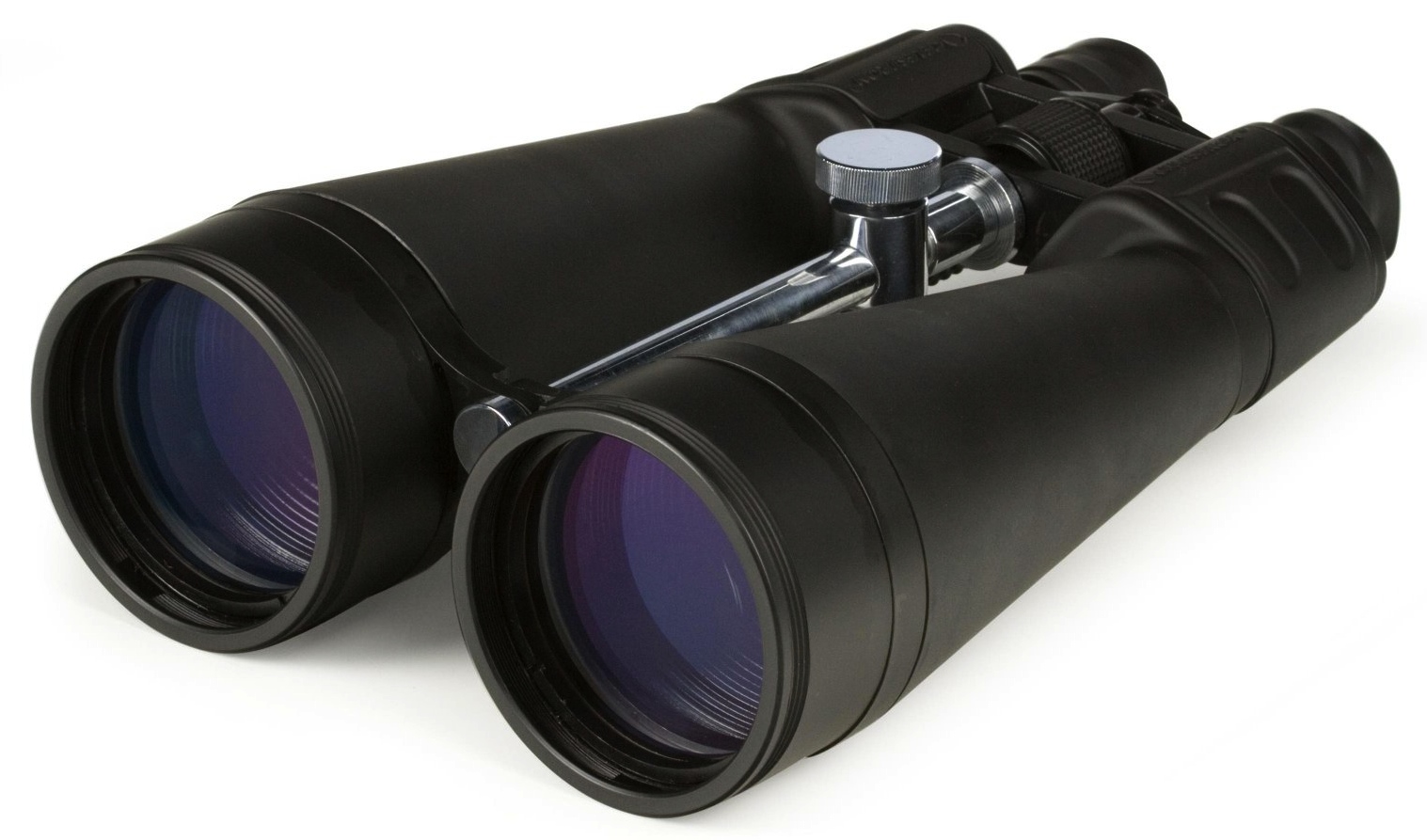
Image credit: Focus Scientific.
This is my preferred tool for checking out the night sky, no matter where I am: a pair of Celestron Skymaster, 20x80mm binoculars. These are versatile -- both for people who do and don't wear glasses -- and they meet all of the criteria above.
- They're cheap, costing only about $100 if you shop around.
- You'll also need a (not included) tripod. The crummy $40 one I bought at Circuit City five years ago is just fine for this, but this is really the upper limit (in weight) that a cheap tripod like this can handle.
- Some lying liars will tell you that you can do just fine without them, but they're no longer with us because they've burned to a crisp from the fires that engulfed them, originating in their pants. Why do you think it has a built-in tripod mount?!


- The 80mm number in that title refers to the diameter of each light-gathering lens, which means these binoculars (when you use both eyes) have the equivalent light gathering power to a 4.5" telescope!
- The optics are multi-coated and the telescope is water/weather resistant, which is very good, but not quite the best. If you want to pay a lot more, you can go for fully-coated optics, and/or a waterproof pair, but for this price point you're not going to find better.
- Finally, setup takes only about 10 minutes, including focusing. The lone exception is that for some pairs (mine wasn't one of them), collimation is a problem, which requires you to either fix them yourself (with an eyeglasses screwdriver), send them in to Celestron, or take them into a camera shop. If you do have this problem, it's a one-time-only fix.

And finally, the 20x magnification (what that first number means in binocular-speak) is enough to see some amazing things! The last time I took them out was Sunday night, which was unseasonably warm and clear. Yes, I got to see the color of some of my favorite stars, as well as the pink/red disk of Mars. But there were a few highlights that I wanted to share.
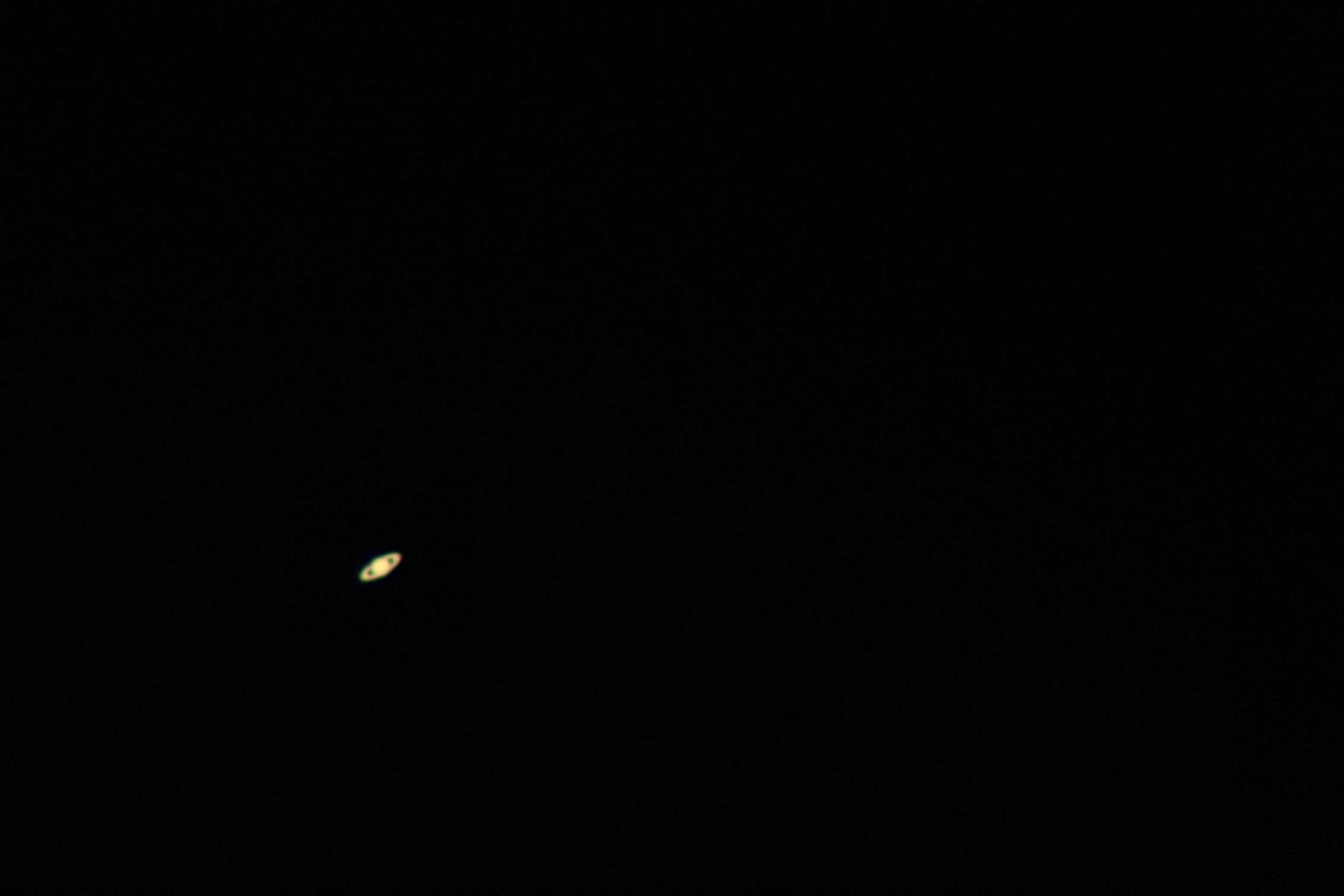
Image credit: gaelicstorm7 (Alan) of Stargazers Lounge.
Saturn, bright and yellow in the night sky, has rings that are actually distinctly visible through these binoculars! I wasn't entirely sure I'd be able to see them, but when I had it centered in the field of view and truly focused the binoculars properly, the nearly edge-on rings came into crisp view, and it was my first time seeing them with my own, personal equipment!
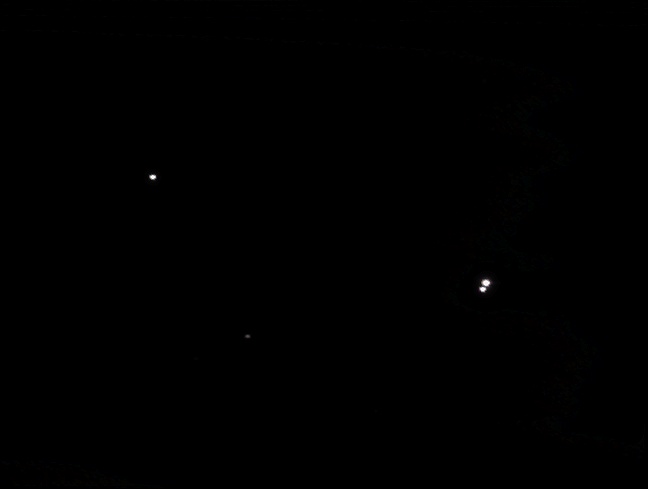
Image credit: John Graham at Cloudy Nights.
As far as stars go, whenever the Big Dipper is prominent, you owe it to yourself to check out the second star from the end of the handle: Mizar. It's not only a binary star system, with the bright star Alcor also present, but there are many other, fainter stars there as well! Even with my lousy, fairly urban skies, I was very clearly able to see the third brightest star in there, which marked only the second time in my life I'd ever seen it, and again, the first time I'd found it on my own.
And last of all, there's the brightest object that isn't named the Moon in our current night sky.
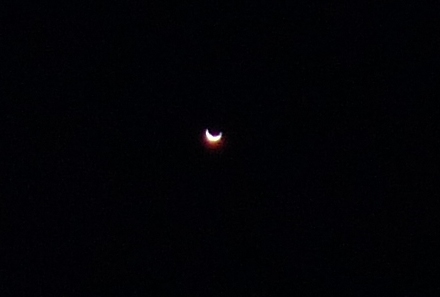
Image credit: David at the Astronomy Nexus.
Venus! Currently in its crescent phase, you'll be able to watch Venus' crescent progressively shrink and shrink over the coming 5 weeks, until in early June it actually transits in front of the Sun, for the last time until 2117!
So if you've got an interest in the night sky, but not a lot of time, money, and not even necessarily good skies, there are still some amazing sights just waiting for you. The question is what are you waiting for; the Universe is yours to explore!
I hope you get commission, these just went on my shopping list.
Australian readers:
Amazon has the best price but i couldn't get one shipped to Australia :-(
There's an Australian agent but they sell them for over $400 :-(++
but i found one on eBay for $109 plus shipping
(http://stores.ebay.com.au/asavings)
pop
That pic of Saturn is impressive. I would never have guessed you could actually see the rings with binoculars!
I have a pair of these. They're a lot of fun. Look for a tripod that extends higher than 6 feet so that you can get under the binos and look up at steeper angles.
The other potential problem is the collimation. These things are lightly built and the carrying bag that comes with them isn't going to protect them from normal bumps and bruises, which will knock them out of collimation. Keep the packing materials and look for a hard case that these materials will fit in. (I found an aluminum tool box for under $40) Then store and transport the binos in this case.
I'm a novice. I have a pair of small ones 8xSomething, for wildlife. Would these Skymasters also be useful for anything else like birds? Even though the price is fair here in Sweden, about $150, it would be easier if I could tell the wife they're good for other stuff
"Look for a tripod that extends higher than 6 feet so that you can get under the binos and look up at steeper angles."
The other alternative is to get a sun lounger/deck chair and sit back in that so you're nearly reclined and then look up. You can use your cheekbones to rest and steady your binos. And, if it's cold, then you can lay the binos down and put your hands in your pocket for a bit.
On cheap binos: the biggest difference in price between cheap and expensive are the tolerances and care taken in constriction (beyond a point). Therefore you *can* get a pair of cheap binos that are in every way as good as expensive ones, but you have to check them out personally and select the best of the batch.
I have a pair of these binoculars. The Andromeda galaxy is a nice target, particularly if you have dark skies.
I don't hold them like the guy in the picture does. Instead, I hold them with my hands at the objective end and the eyepieces resting on my face. I find the binoculars easier to hold steady for longer periods of time this way.
In the spirit of using what you have to do astronomy, perhaps you should use your 8 x somethings at night for a while, just to see if you enjoy doing this sort of thing.
That said, these binos are not quick to use. Acquiring a target is harder because the field of view is about half of what you have now. I've used mine for viewing elk and moose and woodpeckers, not so much for swifts and finches.
For astronomy use, the most generally effective size is a pair of binoculars that have an objective lens size in mm that is 4-5 times that of the magnification.
I.e. 8x40 is best, 8x32 about the minimum. 10x50 (or, more physiologically accurate, 12x50) is the "go to" standard, but that's more about the actual light grasp, which depends on the objective for point objects. But the weight goes up with objective size quickly, and you can lose a magnitude or so of "light grasp" by virtue of the binoculars shaking.
Losing a magnitude of light is about the same as changing that 50mm objective to a 32mm one. And since the smaller is much easier to hold steady (and being lower magnification, less blurred by any remaining motion), you are better off with 8x32 you can hold rock steady than a pair of 10x50's that get tiring to hold after 20 minutes.
One other thing to remember is that the Field of View is also important. A 20x magnification will give a field of view around 2.5 degrees or a little less.
This is only just enough to fit the pleiades in with a surround that shows them up AS a cluster, not just a bunch of stars.
It also means you have to point within about a degree of the right spot to find it in the field of view.
It's very much a case of swings and roundabouts. You can make things easier to find or easier to see once you've found. That's why telescopes have changeable eyepieces.
One option, if you're more currently into land observation, is a spotter scope. A little more expensive than a binocular (they don't sell as many) but come with a zoom eyepiece (though there's no point to the lower magnification: you don't see any more sky with it) that if you can get up to 60x will give you reasonable views of the planets and get you somewhere around 2 degrees field of view. an 80mm 20-60 zoom will cost you somewhere around $180, or a little less if you shop around.
And if you don't do much stargazing, you can still use it for birdwatching, etc.
Those are some serious binoculars! :) Very nice, but for that price range(cca 150$) would recommend a starter celestron refractor with the same aperature. Think it yields better overall image, and with some effort and a lot of patience even try some astrophotography. But binoculars are easier to handle, very true! :)
Have had a 70mm celestron refractor for couple of years now, and really think that for genuine fun you need something like 120mm lens or mirror minimum. Seeing Saturns rings for the first time is awesome, but it's really small and just out there on the end of optical magnification. You get satisfied with Jupier, Saturn and Moon quickly, and the light gathering power and limiting optics are just enough to make you crave for better and larger optics. You're always left with the thought: "Darn, how I wish it was 50% larger in the eyepiece", or "how I wish there was more light". :D
In the end it's how much you pay. When we dish out 400$ on a new TV and think it's a bargain, for 400$ you could get an amazing telescope with outstanding optics that can open a whole new world. :)
"and really think that for genuine fun you need something like 120mm lens or mirror minimum"
Too big, far too big, for a refractor.
For a catadioptic or reflector, yes. But for a refractor, 120mm is too big and heavy and cumbersome. Unless you're serious about your stargazing, in which case you'd be willing to put up with the handling problems to get a better image.
IMO for proper looking at planets you need ~60x magnification. For being able to see clearly things like the rings on Saturn, you want, as Ethan has, 20x.
And, to make out the cassini division (though your eyes will not discern this at anything less than ~50x magnification), you need about 75mm aperture.
As a starter refractor, go longer. 90mm F10 that can take a 32mm eyepiece is a jack-of-all that works. F10 means focussing is much easier for the same magnification, whilst being only 900mm focal length means you can still get around 2 degrees field of view.
What annoys me with purchasing cheap scopes is that you don't get the option of a bundle with a much better tripod. The tripod can get reused on a better scope when you trade up, but the one you get with the scope usually is just about able to manage the scope you buy with it. If you want a bigger scope, you need another tripod.
Insanity.
And, for taking photographs, you need a far far better tripod than you need scope.
One advantage of binos: you can't (readily) take astrophotraphs, therefore you never get frustrated with trying to do this "on the cheap"!
@ Joffemannen
"I'm a novice. I have a pair of small ones 8xSomething, for wildlife. Would these Skymasters also be useful for anything else like birds? Even though the price is fair here in Sweden, about $150, it would be easier if I could tell the wife they're good for other stuff"
As a birder and stargazer, I can tell you these things are not going to replace what I'm guessing are your 8x42s. They're way too heavy, and have too much magnification, for general birdwatching use. You *could* use them with a tripod like a binocular spotting scope, and that might be pretty fun. For that use I think a regular spotting scope with adjustable magnification would be better -- in many of the cases where you'd bother setting up the tripod, 20x wouldn't be enough. But still, it could work. Just make sure to keep your 8x42s around your neck. :)
Oh yeah, and on that topic, a good spotting scope is also good for astronomy! That might be an easier sell on the 'dual purpose' aspect. Trading the ease of use of two eyepieces for the neck-strain relief of an angled eye-piece also might be a good trade-off. :)
@wow
120mm is far from being to big. And am not talking about refractors only. I said lens/mirror. For a standard refractor yes, it's a bit oversized, but wouldn't go for refractor design for great viewing. For dobsonian 120mm is the bottom end of the sizes, and for viewing nebula and deep sky objects, nothing can compare to a dobson.
But if one day I decide to upgrade, this will be my choice:
http://www.celestron.com/astronomy/celestron-nexstar-127slt.html
it's a maksutov-cassegrain design with computerized mount. And it's only around 450$. This is a great machine. Or something similar from Meade, but they are a bit more expensive. But generaly their optics are of better quality then Celestron's.
p.s.
As far as magnification, am not sure how much Ethan saw of Saturn on 20x magnification. The image he posted of Saturn is similar to what I get with a 20mm eyepiece with a 3x barlow lens. So that is something around 70-80x magnification. Without the barlow (at some 20-30x magnification) all I see a dot which is brighter than other stars and a bit bigger but still a dot. On a good night I can see the 4 largest moons of Saturn with 30x, but they are tiny tiny specs.
So I will have to disagree with your view of what is enough as far as magnification. For first time viewing yes, 20-30x will do. But after a year or so with that, it's not enough. It's like riding a bike when everyone around is you is driving a car :D
Sinisa, the magnification you get depends on how far away from the screen you are, and the ppi of the screen as well as the zoom level used to display the image.
At 20x magnification, saturn will be about 1/10th of a degree across (from memory). This is about the same as someone's eye at 20m distance.
Small, but discernable.
Your eyesight should be able to manage 1/10th that resolution.
It's why magnification doesn't get any traction when you print stuff up. Ask a photographer.
"120mm is far from being to big. And am not talking about refractors only"
It's far from being a useful size unless you're seriously into your astronomy, as I said.
It's damn heavy.
A 4" refractor or 5" catadioptic is the maximum size you want to go for a scope you can play about with to find out if you like the hobby, and a catadioptic is harder to focus than a refractor of the same focal ratio since the optical path creates a zoom effect on the folded light path.
My first scope was a 5" Meade Mak.
But it was expensive and, if it hadn't had GOTO, I would have had a hell of a time having fun with it.
And you have to have $800 to blow to buy that sort of thing.
Now, with Celestron and Skywatcher having produced GOTO scopes, the price has nearly halved which is MUCH better. Blowing $450 on a chance of a new hobby is more acceptable than $800.
@Wow
"the magnification you get depends on how far away from the screen you are, and the ppi of the screen as well as the zoom level used to display the image."
am not sure I follow you on this. I'm talking about the optical magnification of a telescope (main lens and eyepiece). You seem to be referring to digital images or something else?
As far as I know, the magnification of a given combination of eyepiece on a scope is: focal length of the scope divided by f.length of the eyepiece.
What do pixels and zoom level have to do with any of this??? If you're talking about a camera, then ok, but thought we were discussing telescope optics? :)
"You seem to be referring to digital images or something else?"
That would be because you were doing so.
I shall quote:
"The image he posted of Saturn is similar to what I get with a 20mm eyepiece with a 3x barlow lens"
@Wow
ahh, sorry for misunderstanding. I was referring to the "relative" size of Saturn in the image. I wasn't thinking about the image in itself or the photo. I was trying to say that the overall size of Saturn with the field of view (in the photo) is about the same as I get (physically) in my eyepiece with about 80x magnification. Altough I also can see the moons, which are strangely not visible in the photo even tough it's a bit overexposed.
So I was just commenting that on 20x magnification, the view of Saturn is even smaller. My point being that even on 80x it's not like it's filling even 20% of the eyepiece. Yes, the first couple of times you see it, it's WOW! But after that you want it bigger! :) And just to be clear, am not advising anyone to dish even 400$ on a starter scope. All I'm saying is that if you like what you see, and want to view further, a 60 or 70mm refractor is quickly going to become inadequate. My best advice for someone thinking about buying a first scope would be to find an astronomy club near him/her and view the sky from someone else's scope first. That way they can see what it's all about. And what they'll get with money spent. Beginners don't realize that you need to dish out some serious cash in order to be able to see color in orion's nebula and some structure. With anything below 200-300$ all you get is some white-ish haze around the sword. And that's a bit of a let-down :)
The optics are limiting me to something like 100x, but I don't have a good quality mount, so focusing on a moving planet with 100x and by hand, with a very narrow f.o.v. proved to be almost impossible.
That's one of the (several) weird things about stargazing.
You have to teach your eyes what they are looking at.
When you look at an image of Saturn at 20x (for example), it looks REALLY tiny. You can't really make out the gap between the rings and the planet at first, but you start to notice a dark splotch that looks to be right.
After half an hour, you no longer notice all that black space around it and you now notice the hint of banding on the front.
Could be the shadow of the ring on the cloud tops!
Then you notice that the view is quite visible and not that small at all.
Though I'd still pick 60x as the minimum to get some useful separation and detail.
The problem with "I want it bigger" is that the seeing you'll get ensures that anything over 60mm will give you as much resolution as you can get out of the image, even under PERFECT skies (1 second of seeing). That means 120x magnification, 150 tops. For 1 second of seeing.
For the 3-4 seconds you normally get, beyond 40-50x magnification, all you're doing is making the blurring bigger, and it looks LESS amazing.
But you can still make that 150x magnification with a 70mm objective, as long as it's an F10 or longer achromat (focuses two wavelengths to the same focal point, removing the green/red/blue fringe that is the result of having a focal point different at that wavelength).
And you get that magnification with a 5-6mm eyepiece. A 90mm F10 gets that with an 8mm eyepiece, roughly, which is that much easier to get the focal plane of the objective and the eyepiece "close enough" in the same location.
The optics limiting you to 100x is more likely due to being F5, where you would need an eyepiece of half the focal length. And at high magnifications, have a look at a wide angle lens. They give you the same mangification but bigger Field of View. I.e. 52 vs 80. It makes a big difference.
PS you won't get colour in your visual look at orion for anything less than around 8inches aperture.
That's serious kit.
IMO, Ethan has it right: To start with, get a pair of binoculars (or as I say, a spotting scope if you like) and you get to see (at 15x) the separation and a hint of the colour in Albiero. You can clearly see M81/M82 (if someone sets it up to point there!). Most of what you'll get to see of Andromeda can be spotted, and almost the entire Messier catalogue of open clusters are available at 10-20x. Along with the dumbbell and (if you're lucky) the ring nebula.
But your FIRST scope can't be anything special. You don't know whether you'll be bothered with photographs (the only way to get colour in the Orion Nebula), deep sky (get a light bucket), planetary webcam imaging (very long focal length) or give up entirely. In which case, a scope you can still take on safari can still get used. Give it an erecting 45 degree diagonal and you're sorted.
It's not the F that is limiting me but the overall quality of lenses on a given magnification. I didn't invest in additional eyepieces because this was/is a starter scope. I only paid about 100$ for the package.
I have a 20mm and 4mm eyepieces and 3x and 2x barlow. My focal length is 700mm.
So with a 20mm eyepiece I get (700/20=35x) with a very nice field of view and razor sharp image. Really no aberation on stars or planets. Then if I put the barlow in (which is how I view the saturn) I get 35x3=105x and the image is really nice. I can see the division of the rings and it's cool. But like I said before, after 2 years of looking... I'm now left with a feeling of wanting more :)
The second option would be to go with a 5mm eyepiece (700/5=140x).. but the field of view is much smaller thus making it more difficult to focus, and at this magnification the quality of optics is noticeable. And tracking by hand (not an equatorial mount) is pain in the butt. That why I said that 100x is about as far as it will really go. Yes.. it can do 140x. but image quality is poor. So I rather go down and still have a good image.
My club picked up a SkyScanner 100 from Orion, for a small bit above $100. It's a 4" (100 mm) table top dob. Weighs 6 lbs. All of it's parts are usable. It comes with 2 1.25" eyepieces giving 20x and 40x - both giving bright clear views. Totally usable as is. Has a standard quarter-20 screw hole if you want to mount on a hefty tripod. I tried it on a hefty tripod, and it worked great.
If you want to figure out if you'll like astronomy, there's no cheaper way than to visit your local astronomy club. This club also has a 22" (558 mm) telescope that is regularly hauled out and shown to members of the public for free. Experts find cool stuff to see, and you look. It doesn't get easier or cheaper than that. Joining the club gets you access to a half dozen loaner scopes in the 4" to 10" range - dobs, SCTs, refractors. You can figure out what you really want and can afford.
I have access to heavily light polluted skies. I use 8x21 binoculars to see stars dimmer than Polaris. They're handy for larger objects like m45. I use a 10" (254mm) push-to dob to see planets, stars, double stars and clusters. I use an oxygen 3 filter (you really need at least an 8" to have enough light for it) to see most nebulae. The scope has a 4 foot tube, and fits across the back seat of any car. And that's what i need to do to see galaxies other than m31. This scope is the largest that i can really handle, and was all i could afford. But it's likely to be my last scope, as i belong to a club with a 22" monster. This monster requires three people to set it up, and a trailer to move it. But the club provides both. The club has dues, but just considering the 22", the break even point is about 35 years. Longer if you consider upkeep costs.
"It's not the F that is limiting me but the overall quality of lenses on a given magnification."
Yes it is. Several ways.
Even proper triplet achromats will give you some fringing (it focuses three wavelengths to the same focal point, but there is still some variation) and the "faster" the focal ratio, the greater the fringing possible from the same focal error.
The focal plane is spherical, not planar, and a short focal length means that you have to pick your eyepiece focal plane to intersect in the "least wrong" position, how much of a difference between the focal plane you have and the one you want is more the shorter your F ratio.
Finally, your focussing is trying to get your focal plane of your eyepiece close in relation to the focal plane displacement to the focal plane of the objective.
A 10mm eyepiece needs you to be twice as accurate in focusing as a 20mm eyepiece. And a 5mm eyepiece is twice the pickyness of a 10mm.
And the eye relief of a non-internal-barlow short eyepiece is much lower than the eye relief of a long focal length eyepiece.
Looking through it is just plain harder.
You don't mention what your objective size is (you missed off the F ratio).
If you have an F5.51 127mm f700 scope, then your Dawes limit is 0.96arc sec.
However, the best seeing you get will be 2 arc sec.
For looking at the planets, you don't need any more than about 60mm even for mountain-top clear skies.
If planets are the thing you want to do, get a good quality motorised equatorial mount.
It really isn't worth chasing any astronomical object at 180x with even a big Dob.
Visually you can set it up pointing "well, the pole star is somewhere over there". Webcam imaging you'll need it somewhat better, but this is also why you want motorized: you'll be sodding about with the computer, too busy to faff about with the scope.
You may well find it just as acceptable to go to an F8 achromat with a dual-speed crayford focuser. It's a lot easier to get good focus visually and an achromat can handle slightly higher than 2x the objective in magnification, somewhere around 2.5x. Keeps the overall size of the scope down.
"You don't mention what your objective size is (you missed off the F ratio)."
Well, my focal length is 700mm and primary lens diameter is 70mm, so I guess it's f/10.
What can you see with Celestron 15x70s? I have them, and you can easily see the pleides clustur, and tonight I may try to see the Andromeda Galaxy!!!!
Your limit with them is really the low magnification you get from them.
Get a tripod: the shake from holding them, even if you have arms like a gorilla, will reduce the visual magnitude by one or two magnitudes.
But otherwise, the 70mm objective is enough to see all the Messier Objects, in so far as if you knew that was what you were looking at, you'd see a dot or smudge.
Something about 2 minutes across in those binoculars will seem about the size of the moon by eye. Though since they're a LOT dimmer, you really have to learn what to see.
Jupiter is DEFINITELY some sort of circle, though you'd not see any detail. Saturn too.
Dumbbell nebula easily as well as most of the clusters, both open and globular, you can very nearly see the colour difference (and easily separate) Albiero.
M81/M82 can easily be found. Pick things about the size and brightness of those two and you'll be fine.
One thing I've found on ONE BOOK ONLY is a measure of the intensity of an object, rather than the integrated magnitude, which for extended objects is frankly pants.
The Observer's Sky Atlas
E Karkoschka
ISBN 978-0-387-48537-9
Note: one good way to use binos (even in winter) is like this:
One binocular (pair)
One Sun lounger (can be laid flat)
One observer in decent clothing (you)
Lie down on the lounger and lie on your back (or slightly inclined). Rest the binos on your eye sockets and if it's cold, you can put the binos on your chest and stick your hands in your coat to warm.
" primary lens diameter is 70mm"
Dawes limit is a smidgeon over 1.5 arc sec (=116/70).
If you're VERY good and in the Atacama Desert, your seeing could be equal to your visual resolution.
And your maximum magnification would be with a 4mm eyepiece otherwise all you'd be doing is making the airy disks bigger.