
Advertisment
Home

Main navigation

  • Life Sciences
  • Physical Sciences
  • Environment
  • Social Sciences
  • Education
  • Policy
  • Medicine
  • Brain & Behavior
  • Technology
  • Free Thought
  1. grrlscientist
  2. Spondylus Imperialis Oyster

Spondylus Imperialis Oyster

  • email
  • facebook
  • linkedin
  • X
  • reddit
  • print
Profile picture for user grrlscientist
By grrlscientist on May 25, 2010.

tags: molluscs, Spondylus Imperialis Oyster, travel, Luonnontieteellinen keskusmuseo, University of Helsinki, Helsinki, Finland, image of the day, photography
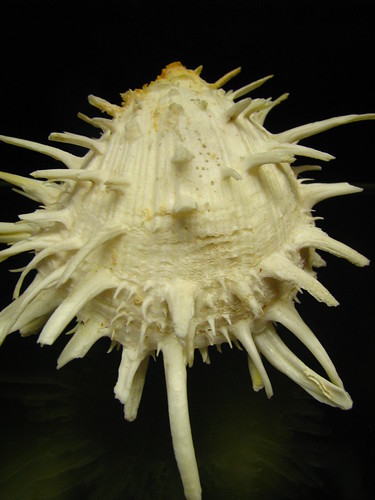
Spondylus Imperialis Oyster?

Photographed in the Luonnontieteellinen keskusmuseo, University of Helsinki, Helsinki, Finland.

Image: GrrlScientist, 18 May 2010 [larger view]

Canon SX100 IS.

Tags
Helsinki, Finland
image of the day
my pictures
Photography
south pacific islands
travel
zoology
Finland
Helsinki
Luonnontieteellinen keskusmuseo
Molluscs
Spondylus Imperialis Oyster
university of helsinki
image of the day
my pictures
Photography
south pacific islands
travel
zoology

More like this

Advertisment

Donate

ScienceBlogs is where scientists communicate directly with the public. We are part of Science 2.0, a science education nonprofit operating under Section 501(c)(3) of the Internal Revenue Code. Please make a tax-deductible donation if you value independent science communication, collaboration, participation, and open access.

You can also shop using Amazon Smile and though you pay nothing more we get a tiny something.


Science 2.0

  • Long Before The Inca Colonized Peru, Natives Had A Thriving Trade Network
  • The Creepy Uncanny Valley Of Targeted Online Marketing
  • Teens Are Getting Much Less Sleep Than In The Past
  • Ozempic Is A Kickstart, Not Magic - Here Is How To Make Weight Loss Stick
  • Spring Forward Fall Back: We Hate Changing Clocks But Hate One Change Most

Science Codex

More by this author

Big News: This Blog Has Migrated to a New Home
September 1, 2010
As one of the initial recruits to Scienceblogs, my years and effort invested into Scienceblogs have been worthwhile. Since I relocated my original blog, Living the Scientific Life, to Scienceblogs in early January 2006, it received more than 6 million visits and nearly 30,000 comments, it helped…
ScienceBlogs = ZombieBlogs
July 20, 2010
Unless you've been living under a rock, or you are the CEO of Seed Media Group (SMG), you are well aware that Bora Zivkovic left ScienceBlogs 24 hours ago. Shockingly, despite this important loss, Adam Bly, CEO of SMG, has not communicated with any of us who remain at ScienceBlogs about this loss…
Mystery Bird: Magnificent Frigatebird, Fregata magnificens
July 20, 2010
tags: Magnificent Frigatebird, Man O'War, Fregata magnificens, birds, mystery bird, bird ID quiz [Mystery bird] Magnificent Frigatebird, sometimes known as the Man O'War, Fregata magnificens, photographed at Quintana Neotropical Bird Sanctuary, Brazoria County, Texas. [I will identify this bird…
Scientia Pro Publica (Science for the People) #35 is Published!
July 20, 2010
Nam et ipsa scientia potestas est (And thus knowledge itself is power) -- Sir Francis Bacon. The most recent edition of Scientia Pro Publica (Science for the People) -- "Scientia Pro Publica 35" -- was just published at the buttcrack of dawn today by John at Kind of Curious. To share yours,…
The Secret Powers of Time
July 20, 2010
tags: The Secret Powers of Time, time, hedonism, future orientation, education, personality type, popular psychology, society, culture, lucifer effect, teenage pregnancy, Philip Zimbardo, Royal Society of Art, RSA, streaming video In this video animation, Professor Philip Zimbardo conveys how our…

More reads

Second Light: Herschel and Hubble together
Just a few weeks ago, the Herschel Telescope was launched into space and successfully deployed. Herschel is larger than the Hubble Space Telescope, but instead of measuring visible light, it measures far-infrared light. This means that, when you look at any object in the Universe, the Hubble Space Telescope sees (mostly) visible light, or light between 400 and 700 nanometers. What gives off…
What does the Universe look like as seen from its most distant galaxy?
"One sees qualities at a distance and defects at close range." -Victor Hugo A couple of weeks ago we took a look at the most distant galaxy (so far) in the known Universe, a galaxy so far away that it takes exclusively infrared observations from our most power space telescopes (Hubble and Spitzer) in order to detect it. What's perhaps even more remarkable is that the light we do detect from…
Comments of the Week #3: From the Beginning to Today
"We shall not cease from exploration, and the end of all our exploring will be to arrive where we started and know the place for the first time." -T.S. Eliot It's been a remarkably exciting week for science, and you've had a lot to say about our new articles at the main Starts With A Bang blog. After all, it isn't every week that we possibly discover the imprint of gravitational waves on the…

© 2006-2026 Science 2.0. All rights reserved. Privacy statement. ScienceBlogs is a registered trademark of Science 2.0, a science media nonprofit operating under Section 501(c)(3) of the Internal Revenue Code. Contributions are fully tax-deductible.